  1. Home
  2. Emerging Tech
  3. Legacy Archives

Nook Simple Touch packs surprise Web browser

Add as a preferred source on Google
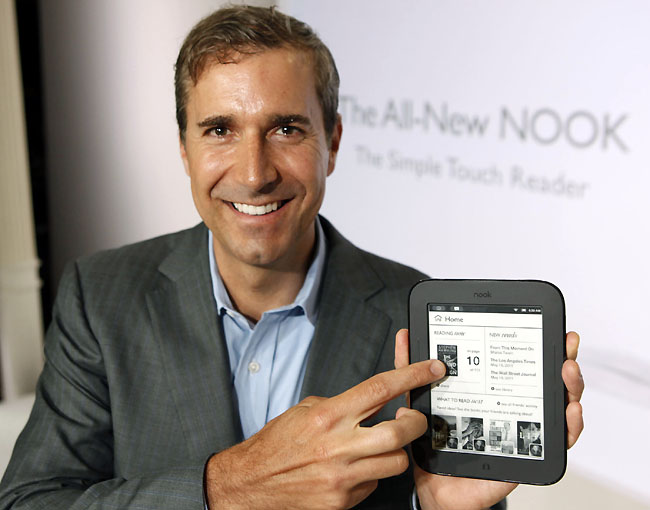
Barnes & Noble Nook Simple Touch eReader (CEO William Lynch)
Image used with permission by copyright holder

Barnes & Noble debuted its new Nook Simple Touch ereader last month, the company touted the unit’s touch-sensitive screen, improved contrast, better performance, and sleek design. But now that the units are reaching customers, they’ve found a bit of a secret feature in the device: a rudimentary Web browser. Just enter a URL into the ereader’s search bar and the unit will load the site in a built-in Web browser.

The Nook Simple Touch is based on Android 2.1, and while Barnes & Noble’s Nook Color is expanding into the wider world of Android applications, some ereader users have lamented that Barnes & Noble hadn’t done more with Android on the Simple Touch. Turns out, the company kind of has done more: limited Web browsing opens up whole new realms of possibilities for the ereader.

Recommended Videos

Of course, as video from The eBook Reader demonstrates, the Nook Simple Touch’s E Ink display doesn’t always make for the best mobile Web experience—which is probably why Barnes & Noble hasn’t flagged the browser as an official feature. However, there are many cases where some Web access is better than no Web access at all.

Of course, users who really want to tap into the Nook Simple Touch’s possibilities will need to root the device to install their own software—which, of course, falls outside the bounds of what Barnes & Noble wants people to do with the device. After all, literature fans probably haven’t lived until they’ve tried to play Words with Friends on an E Ink screen.

Geoff Duncan
Former Contributor
Geoff Duncan writes, programs, edits, plays music, and delights in making software misbehave. He's probably the only member…
Google’s new AI gives robots better balance, smarter hands, and teamwork capabilities
Google just made robots a lot less clumsy and a lot more helpful.
Gemini robotics 2.0

Google DeepMind just brought sci-fi robots closer to reality, and it is very exciting. Building on its original Gemini Robotics model, the company has introduced Gemini Robotics 2, an AI system designed to help robots think, move, and even work together. Unlike most robots today, which rely on pre-programmed routines or someone controlling them remotely, this new system lets robots figure things out on their own when situations get unpredictable.

Can robots finally handle whole-body tasks?

Read more
Remember Samsung’s Ballie home robot? It may finally be inching closer to reality
Leaked app wireframes give the strongest hint yet that Samsung's Ballie home robot, first shown at CES 2020, might still be headed toward an actual release.
Samsung Ballie robot in a room next to a dog feeder.

Samsung's rolling home robot has been the industry's longest-running "will it ever actually ship" joke, and I'll admit I'd mostly given up on it. Now, there's finally a glimmer of hope.

Samsung first unveiled Ballie as a concept at CES 2020. Then, it showed it as a significantly upgraded version four years later. However, the company never confirmed a release date or committed to releasing it at all. 

Read more
Polar is yet another AI browser, but it goes beyond just automating the mundane web chores
Polar wants to turn your browser into an AI-powered productivity tool
Polar AI browser

The AI browser race is entering a new phase. After spending much of 2025 trying to reinvent web search with built-in chatbots, startups are increasingly shifting their attention toward browser agents that can automate repetitive work instead of simply answering questions. The latest company to embrace that transition is Polar, a startup founded by former Perplexity engineer Kevin Zhang, which has raised $5.7 million in seed funding led by Madrona.

Unlike the first generation of AI browsers that targeted everyday consumers, Polar is designed specifically for knowledge workers. Its premise is straightforward: instead of replacing Google Search, the browser aims to eliminate repetitive tasks that professionals perform across dozens of browser tabs every day.

Read more