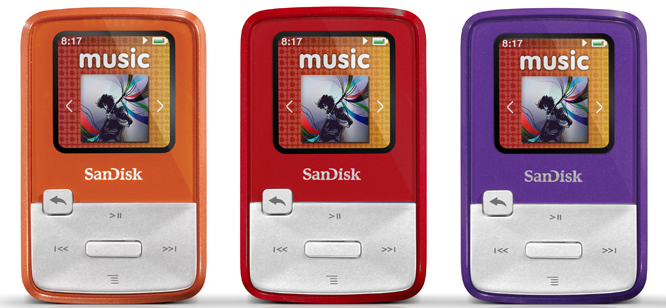
Today, SanDisk introduces the latest addition to the Sansa lineup of MP3 players, the Sansa Clip Zip MP3 player. In addition to sporting a microSDHC slot for expanded storage, the Sansa Clip Zip comes in two different storage sizes. The 4GB model stores up to 1,000 songs (based on an average of 3.5 min songs encoded at 128 kbps) and the 8GB model stores up to 2,000 songs. The microSDHC slot allows consumers to expand the memory of the MP3 player an additional 32GB. While some memory is being used for other device functions, the total number of songs between the internal and external memory totals 8,000.
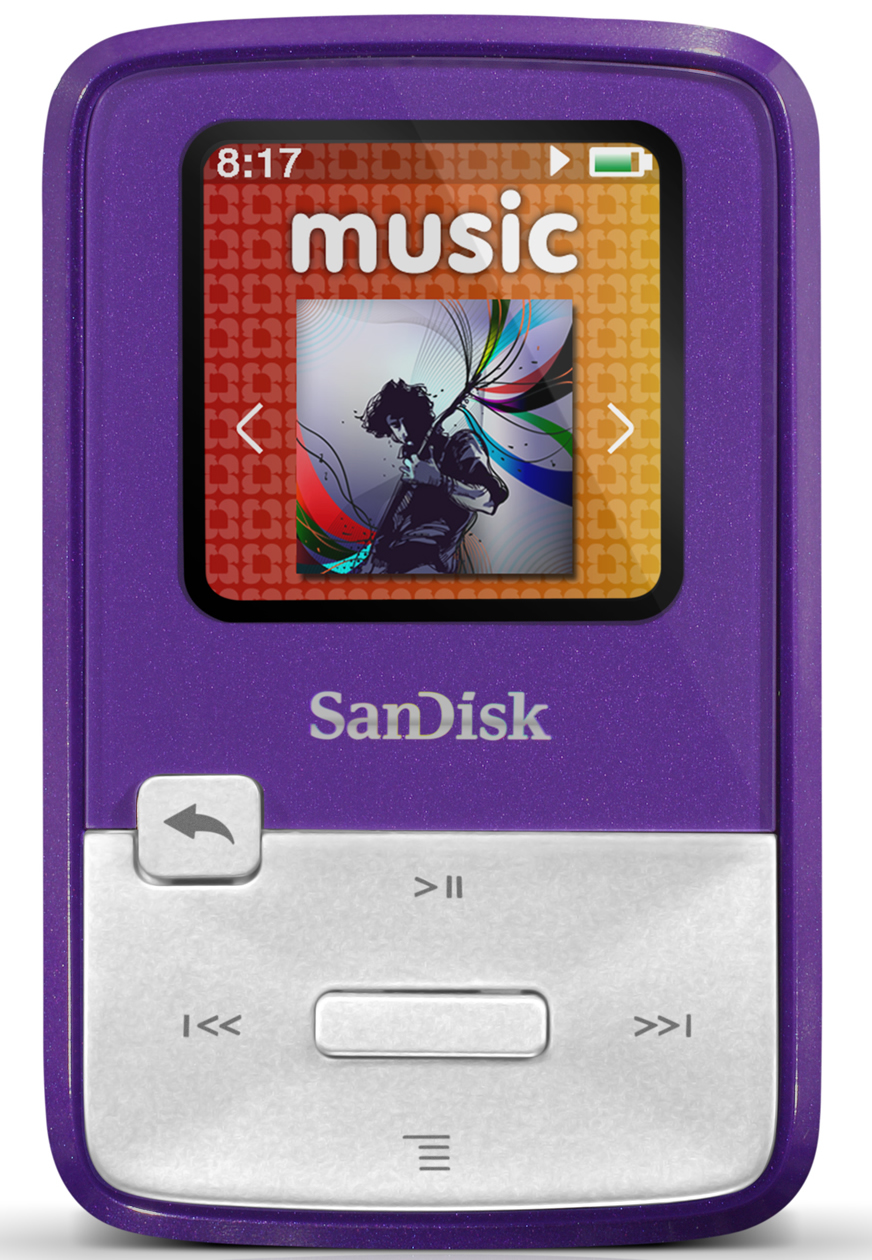 The Sansa Clip Zip utilizes a 1.1-inch LCD color screen for menu navigation and showing off album art. In addition to being compatible with the AAC codec used in iTunes, the player is capable of playing music and audiobook files encoded in the MP3, FLAC, WMA, WAV, Ogg Vorbis and Audible formats. The Sansa Clip Zip music player has also been optimized for use with Napster, eMusic and Rhapsody services. Beyond music, the Sansa Clip Zip offers a stopwatch for timing during workouts, a FM radio to pick up local radio stations and a built-in microphone for voice recording.
SanDisk claims that the Sansa Clip Zip has up to 15 hours of battery life. It utilizes a micro-USB connector for charging while mobile and the device is about the size of a matchbox. For consumers interested in matching the MP3 player to outfits, the Sansa Clip Zip comes in red, purple, grey, white, orange, blue and black. The 4GB model of the Sansa Clip Zip retails for $49.99 and and 8GB model retails for $69.99. The Sansa Clip Zip is currently available in the United States and is scheduled to be released in Europe next month.