
  1. Home
  2. Emerging Tech
  3. Legacy Archives

Sony dash Personal Internet View Tunes into Netflix

Add as a preferred source on Google

Sony’s forthcoming dash “personal Internet view” got its debut at CES, but didn’t raise a tremendous number of eyebrows: although the device features a 7-inch touchscreen display, built-in WiFi, and is designed for convenient use in places like countertops and nightstands, rather than offering a true OS and an application ecosystem to drive it, the dash relied on a series of custom widgets: if the widget did what you wanted, great, but if you wanted something else, tough luck.
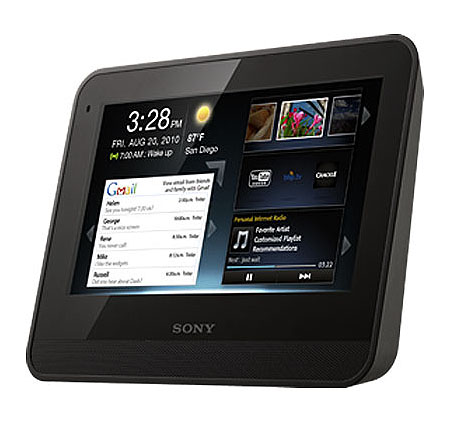
Sony Dash
Image used with permission by copyright holder

Now Sony is upping the ante on those built-in widgets, announcing today that the dash will feature a dedicated application for Netflix, enabling Netflix subscribers to tap into thousands of movies and TV shows that can be streamed to them over their existing home broadband connection. In addition, Sony says Demand Media offerings eHow, Golflink, and Livestrong.com will be available as part of the dash’s content lineup. The Netflix and Demand Media offerings supplement content that will be available via Sony’s Bravia Internet video platform and a content channel from chumby industries.

Recommended Videos

“We’re continuing to develop innovative products that bring online music, news, video, and more into our customers’ homes in real time,” said Sony Electronics senior VP for personal imaging and audio Brennan Mullin, in a statement. “By adding content from Netflix and Demand Media to our dash product, Sony is giving consumers a new, convenient way to enjoy some of the highest quality entertainment and most useful information available on the Internet today.”

Sony says the dash will be available in April for a suggested price of $199. As with other devices capable of tapping into Netflix streaming, a separate Netflix subscription is required.

Geoff Duncan
Former Contributor
Geoff Duncan writes, programs, edits, plays music, and delights in making software misbehave. He's probably the only member…
Elon Musk says Neuralink’s brain implants could help people with paralysis and blindness
Neuralink's Telepathy helps people control computers through thought, while Blindsight aims to restore visual perception.
elon-musk-neuralink-brain-implant

Elon Musk has revealed ambitious plans for Neuralink, and they go beyond controlling computers with your thoughts. The company is developing two brain implants, Telepathy and Blindsight, aimed at helping people with paralysis and severe vision loss. Musk also believes future advances could help people regain control of their hands and legs by reconnecting the brain with their limbs.

How Neuralink's Telepathy can help people with paralysis

Read more
Sony has shrunk its glasses-free 3D technology into a tiny screen, and it can bring anime characters to life on your desk
It's almost like having a digital, three-dimensional companion on your desk.
Sony's smaller 3D display for desk

Glasses-free 3D has always felt like a luxury I could admire from afar. Those screens were built for design studios, not smaller desks like mine. But Sony’s new version is small enough to sit beside my keyboard, and I’m genuinely excited.

The company has unveiled the ELF-MN1, a 6-inch display that makes 3D characters and avatars look like they’re coming out of the screen without any special glasses or a headset. It plugs into a phone or PC with one USB-C cable, and that’s pretty much it (via Sony).

Read more
3D-printed ghost guns are a notorious blind spot. Scientists may have finally cracked the traceability problem
The plastic used to make these weapons could hold clues that conventional forensic methods often miss.
3D printed Gun replica

Most conventional firearms come with serial numbers and leave unique microscopic markings on bullets and cartridge cases when fired. Investigators can use these clues to trace weapons or connect them to crimes. However, 3D-printed firearms, commonly called ghost guns, present a different challenge. They can be manufactured without serial numbers, and their unconventional construction can make traditional forensic analysis more difficult.

Now, researchers in Australia may have found another way to trace these weapons, using clues hidden in the plastic they're made from.

Read more