1. Home
  2. Emerging Tech
  3. News

SpaceX aims to launch again this year following September’s rocket explosion

Add as a preferred source on Google

SpaceX suffered a serious setback at the start of September when one of its Falcon 9 rockets suddenly exploded on a Cape Canaveral launchpad, taking with it an Israeli communications satellite.

Since then the team has been working with industry experts from the likes of NASA, the Federal Aviation Administration, and the U.S. Air Force to try to determine the cause of the incident.

Recommended Videos

Elon Musk’s space company revealed on Friday that it’s close to understanding exactly what went wrong, adding that it hopes to resume missions before the end of the year.

Getting its operation up and running again in less than four months would be a major boost for SpaceX. Following the loss of a Falcon 9 booster in 2015 just minutes after launch, missions were put on hold for a full six months, while this latest incident had some speculating its space project could be grounded for up to a year.

As for the cause of September’s explosion, SpaceX had said it suspected a breach in the rocket’s helium system of the second stage liquid oxygen (LOX) tank.

In an update posted on its website, the California-based company said that while the root cause of the breach has yet to be confirmed, “attention has continued to narrow to one of the three composite overwrapped pressure vessels (COPVs) inside the LOX tank.”

It added that following extensive testing, it’s been able to “re-create a COPV failure entirely through helium loading conditions. These conditions are mainly affected by the temperature and pressure of the helium being loaded.”

SpaceX said that at the moment its two main objectives are to pinpoint “the exact root cause” of the incident and to develop “improved helium loading conditions that allow SpaceX to reliably load Falcon 9.”

Finally, it confirmed that “pending the results of the investigation, we continue to work towards returning to flight before the end of the year.”

SpaceX’s latest report aims to reassure partners considering whether to use the company for launching its payloads, after all, none will want to see their satellite suffer the same fate as Spacecom’s Amos-6 satellite at the start of September.

The update is also SpaceX’s way of telling the world that it’s as determined as ever to push ahead with its goal of launching manned missions to the International Space Station, as well as its altogether bolder ambition of one day reaching Mars.

Trevor Mogg
Contributing Editor
Not so many moons ago, Trevor moved from one tea-loving island nation that drives on the left (Britain) to another (Japan)…
A new AI model wants self-driving cars to think before they swerve
Forget guessing games, this self-driving AI actually shows its work.
Self driving car

Self-driving cars have gotten pretty good at driving. The harder problem is teaching them to drive safely in situations nobody planned for. We have heard horror stories of self-driving cars, behaving erratically in emergency situations, often times delaying first responders from reaching the scene.

A team at Seoul National University, led by professor Jun Won Choi from the Department of Electrical and Computer Engineering, thinks they have cracked part of that puzzle with a new AI model called SafeDrive. The research was recently selected as a highlight paper at CVPR 2026, a distinction that goes only to roughly 3% of all submissions.

Read more
An AirPods-sized mini lab could help catch disease markers in minutes
Meet VPodDuo, an AirPods-sized molecular testing gadget
VPodDuo Mini Medical Device

Home testing could eventually become a lot more convenient. Researchs at the at the University of Illinois Urbana-Champaign has developed the VPodDuo, a pocket-sized fluorescence reader designed to measure sensitive molecular tests outside a conventional laboratory.

Its housing is roughly comparable in size and shape to an AirPods charging case, while Bluetooth connectivity sends results directly to a smartphone. Meaning, you might not have to wait in line anymore.

Read more
Your future AR glasses might finally stop making the real world look weird
Researchers have developed a new display technique that keeps virtual objects realistic without dimming the real world.
Samsung AR Glasses

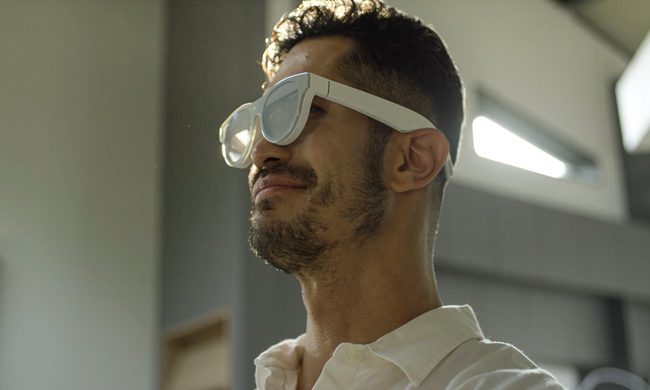
One of the biggest promises of augmented reality is blending digital objects seamlessly into the real world. Ironically, today's AR glasses often make the real world harder to see. Researchers at the Shibaura Institute of Technology (SIT) in Japan, led by Assistant Professor Xiaodan Hu in collaboration with Dr. Yan Zhang and Professor Xubo Yang from Shanghai Jiao Tong University in China, and Professor Kiyoshi Kiyokawa from Japan's Nara Institute of Science and Technology, have developed a new AR display technique that aims to make virtual objects look realistic without reducing visibility of the real world. The study was published in IEEE Transactions on Visualization and Computer Graphics.

The biggest AR problem isn't virtual objects; it's everything around them

Read more