“The Surface Buds are more office companions than AirPods foes, but are they worth the dough?”
- Comfortable fit
- Balanced sound
- Microsoft suite integration
- Translation
- Pricey
- Lacking key features

“Why you can trust Digital Trends – We have a 20-year history of testing, reviewing, and rating products, services and apps to help you make a sound buying decision. Find out more about how we test and score products.“
At some point in the last year, the entire world bought into the wireless earbud craze. Everyone is trying to make their own spin on Apple’s Airpods – despite the fact that, lets be honest, they look silly.
Microsoft is the latest entry to the wireless audio world, unveiling the Surface Earbuds at the company’s annual October Surface hardware event. The buds are pricey, at $249, but Microsoft has a reason for that. These aren’t just earbuds, the company says. They’re Surface products.
The Surface lineup is all about bridging the gap between software and hardware, under the umbrella of Panos Panay. Panay’s mantra has always been the harmony between the device and the application, which explains why Microsoft’s Surface Duo folding phone is so different from every other folding phone on the market. It’s a fascinating concept when applied to wireless earbuds. Given the doodads in your ears, and the power of software, what else can you do?
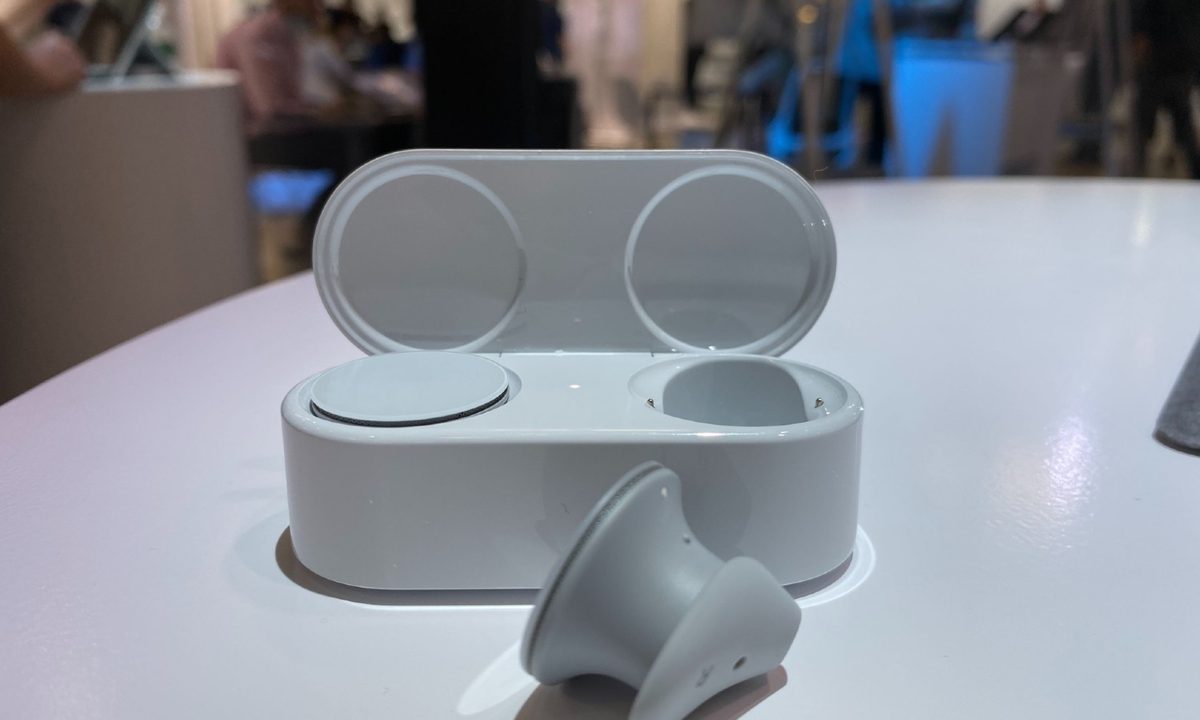
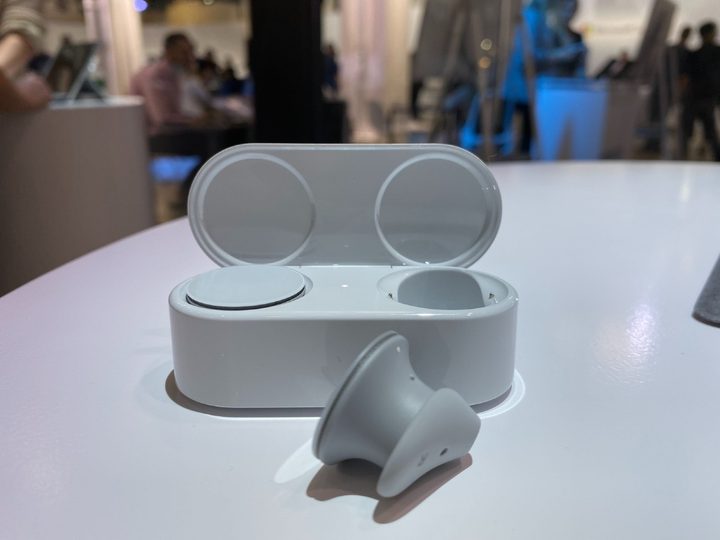
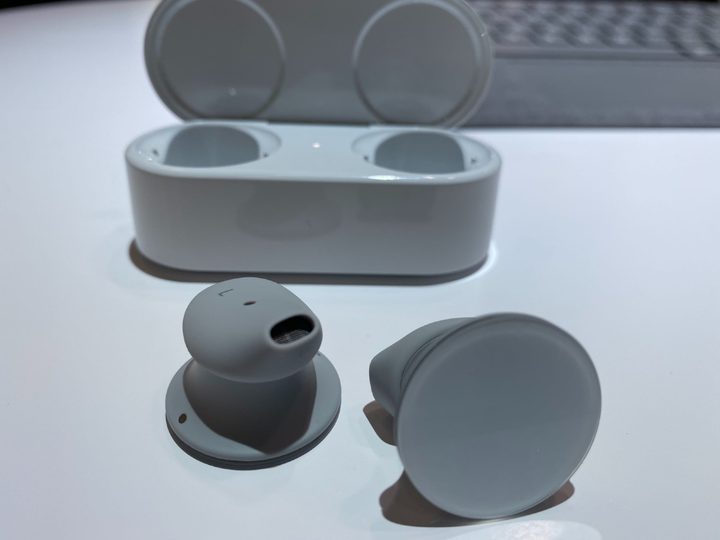
I spent a few minutes testing out the new gadgets at Microsoft’s event, after playing around with the new Surface Duo (a Microsoft phone! Again!) and Surface Neo (the future of computing?). The Earbuds are visually quite different than most others on the market, resembling gauge earrings more than a traditional earphone. One side of the bud is a molded module of soft rubber that sits in your ear (the Earbuds come with three sizes); the other side is a shiny, touch-sensitive white disk that sits flat against your head. It’s a striking look. I suppose earbuds will always look weird, won’t they?
They felt comfortable in my ears, not heavy despite the bulbous appearance that the discs give off. I opted for the medium size, which felt okay; swapping to a large offered me a snugger fit.
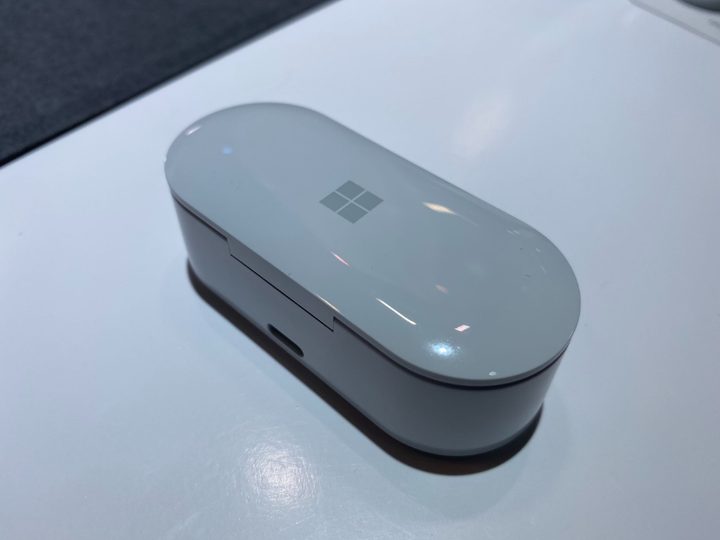
Functionality is similar to what you’ll get in other devices; a double tap pauses the song or answers the phone. Swipe left or right on the left bud to move between tracks, while swiping or down on the right earbud raises or lowers the volume — something Apple’s popular AirPods are notably lacking.
More interesting is what it can do in conjunction with your Windows laptop. Directional microphones pick up your voice and pump it into the cloud, where it can be translated it into up to 60 languages, for example. In a demonstration, I annotated a PowerPoint slide in real time. Someone giving a presentation in a foreign country could have their narration displayed on screen for foreign speakers to hear – a remarkable slight of hand for an audio device.
Real time translation you say? Can it interpret too? That’s coming soon, Robin Seiler, a Vice President with the company, told me. While the buds can’t do that kind of thing with Android or iOS, certain Microsoft apps are also enabled by the device on both platforms. Again, the power of the device is enabled by the software.
So how did they sound, you ask? While the event hall was quite crowded, the Surface Earbuds offered surprisingly good sound quality, with decent bass – a challenge for such a small product. I had to press them into my ears a tad to shut out the outside noise, but when I did, music felt noticeably richer than it does from some of the cheaper buds I’ve worn.
Here’s the catch: At $249, these are not your average earbuds. Sure, they appear to offer powerful features, but can you justify the cost? I’m hesitant. And I suspect most consumers will balk at these buds, too. We’ll have a better idea once we’ve had the chance to spend some quality time with them.