Apple proudly boasts that its Apple Music streaming service offers lossless audio versions of every track — and many are also available in hi-res audio. And yet, if you use an iPhone to listen to Apple Music using a set of wireless earbuds or headphones, you’ll instantly lose some of that extra quality. That’s because the iPhone only supports two Bluetooth codecs, SBC and AAC, and neither is designed to transmit audio at bit rates that can preserve the quality of Apple Music’s tracks.
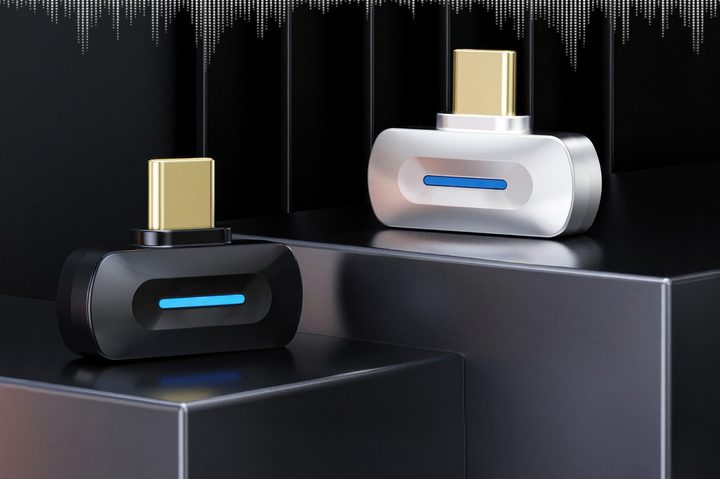
Why Apple has chosen to keep the iPhone’s codec support firmly stuck in the past while its streaming service embraces the best formats of the present and the future isn’t a mystery we’re going to solve any time soon. But in the meantime, Fiio’s new BT11 USB-C Bluetooth transmitter promises to load up your iPhone 15 or 16 with many of the best Bluetooth codecs, including Sony’s LDAC and every single flavor of Qualcomm’s aptX codec family.
The BT-11 will be available in black and silver colors when it hits retail on October 8 for $44.
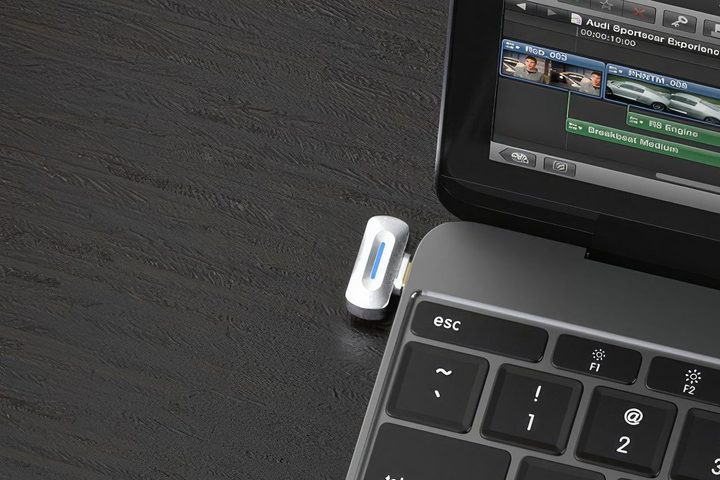
It’s not just for USB-C-equipped iPhones. Any Android phone that lacks one or more of these codecs can benefit, as can any laptop (a USB-A to USB-C adapter is included). It also works with Nintendo Switch and Sony’s PlayStation 5 gaming consoles.
A device like that this is sorely needed by iPhone owners who have chosen to invest in wireless hi-res audio gear like Sony’s excellent WH-1000XM5 headphones or WF-1000XM5 earbuds. Both use LDAC and perform considerably better with a phone that supports this codec.
The same is true for any phone that isn’t Snapdragon Sound-compatible, which if we’re being honest, is true of the majority of phones sold. If your new wireless earbuds support aptX Lossless (like the Sennheiser Momentum True Wireless 4 or Bose QuietComfort Ultra Earbuds), you need a Snapdragon Sound phone for CD-quality audio … or the BT11 attached to any phone.
As someone who reviews earbuds and headphones every day, I can already see the BT11 becoming an essential tool.
Fiio says the BT11 uses Bluetooth 5.4 with support for LE Audio, giving low-latency performance for headphones that are compatible with the LC3 codec. The company says it has also given the transmitter a PDS antenna, which it claims can significantly increase Bluetooth range versus traditional antenna designs.
A large LED indicator uses colors to denote which Bluetooth codec is currently in use, and it can support two simultaneous device connections, effectively acting as a wireless audio splitter so you can share audio with a friend.
As awesome as it is to have a USB-C dongle with 24-bit/96kHz capable codecs, I can see a few potential challenges with using the BT11. Though tiny, its T-shape extends to either side of the USB-C port it uses. On some devices, this could block access to an adjacent USB-C port. If that device is an Apple MacBook Air (for example), you wouldn’t be able to connect your laptop to power and use the BT11 at the same time.
Also, despite the BT11’s codec prowess, it doesn’t currently have AAC compatibility. If your headphones or earbuds only support SBC and AAC (like the Apple AirPods), you’ll be better off sticking with your phone’s built-in Bluetooth connection.