  1. Home
  2. Smart Home
  3. News

Food-delivery service Doordash is now serving customers in all 50 states

Add as a preferred source on Google
Image used with permission by copyright holder

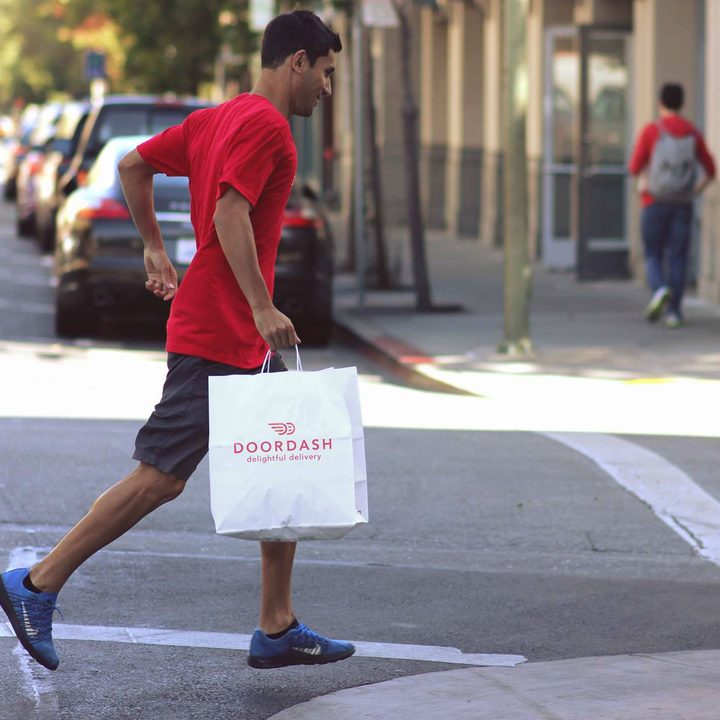
Don’t feel like braving the elements to pick up an order? Wish you could enjoy the delicious goodness of your favorite restaurants from the comfort of your own home? Well, good news for you and fellow convenience-seekers: on-demand delivery service DoorDash now delivers in all 50 states.

A recent expansion to the company’s delivery services means DoorDash is now active within the borders of ever state in the country. The latest expansion brought DoorDash to Montana (the cities of Billings, Bozeman, and Missoula), Alaska (Anchorage) and South Dakota (Sioux Falls). DoorDash also expanded its presence in North Dakota and West Virginia. According to the company, it now offers deliveries in more than 3,300 cities and reaches about 80 percent of Americans.

Recommended Videos

DoorDash has moved quickly to gain a foothold in as many markets as it can. The company has outpaced much of its competition, which has yet to reach nearly the same number of cities. GrubHub serves 1,700 cities across the United States (and has started reaching global audiences with service in London) while UberEats only reaches a few hundred American cities. UberEats does have a much larger global presence than the alternatives, at this point.

Despite hitting more cities than any of its competitors, DoorDash still trails in actual market share. GrubHub dominates with about 34 percent of the market according to Edison Trends. UberEats comes in second with 28 percent. DoorDash is third, trailing its two major competitors with just 17 percent of the overall food delivery market. DoorDash has been the fastest growing of the bunch, according to research from Edison Trends.

While DoorDash has moved quickly to reach as many people as possible, it has managed to ruffle some feathers along the way. The delivery company has been the subject of lawsuits from restaurants alleging that it offers delivery from their establishments without permission. In-N-Out Burger filed a lawsuit against DoorDash in 2015 claiming the delivery service used its logo and menu without permission. Similarly, a suburban restaurant near Chicago called Burger Antics has asked DoorDash to stop using its logo and delivering its food because the deliveries are often late and lead to complaints from customers.

AJ Dellinger
AJ Dellinger is a freelance reporter from Madison, Wisconsin with an affinity for all things tech. He has been published by…
Why Your Next Outdoor Security Camera Might Need Three Lenses
EZVIZ Puts Triple-Lens Outdoor Security in the Spotlight at IFA 2026
camera, security camera

Monitoring a home often means watching several things at once. Just as a car pulls into the driveway, a visitor might approach the front gate, or movement could catch your eye in the side garden. For many European homes, this is a familiar scenario.

The challenge becomes even more noticeable when a property includes a backyard, detached garage, or swimming pool. Installing another camera for every angle is one solution, but it also means more devices to set up, manage, and maintain.

Read more
I played with Yarbo’s yard robot at IFA, and now I want one for every season
One tracked robot, a new job for every season
Yarbo M-series Featured 2

I’ll admit, I wasn’t expecting a yard robot to be one of the more entertaining things I’d get my hands on at IFA 2026. Then I walked over to Yarbo’s booth and started playing around with the M Series.

The basic idea is wonderfully simple: instead of buying a different robot for every outdoor chore, Yarbo gives you one tracked robotic Core and a collection of attachments. Swap the module, and suddenly your robot has a completely different job. Mowing? Yep. Snow? Yep. Leaves? Yep. And there’s even a trimmer module on the way.

Read more
WindGroove’s AirFi One imagines a smarter home with fewer devices
The future of smart homes may not be more devices, but better-designed experiences
Architecture, Building, Furniture

The future of smart homes may not be more devices, but better-designed experiences

Minimalism has reshaped almost every corner of the modern home. Kitchens hide appliances behind seamless cabinetry, televisions have become slimmer and more discreet, and storage is increasingly designed to disappear into the architecture. The goal isn’t simply to own better things. It’s to create spaces that feel calmer, cleaner, and more intentional. Smart home technology, however, has largely moved in the opposite direction. Every upgrade seems to introduce another speaker, another controller, another light, or another connected device competing for space and attention.

Read more