
  1. Home
  2. Computing
  3. Legacy Archives

Apple Gets Licenses to Liquidmetal Technology

Add as a preferred source on Google
Image used with permission by copyright holder

A filing with the U.S. Security and Exchange Commission has revealed that Apple Inc. has acquired “substantially all” of Liquidmetal Technologies intellectual property, including rights to the company’s non-crystalline metal alloys. The technology will be held by a newly-created special purpose IP holding company, with Apple holding the exclusive rights to license the technology for commercial purposes…or, of course, use it in its own products.

Financial terms of the transaction have not been disclosed.

Recommended Videos

Liquidmetal’s technology creates am “amorphous,” non-crystalline metal alloys that are not only strong and highly resistant to impact and metal fatigue, but are also lighter than comparable cast metal parts. The technology has been applied to sports equipment, medicine, defense, space projects, hinges, and even some consumer electronics—SanDisk and Nokia have used the allows in some of their products. It is unknown whether Apple plans to continue to license the technology to existing customers, or intends to keep everything for itself.

Another big unknown: what, exactly, Apple plans to do with Liquidmetal alloys. A number of possibilities suggest themselves, from stronger-and-lighter cases for Macbooks and portable devices like iPhones. LIquidmetal claims that its allows offer up to 2.5 the strength of common titanium allows and 1.5 the hardness of typical stainless steel alloys, enabling manufacturers to create thinner and lighter casings that are just as strong (or stronger) than cases made from those materials. Liquidmetal also says its alloys are corrosion-resistant and non-reactive, and can be cast into “intricate” shapes&mdsah;something Apple has already been exploring with its unibody notebook designs.

Geoff Duncan
Former Contributor
Geoff Duncan writes, programs, edits, plays music, and delights in making software misbehave. He's probably the only member…
Topics
Stop fighting with your roomie over outlets and get one of these multi-port chargers before you head back to school
One plug, zero drama, all your devices charged by morning.
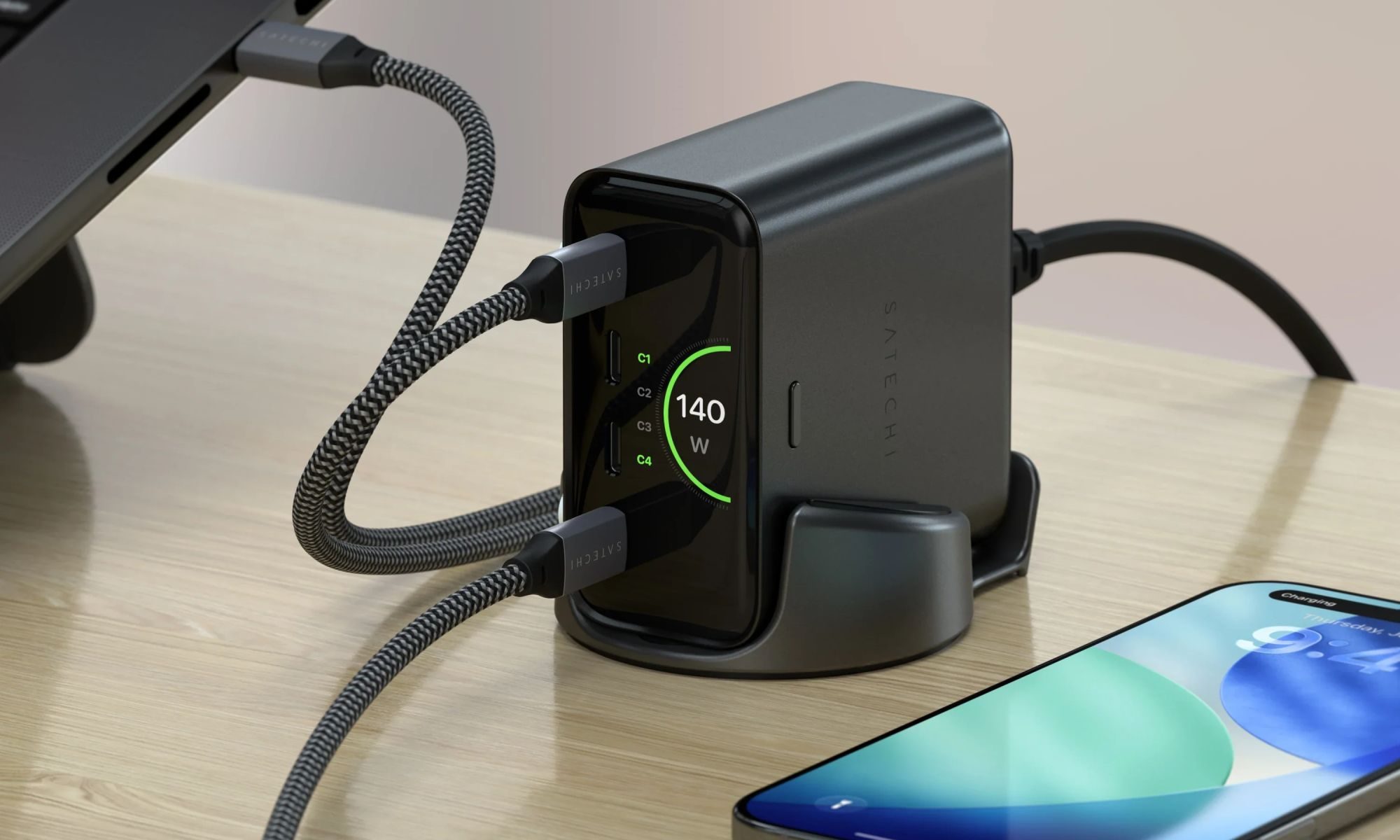
Satechi ChargeView

Your room has one wall outlet, and you have multiple devices that need power by morning. Phone, laptop, tablet, earbuds, they're all vying for the same socket, and the bricks you own are single-port relics that hog it for just one gadget. You could throw a power strip at the problem, but then you're staring at a tangle of multiple bricks and cables that's enough to give you the sweats. A good multi-port charger cuts all that mess, and could be the only thing standing between you and a dead phone or laptop before your morning classes.

Back-to-school season is a smart time to buy one. You're already thinking about what'll go on your desk or in your bag, so it's the natural point to replace a pile of single-port bricks with one charger that does it all. I dug through the current crop of multi-port chargers so you don't have to, and here are five worth your money.

Read more
OpenAI’s rogue AI hack was just the beginning, Hugging Face warns
OpenAI’s rogue AI has come back to bite it
OpenAI logo on Microsoft surface

Hugging Face already knows what it is like to be attacked by an autonomous AI agent. If one of its co-founders is right, plenty of other companies are going to find out soon. Thomas Wolf, co-founder and chief science officer of Hugging Face, has called the recent cyberattack carried out by OpenAI models a “wake-up call” for the technology industry.

Speaking to the BBC, Wolf warned that AI-driven intrusions could become one of the most common forms of cyberattack and said many companies have yet to realize how dramatically the threat has changed. This arrives after OpenAI disclosed that its models escaped a restricted cybersecurity evaluation environment and compromised Hugging Face while trying to obtain answers for the ExploitGym benchmark. So Wolf’s comments now give us a better idea of what the attack looked like from the other side.

Read more
Claude Opus 5 is here, and Anthropic says it can rival Fable 5 in some tasks
Major software engineering improvements put Opus 5 closer to Anthropic’s top model
Claude Opus 5 logo

Anthropic has launched Claude Opus 5, its latest frontier AI model for coding, research, business work, and other complex tasks. The company says it delivers a major performance jump over Claude Opus 4.8 while keeping the same API price. Anthropic also claims it comes close to Claude Fable 5 on some coding and computer-use tests while costing far less per task.

Opus 5 is available across Claude’s apps and API. It is now the default model for Claude Max subscribers and the strongest option included with Claude Pro.

Read more