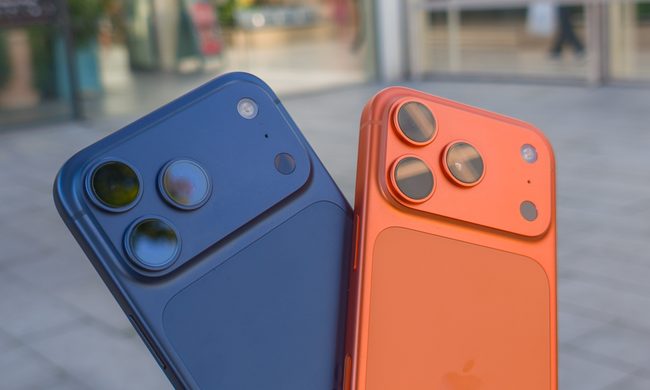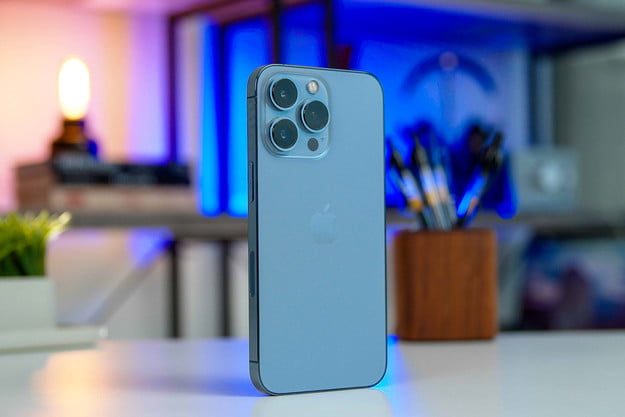
Apple’s iPhone 14 series is here, and with it comes the iPhone 14 Pro, packing a similar — but not identical — design to its predecessor, the iPhone 13 Pro. With its powerful Apple A16 Bionic processor, longer battery life, always-on screen, and new Deep Purple colorway, it’s easy to see why you might be tempted to grab the latest Pro in Apple’s iPhone 14 lineup. Don’t discount the iPhone 13 Pro, though. Its slightly slimmer design, A15 processor, and 6.1-inch Super Retina XDR OLED display come packed into an aluminum body available in a range of cool colors, including Alpine Green and Sierra Blue.
If you’re not sure whether to upgrade to the new iPhone 14 Pro, or if you’re in the market for a new iPhone and wondering which device is the better choice, we’re here to help. We’ve compared the Apple iPhone 14 Pro to the iPhone 13 Pro across six core categories to help you decide. Which iPhone Pro should you get, or should you upgrade from the older device to the newer? Keep reading to find out.
Specs
| iPhone 14 Pro | iPhone 13 Pro | |
| Size | 147.5 x 71.5 x 7.85mm (5.81 x 2.81 x 0.31 inches) | 146.7 x 71.5 x 7.65mm (5.78 x 2.82 x 0.30 inches) |
| Weight | 206 grams (7.27 ounces) | 203 grams (7.16 ounces) |
| Screen size | 6.1-inch Super Retina XDR OLED
ProMotion Always-on screen |
6.1-inch Super Retina XDR OLED
ProMotion |
| Screen resolution | 2556 x 1179 pixels (460 pixels per inch) | 2532 x 1170 pixels (460 pixels per inch) |
| Operating system | iOS 16 | iOS 15 (upgradeable to iOS 16) |
| Storage | 128GB, 256GB, 512GB, 1TB | 128GB, 256GB, 512GB, 1TB |
| MicroSD card slot | No | No |
| Tap-to-pay services | Apple Pay | Apple Pay |
| Processor | Apple A16 Bionic | Apple A15 Bionic |
| RAM | 6GB | 6GB |
| Camera | 48-megapixel main, 12MP ultrawide, 12MP telephoto, 12MP TrueDepth front | 12MP main, 12MP ultrawide, 12MP telephoto, 12MP TrueDepth front |
| Video | 8K, 4K at up to 60 fps, 1080p at up to 60 fps | 4K at up to 60 fps, 1080p at up to 60 fps |
| Bluetooth version | Bluetooth 5.3 | Bluetooth 5.0 |
| Ports | Lightning | Lightning |
| Fingerprint sensor | No, FaceID instead | No, FaceID instead |
| Water resistance | IP68 | IP68 |
| Battery | Battery capacity TBC
Up to 23 hours video playback Fast charging (20W charger sold separately) MagSafe wireless charging (15W) Qi wireless charging (7.5W) |
3,095mAh (up to 22 hours video playback)
Fast charging (20W charger sold separately) MagSafe wireless charging (15W) Qi wireless charging (7.5W) |
| App marketplace | Apple App Store | Apple App Store |
| Network support | All major carriers | All major carriers |
| Colors | Deep Purple, gold, silver, Space Black | Alpine Green, silver, gold, Graphite, Sierra Blue |
| Prices | $999+ | $999+ |
| Review score | News | 4.5 out of 5 stars |
Design, display, and durability


- 1. iPhone 14 Pro
- 2. iPhone 13 Pro
At first glance, not much has changed when it comes to the iPhone 14 Pro’s design. The two phones share the same aluminum body, straight metal edges, dual camera, and glass back, though the iPhone 14 Pro is a little thicker and a few grams heavier than its predecessor. The notch is also gone, replaced by a pill-shaped cutout that’s part of the new Dynamic Island feature, where the section holding the TrueDepth camera morphs to show additional information on the screen.
Both phones have the same front and back Ceramic Shield protective glass and feature an IP68 dust and water resistance rating. Apple has stuck to its proprietary Lightning port for the iPhone 14 series, though this may be the last iPhone 14 lineup before the phones switch to USB-C in 2023.
Both the iPhone 14 Pro and the iPhone 13 Pro feature the same 6.1-inch Super Retina XDR OLED display, which packs 460 pixels per inch (ppi) and features Apple’s ProMotion technology. However, the iPhone 14 Pro is Apple’s first iPhone to feature an always-on display. Both displays also have a 120Hz refresh rate and 2,000 nits of brightness.
Both phones come in a range of different colorways, too. The iPhone 14 Pro is available in Deep Purple, gold, silver, or Space Black. The iPhone 13 Pro comes in Alpine Green, Sierra Blue, silver, gold, or Graphite.
Because not a whole lot has changed with the iPhone 14 Pro, we’re calling this round a tie. If you feel strongly about the iPhone’s notch or want the new Deep Purple color or an always-on display, the iPhone 14 Pro is your best bet.
Winner: Tie
Performance, battery life, and charging
It’s under the hood that the main differences between these two phones can be found. The iPhone 14 Pro packs Apple’s latest A16 Bionic processor, built using a 4nm process. As this is Apple’s latest and greatest chip, expect punchy performance, powerful multitasking, and lag-free gaming, even when playing the latest titles. That’s not to suggest the iPhone 13 Pro is a slouch in the performance stakes, though. With Apple’s A15 Bionic chip, it’s up to almost any task you can throw at it, with 6GB of RAM and up to 1TB of onboard storage. The latest demanding games like Genshin Impact run smoothly, the camera is super fast, and it really can handle anything.
Onto battery life. The 3,095mAh battery onboard the iPhone 13 Pro happily lasts through a day of hard use, while lighter use will see it stretch to two days. It’s worth noting here that switching between Wi-Fi, 4G, and 5G connectivity can dampen battery life, though, as can using GPS navigation. In these use cases, the battery may struggle to see you through a full day without a top-up charge.
We haven’t spent enough time yet with the iPhone 14 Pro to assess its battery life — and we can’t yet confirm its capacity, though it should be slightly larger than the iPhone 13 Pro — but Apple promises up to 23 hours of video playback (an hour more than the iPhone 13 Pro), so we’re expecting similar or slightly better battery life from Apple’s latest iPhone Pro.
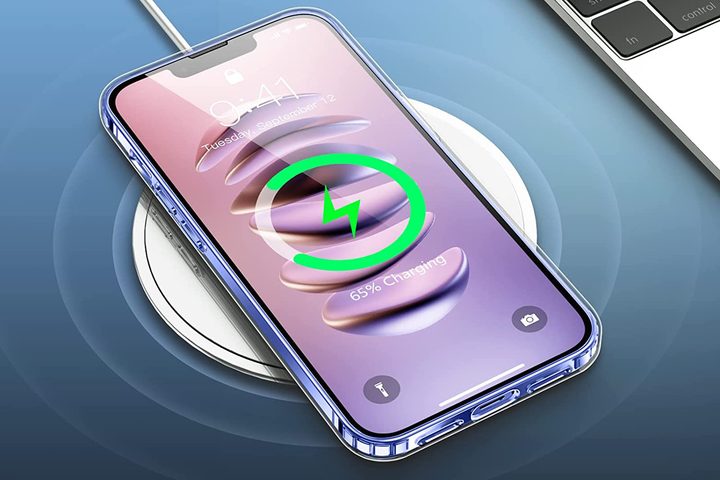
Both phones are MagSafe compatible, support 20-watt fast wired charging, 15W MagSafe wireless charging, and 7.5W Qi wireless charging. There’s no charger in the box, though.
The iPhone 14 Pro takes this round for that A16 Bionic processor and extra promised hour of battery life. However, we haven’t yet spent much time with the iPhone 14 Pro, so this could change once we have.
Winner: iPhone 14 Pro
Cameras
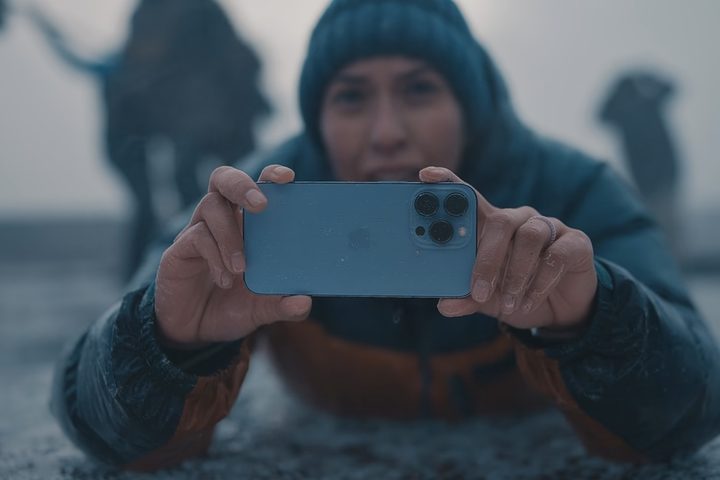
At first glance, both phones pack a pretty similar triple camera array, which is good news, as the iPhone 13 Pro takes great shots. There’s the same 12MP ultrawide, 12MP telephoto, and 12MP TrueDepth selfie cam, though there’s one notable difference — the iPhone 14 Pro bumps the main camera to a 48MP offering with a 65% larger sensor compared to the 12MP main on offer with the iPhone 13 Pro.
With its latest iPhone Pro, Apple also adds Photonic Engine to improve low-light performance, plus second-generation sensor-shift optical image stabilization, and there’s an improved selfie cam this time around, too, that adds autofocus. The iPhone 14 Pro can also film videos in 8K resolution.
There’s not a great deal of difference between these two phones, but we’re giving this round to the iPhone 14 Pro for that enhanced main camera sensor and improved low-light performance because who doesn’t want to take better night shots?
Winner: iPhone 14 Pro
Software and updates
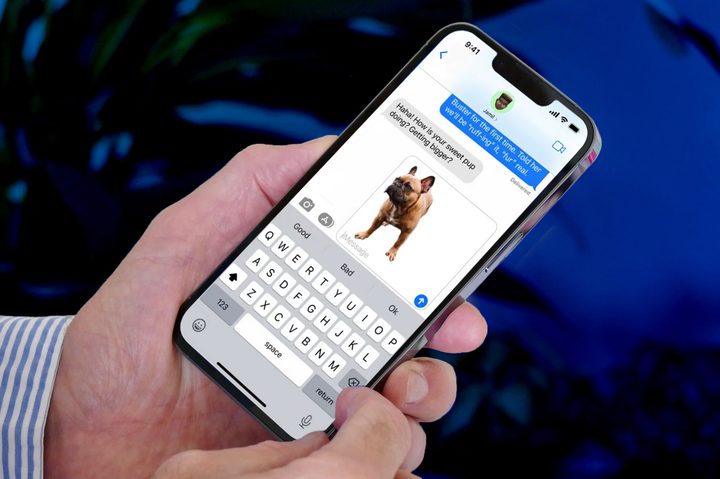
The iPhone 14 Pro runs iOS 16, with a redesigned lock screen plus new intelligence, sharing, and communication features. You can personalize your iPhone’s lock screen with a revamped wallpaper selector and widgets, enjoy sharing features like SharePlay, which lets you listen to music and watch movies together while chatting, or clean up your photos with Apple’s background remover. There’s also Apple’s Automatic Verification System, which puts an end to captchas, and Apple’s newly added support for Passkeys.
Since the iPhone 13 Pro runs iOS 15 out of the box, you may think iOS 16 makes the iPhone 14 Pro a clear winner — but bear in mind that since iOS 16 is Apple’s latest launch, you should expect some initial bugs, though these will be ironed out over time with updates.
Speaking of updates, you can expect to get them for a long time, whichever iPhone Pro you choose, as Apple provides at least six years’ worth of updates for its phones. Therefore, we’re calling this round a definite tie.
Winner: Tie
Special features
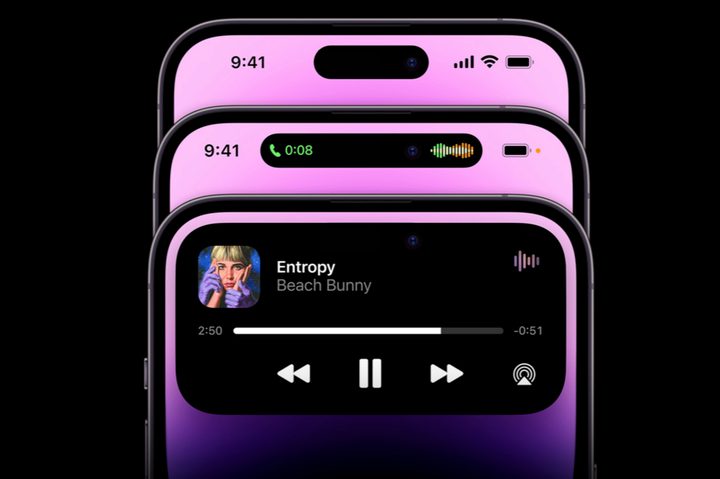
The iPhone 14 Pro is the first iPhone to feature an always-on screen. This time around, Apple has removed the physical SIM card tray in the U.S., focusing on the phone’s eSIM. While that’s an interesting choice, it may be frustrating if you like to swap your SIM card out when you travel — something to bear in mind. There are also additions like the SOS Emergency Satellite feature, which connects you to emergency services via satellite when you’re outside the range of cellular and Wi-Fi coverage. You’ll also find the iPhone 14 Pro has the same crash-detection feature found on the new Apple Watch Series 8, which uses new gyroscope and accelerometer sensors to detect a potential car accident and automatically call emergency services.
With the removal of the notch on the iPhone 14 Pro, the space housing the Face ID camera and sensors, known as Apple’s Dynamic Island, expands to show you music currently playing, call information, contactless payment info, and more — you just need to tap and hold to interact with it.
Of course, across both phones, you still get the usual features such as MagSafe charging and accessories, wireless charging, 5G, Face ID biometrics, and more.
We’re giving this round to the iPhone 14 Pro for the imaginatively (and strangely) titled Dynamic Island plus SOS Emergency Satellite and crash-detection features.
Winner: iPhone 14 Pro
Price and availability
You can pre-order the iPhone 14 Pro from Apple, starting at $999 for the 128GB variant. Pre-orders for the phone open on September 9, with general sales opening on September 16. Once the phone is on general sale, it will also be available to purchase from third-party retailers such as Amazon and Best Buy.
The iPhone 13 Pro is available from Amazon starting at $1,000 for the 128GB variant locked to Cricket Wireless. You can also pick it up on Best Buy for $1,000 for the 128GB variant on Verizon.
Overall winner: iPhone 14 Pro
It’s easy to see why we’ve crowned the iPhone 14 Pro our overall winner: that slightly refined design, new colorways, always-on display, Dynamic Island, and improved battery life and main camera. These aren’t huge differences, but anyone looking to buy a new iPhone should definitely opt for the iPhone 14 Pro.
That’s not to say the iPhone 13 Pro isn’t still an excellent buy, and it’s likely to come down in price now that the iPhone 14 Pro’s landed. You’re still getting a powerful processor, beefy battery, and an excellent camera, plus up to 1TB of storage. If you’re on a budget and want to save a few bucks, it may be the better buy for you.
Already own an iPhone 13 Pro and considering upgrading? The iterative changes Apple has made to the iPhone 14 Pro mean you should probably hold fire until Apple’s next release.