
It’s the end of the year, and that means wireless carriers are dumping out a ton of new phones for the holidays. Today, AT&T announced five new Android devices from Motorola, Samsung, Pantech, and ZTE. The Motorola Atrix 2, Samsung Captivate Glide, Samsung DoubleTime, Pantech Pocket, and AT&T Avail will all hit shelves in the days and weeks ahead, bringing the carrier’s total Android lineup to 19. And it says it has more announcements planned. Is there such a thing as too much choice?
Below are some brief specs and info about each phone. To get an overview of the phones, you can watch this AT&T marketing video.
Motorola Atrix 2
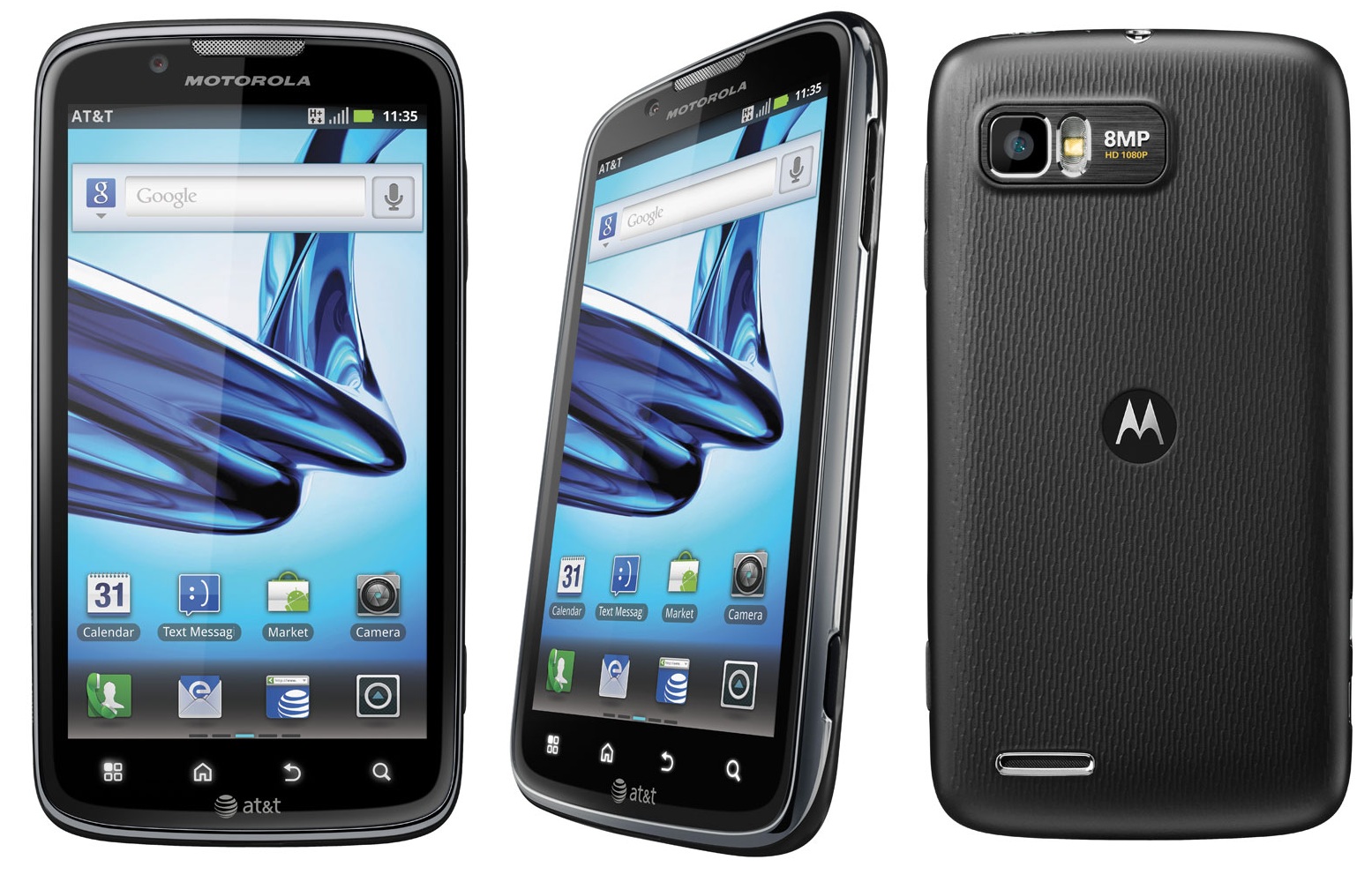
A sequel to one of (if not the) first dual-core phones on the market, the Atrix 2 is essentially the same phone as its predecessor, but with a few tweaks. It now runs Android 2.3 and can take 1080p video, among other things. It’s a good pick for power users.
- 4G HSPA+ 21 Mbps (Category 14)
- 1 GHz dual-core processor
- Internal memory: 8 GB internal, 1 GB RAM, 2 GB microSD™ card (expandable to 32GB)
- Android 2.3 (Gingerbread)
- 4.3-inch qHD screen 960x540TFT, with more than 500,000 pixels for sharper, clearer display
- 8 MP camera and LED flash
- Front-facing camera
- 1080p HD video capture, 30 frames per second playback
- On Device Encryption (ODE) and Enhanced Exchange ActiveSync® (EAS)
Samsung Captivate Glide
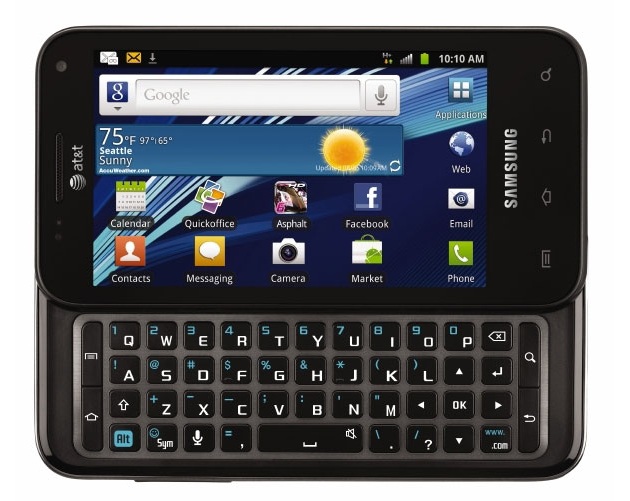
The Glide is for those who want a large 4-inch Super AMOLED screen, but don’t want to give up the keyboard. This phone packs a dual-core processor as well as a few business features like Exchange ActiveSync. It’s also good pick for power users.
- 4G HSPA+ 21 Mbps (Category 14)
- 1GHz Nvidia Tegra 2 AP20H dual core processor
- 1GB RAM/1GB ROM/8GB Internal microSD™ to 32GB (not included)
- Android 2.3 (Gingerbread)
- 4-inch 480×800 WVGA Super AMOLED™
- Dual camera – 8MP Autofocus w/LED + 1.3MP front
- Full HD 1080p video camera + HDMI playback
- Enhanced Exchange ActiveSync® (EAS) to sync email, contacts, calendar and tasks
- Device and SD card encryption
- Virtual private network support
- Mobile Device Management (MDM)
Samsung DoubleTime
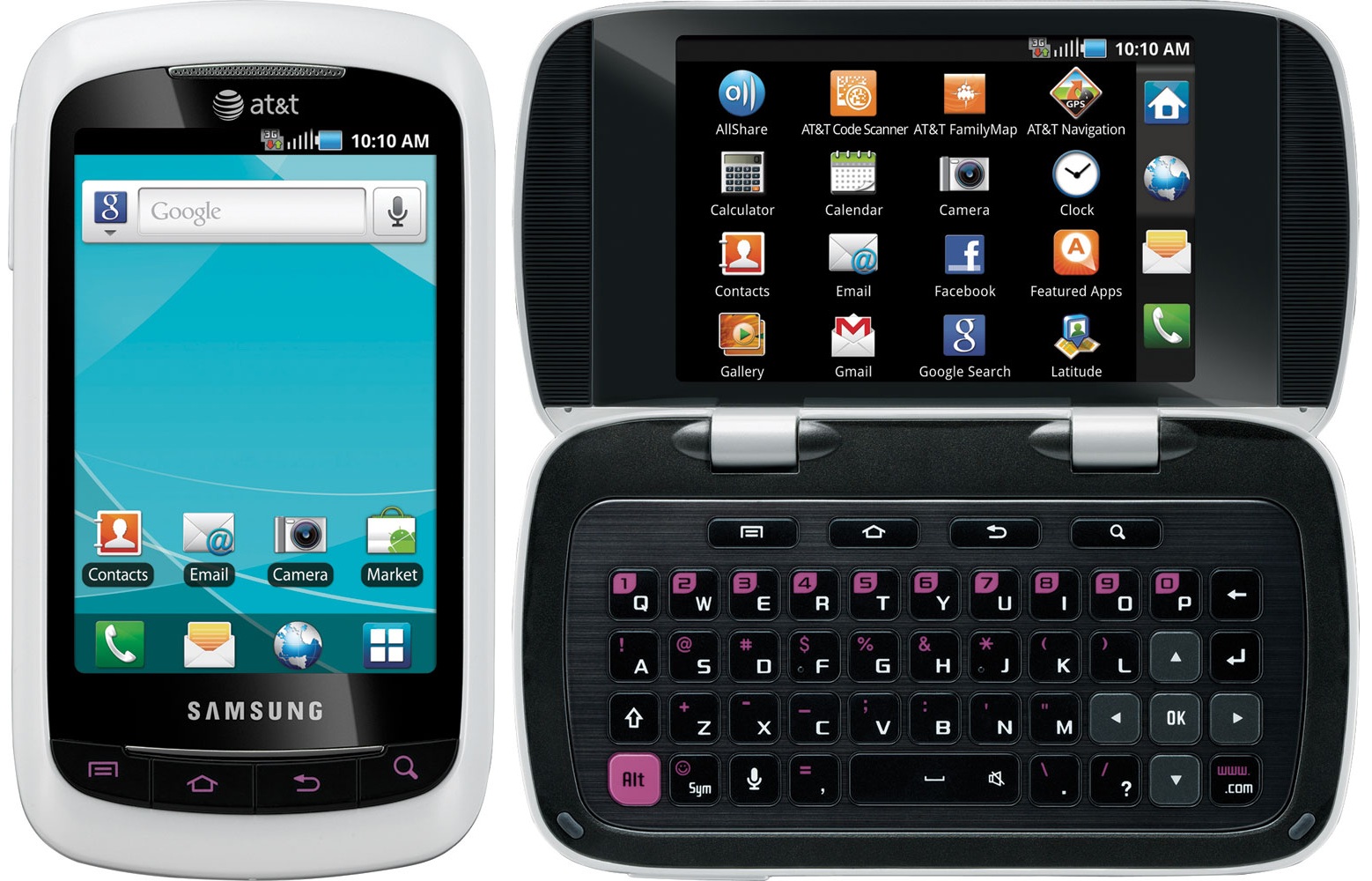
The DoubleTime is a much weaker phone than the last two. It has a flip-out QWERTY keyboard, but is a budget phone through and through. It still runs Android 2.2 (unacceptable these days as 2.3 is so much better and a year old), has a 600MHz processor, and a tiny touch screen with a low resolution. If you value your experience with a smartphone, we don’t recommend this guy, as it’s specs are worse than the two-year-old Droid. It doesn’t even support HSPA+, AT&T’s high speed 3G network.
- Processor Qualcomm 600 MHz
- Onboard Memory Supports 260MB
- Android 2.2 (Froyo)
- microSD™ memory card supports up to 32GB (2GB microSD card included)
- 3.2” full touch screen display with 320 x 480 and 480 x 320 (HVGA) resolution
Pantech Pocket
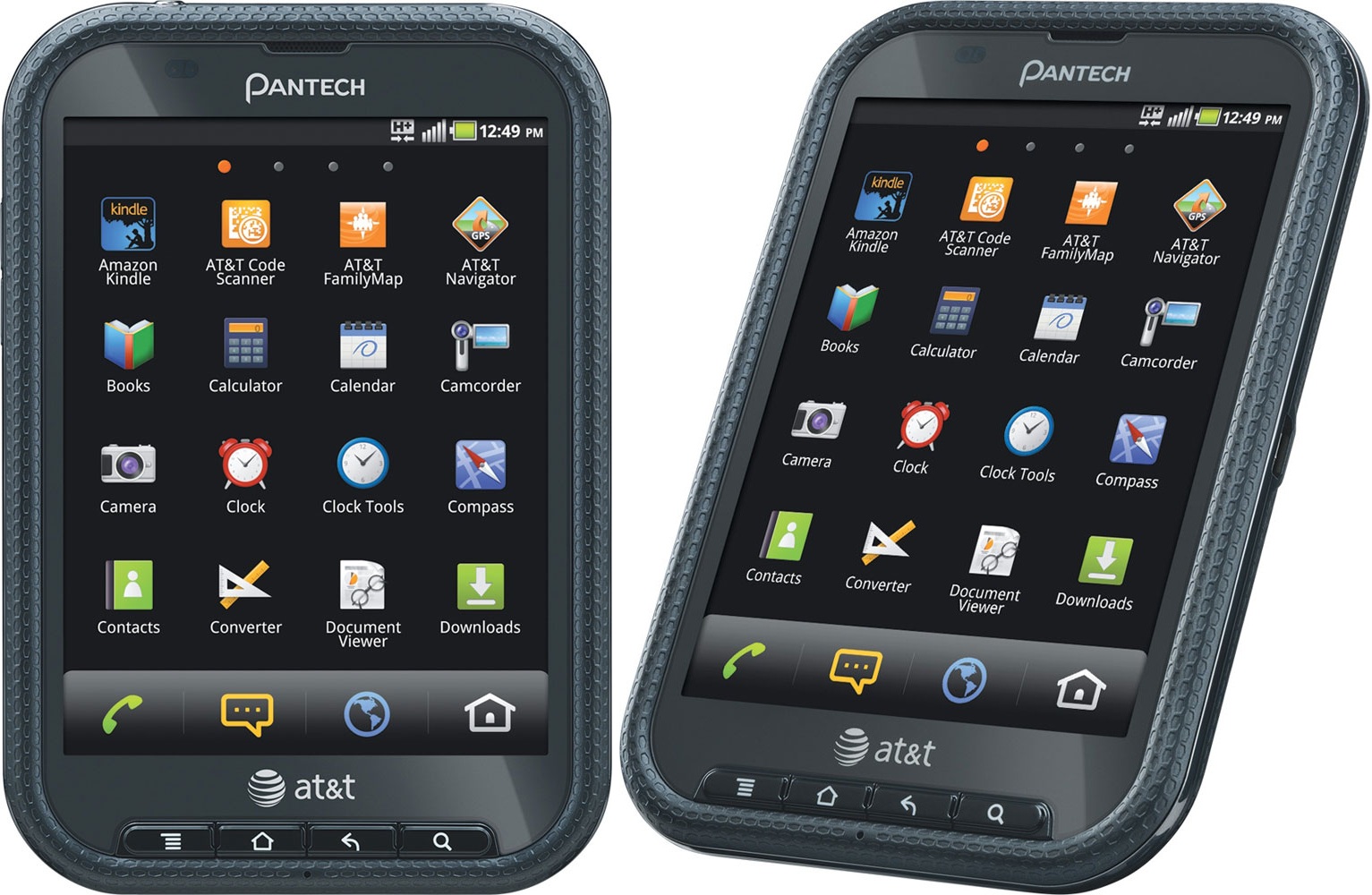
Pantech doesn’t have much of a brand identity here in the states, but it’s phones often aren’t bad. The Pocket has a 4-inch screen that’s wider than most phones and runs Android 2.3, so it’s a much better choice than the DoubleTime. Those who like Apps may run into problems with the screen size though, as few phones run a 600×800 resolution. Some apps will look weird, while others may not run at all. It’s unlikely many app makers will rewrite their apps for Pantech’s sole fat screen phone. This phone also can’t connect to HSPA+, so you’ll be stuck with slow 3G speeds.
- Internal Memory: ~600MB plus 2GB microSD™ included.
- User Memory: 2.5 GB included (Includes a 2 GB microSD Card)
- Support for up to 32GB microSD
- Android 2.3 (Gingerbread)
- Full touch 4″ SVGA display
- Screen size & resolution: 4″ (600×800) 16M TFT
- 5 MP camera with flash and HD video recording
- 114.7mm x 78mm x 11.3mm
- Weight is 4.66 oz
AT&T Avail
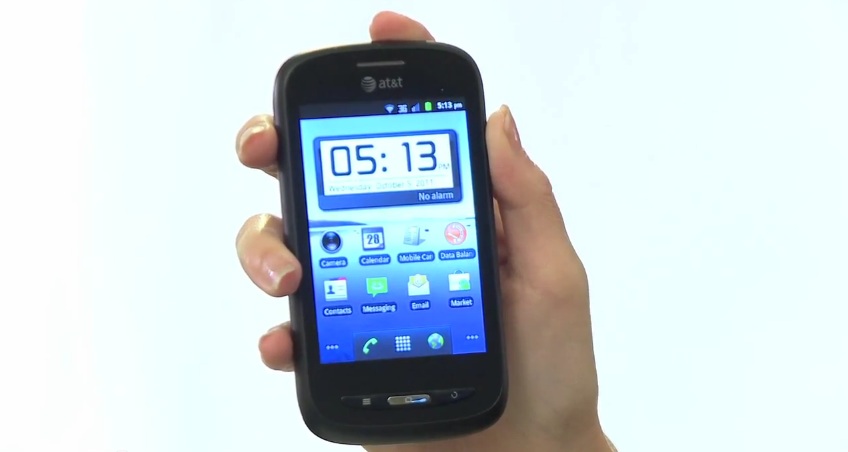
For prepaid customers, this ZTE phone may do the trick. It does run Android 2.3, but that’s about all it has going for it. Other than that, it only has half a gigabyte of internal storage, a 3.5-inch screen, and a 5MP rear camera. We don’t know the processing power of the phone, but it’s probably pretty bad.
- Internal memory: 512 MB ROM, 512 MB RAM, 2 GB microSD™ card
- Android 2.3 (Gingerbread)
- 3.5-inch capacitive touch screen
- 5 MP autofocus camera and video recorder


