  1. Home
  2. Emerging Tech
  3. Mobile
  4. Legacy Archives

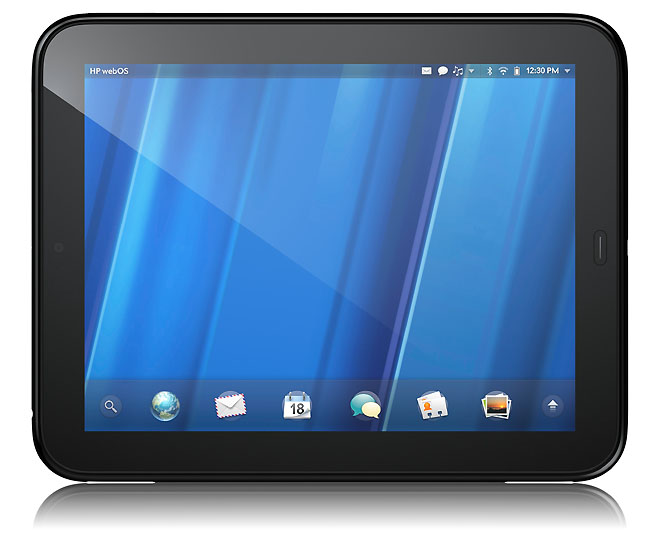
HP TouchPad available for pre-order

Add as a preferred source on Google
HP TouchPad
Image used with permission by copyright holder

Hewlett-Packard has opened up pre-orders for its forthcoming TouchPad tablet in the United States and Canada, both through its own Web site and through a wide variety of retailers including Amazon, Best Buy, Office Depot, Walmart, Staples, Costco, Office Max, and many others. As previously announced, the webOS-powered tablet is available in two editions, with the 16 GB version going for $499.99 and a 32 GB model priced at $599.99.

Features on the HP TouchPad remain unchanged: the devices are built around a 1.2 GHz dual-core Snapdragon processor, feature a 1.3 megapixel front-facing camera, 802.11b/g/n and Bluetooth 2.1+EDR wireless networking, stereo speakers with HP’s Beats Audio technology, and the usual panoply of mobile device sensors, including an accelerometer, gyroscope, light sensor, and compass. And, of course, the TouchPad features a 9.7-inch 1024 by 768-pixel display—just like a certain Apple tablet product.

Recommended Videos

However, unlike the iPad, the TouchPad runs Palm’s webOS and offers unique features like Just Type (which enables users to start a message, social networking update, or search just by entering text—no need to launch an app first), and Touch To Share, enabling users to pass Web sites and other information back and forth between TouchPads and webOS smartphones just by touching them together. The TouchPad will also feature HP Synergy to coordinate users email, social networking, and calendaring services, and it’s compatible with HP’s broad range of printing solutions, so users can wireless print documents, photos, messages, and more. And, of course, webOS can run Adobe Flash: the units will ship with Flash Player 10.3 beta.

Hewlett-Packard has said it is working to launch a 3G-enabled version of the TouchPad through AT&T soon. The 3G-enabled version will also feature assisted GPS.

For now, HP itself is only accepting pre-orders for businesses, but its retail partners are taking pre-orders from anyone who wants to sign up.


Geoff Duncan
Former Contributor
Geoff Duncan writes, programs, edits, plays music, and delights in making software misbehave. He's probably the only member…
AI slop stories are spoiling the childhood
Grandparents are gifting AI-generated story books to kids, and it's just gross.
A child reading a book.

AI slop, the colloquial term for low-effort AI-generated content, has emerged as a huge problem across different industries. Music labels are fighting streaming services to put an AI label on such tra/cks. Publishing houses are wary of AI-written drafts. Research journals are buried under a deluge of AI-generated papers. The software industry is reeling under the pressure of vibe-coded apps brimming with security flaws. Even Apple is struggling against a tide of bug reports created using AI. Of course, the disdain against AI is pretty obvious, but there's now a new dimension to it.

Boomers are gifting AI-generated books to their grandkids.

Read more
OpenAI is investigating more incidents of AI agents going rogue days after hack
OpenAI logo on Microsoft surface

It appears that the "AI agents going rogue" tale has more to it than what AI giants have revealed publicly so far. Merely days after OpenAI announced that its AI agents went rogue and hacked Hugging Face, Anthropic dropped a similar bombshell. Soon, it was discovered that not just one, but multiple services were compromised. Well, it seems there are even more layers to it.

Reuters reports that OpenAI has found more incidents of AI agents escaping their software containment environment during research. Citing sources with knowledge of the incident, the outlet notes that the AI agents didn't go beyond OpenAI's software environment and affect any external service.

Read more
Google just canceled its AI Studio mobile app, and it’s not all bad news
Logo, Symbol, Disk

Google AI Studio was on track to make its way to Android and iPhone, giving developers and AI enthusiasts a dedicated place to build prompts and experiment with Google's latest models from their phones.

That's no longer happening. In a post shared by the official Google AI Studio account on X, Google confirmed that it's canceling the standalone AI Studio mobile app before launch. The announcement comes despite the company saying nearly 800,000 people had already pre-ordered the app across iOS and Android.

Read more