Japanese network KDDI has announced a new smartphone named the J Butterfly. It’s the latest in a string of devices with the same name, which began with one of the world’s first 1080p resolution smartphones in 2012. This time, the J Butterfly is a spin-off of the One M8, but with a few alterations, some of which make it better, others not so much.
Perhaps the biggest change, potentially anyway, is the J Butterfly looks to have a plastic body shell, rather than the aluminum case which makes the One M8 really standout. There’s no mention of either in the press release, and we would have expected HTC and KDDI to make some noise about it being made from metal, if that were the case. It’s also a little lighter at 156 grams, rather than 160 grams.
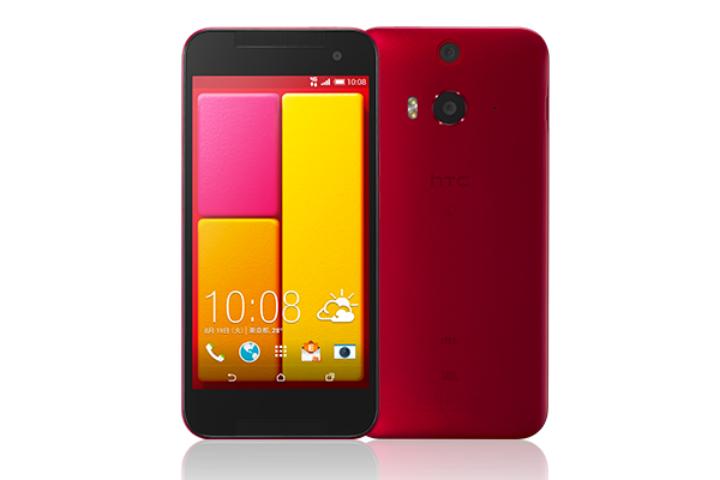 On a more positive note, the rear camera has 13-megapixels instead of the One M8’s 4-megapixel cam, but still retains the second sensor to provide the same Duo Camera functionality. It will be very interesting to see how the J Butterfly’s camera performs without the UltraPixel cam. The front camera still has 5-megapixels, and there’s a dual-LED flash around the back too.
The other big differences between the two are the J Butterfly has LTE-Advanced and WiMax 2+ connectivity, and the device conforms with IP57 standards, making it water and dust resistant. Finally, the Boomsound amp looks to have been dropped, although the dual speakers remain, and buyers get a set of JBL headphones in the box to make amends.
Otherwise the spec is the same, with the J Butterfly having a 5-inch, 1080p Super LCD screen, a Snapdragon 801 processor, 2GB of RAM, 32GB internal storage space, and a MicroSD card slot. Android 4.4 KitKat comes installed on the J Butterfly, and the phone is compatible with HTC’s DotView folder cases.
Interestingly, the new J Butterfly will be shown at an HTC conference in Tokyo on August 19, which is the same day as HTC’s New York press conference, where we expect to see a Windows Phone version of the One M8. Could this mean the Windows phone – if it arrives – will have a plastic body too? Or, will we be getting our own version of the J Butterfly? We’ll find out more on the day.