We reported yesterday that a Korean news site had leaked that Samsung would be announced its 10.1-inch Galaxy Tab and Galaxy S II at Mobile World Congress. True enough, Samsung stepped up to the plate at Mobile World Congress and dropped the official details on both its supersized tablet and second-generation Galaxy phone.
Galaxy Tab 10.1
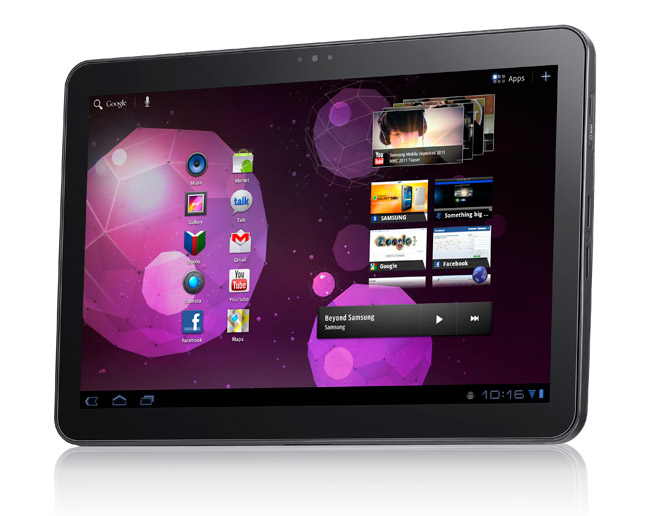 Yes, that is its actual name, and yes it runs on the Honeycomb OS. The tablet lives up to its name with a 10.1-inch display with 1280 x 800 resolution and comes in 16GB and 32GB versions. It’s packing a dual-core Tegra 2 processor. We thought Samsung might outfit it with one of its new Exynos chips, but that’s unclear. It’s also (just barely) lighter than the Xoom, weighing in at 1.2 pounds compared to 1.5 pounds on both the Xoom and iPad. It also features a 2-megapixel front-facing camera for video chat functionality, and an 8-megapixel camera on the front.
Galaxy S II
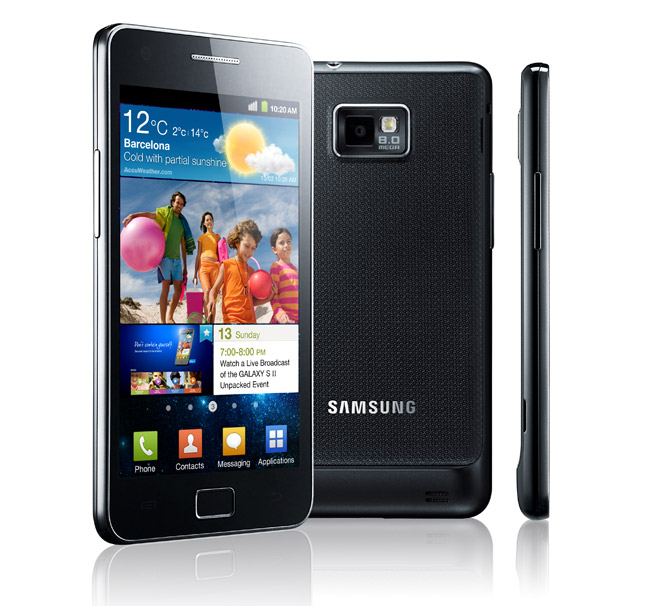 Samsung has announced the world’s thinnest smartphone, complete with Android 2.3 and a Super AMOLED Plus 4.3-inch display. As we reported earlier, it has HSPA+ connectivity and Bluetooth 3.0.
It also comes with an 8-megapixel camera, and 1080p full HD video recording ability. We also know that it has a 1GHz dual-core processor, and will sport the same near-field communications (NFC) technology as the Nexus S, which will open the phone up for functions like using it for purchases.