  1. Home
  2. Phones
  3. Mobile
  4. News

T-Mobile’s controversial price increases have gotten it in trouble

Add as a preferred source on Google
The T-Mobile logo on a smartphone.
NurPhoto / Getty Images

In May, T-Mobile, the nation’s third-largest carrier, revealed its intention to raise rates on some of its older plans by $2 to $5 per line or up to $20 per account per month. Many of those customers aren’t happy and, according to Phone Arena, are bringing a class action lawsuit against the company.

As we previously noted, the price hikes affect users of legacy Simple Choice, ONE, and Magenta plans. Some users say those increases go against the company’s Price Lock and Un-Contract obligations. The move to see T-Mobile in court comes after thousands of customers filed complaints with the U.S. FCC and FTC.

Recommended Videos

The class action lawsuit against T-Mobile represents customers in four states: Georgia, New Jersey, Nevada, and Pennsylvania. These folks have ONE, Simple-Choice, Magenta, Magenta Max, Magenta 55+, Magenta Amplifed, or Magenta Military plans.

According to Android Authority, the company is accused of violating the Consumer Protection Law, New Jersey’s Consumer Fraud Act, and the Pennsylvania Unfair Trade Practices Law.
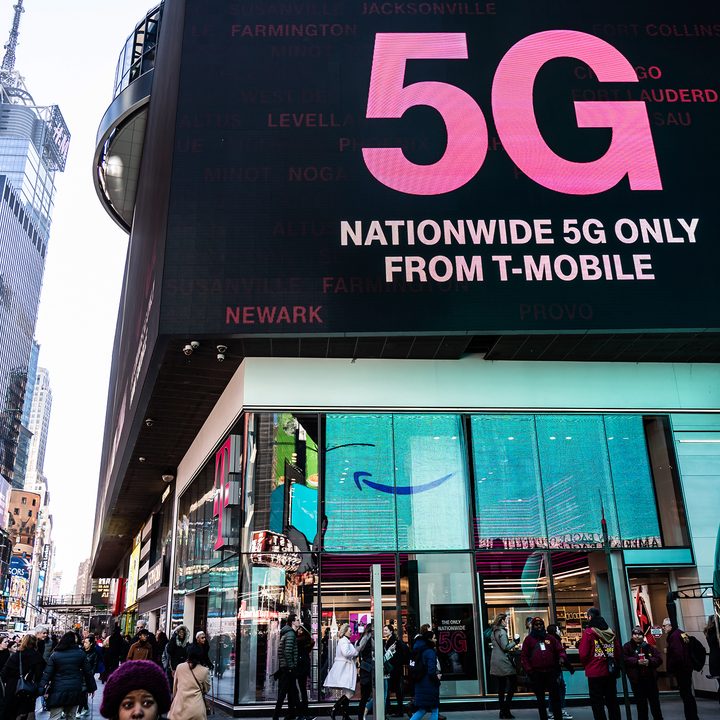
T-Mobile 5G nationwide network advertisement.
Alex Tai / Getty Images

The National Advertising Division (NAD), a self-regulatory, non-profit organization, has criticized T-Mobile over the price hike. As such, it requests that the company no longer advertise its “Price Lock” policy.

When it announced the price hike two months ago, T-Mobile noted that it was “committed to offering the best value in wireless with low prices and a best-in-class 5G network, and we have no intention of ever changing that. As costs continue to rise, for the first time in nearly a decade we’re making small adjustments to the prices of some of our oldest rate plans. The majority of our customers are not included.”

At this early stage, it’s impossible to predict whether T-Mobile customers or the company will have the final say. It’s likely that it will take years before a court or jury reaches a decision on this issue.

T-Mobile’s price hikes came after other companies, including Verizon and AT&T, also raised rates recently.

Bryan M. Wolfe
Former Mobile and A/V Freelancer
Bryan M. Wolfe has over a decade of experience as a technology writer. He writes about mobile.
This new technology could make spotting fake products easier for everyone
Your smartphone could soon tell you if the product you bought is fake
The new system combines three technologies into a single printable label.

Counterfeit goods are becoming increasingly sophisticated, forcing brands to rely on expensive authentication systems that often require specialized scanners or proprietary hardware. Researchers now believe a smartphone could do much of that work instead. A team has developed a new printing system that creates responsive anti-counterfeit labels that are more durable, easier to mass-produce, and can be verified using nothing more than a phone. The research was published in the International Journal of Materials and Product Technology.

At first glance, the technology looks like another incremental improvement in product security. In reality, it addresses one of the biggest limitations of anti-counterfeit systems today: accessibility. If authentication only works with expensive equipment, it becomes difficult to deploy at scale. By enabling smartphone-based verification, the technology could make counterfeit detection practical for manufacturers, retailers, and even consumers.

Read more
Apple’s iPhone Air could serve as the blueprint for its 20th anniversary iPhone
Fresh leaks suggest Apple's 20th anniversary iPhone will combine an Air-inspired frame.
iPhone Air Featured

The iPhone Air is often dismissed as an experiment that didn’t achieve the same success as Apple’s other products.

However, a fresh leak suggests Apple may view the slim iPhone differently, treating its design language as something that could eventually make its way into the mainstream lineup.

Read more
Sunbird relaunches its iMessage app for Android, three years after a privacy scandal shut it down
Sunbird returns to Android with fixed encryption and an AI assistant on the way.
sunbird-imessage-app-relaunch-2026

Sunbird's blue bubble dream for Android users is making another attempt, and this time the company insists it's actually earned your trust. Sunbird Messaging, the app that lets Android users join iMessage conversations without the green bubble stigma, is now available on the Google Play Store after sitting dormant since 2023.

Back then, security researchers discovered the app was sending Apple ID credentials over unencrypted connections and quietly logging user messages through a debugging tool, despite Sunbird's public claims of full end-to-end encryption. The fallout forced both Sunbird and its Nothing Phone partnership to shut down almost overnight.

Read more