  1. Home
  2. Mobile
  3. Web
  4. Legacy Archives

Uber and Home Depot team up to deliver Christmas trees on demand

Add as a preferred source on Google

Uber is certainly no stranger to out-of-the-box promotional stunts. During late October, Uber delivered kittens to people in New York, San Francisco, or Seattle for a 15 minute cuddle on National Cat Day. On Valentine’s Day, Uber offered delivery of red roses to users in 15 different cities. During July 2012, Uber experimented with on-demand ice cream trucks to beat the heat in Chicago, Seattle, Boston, San Francisco and Toronto.

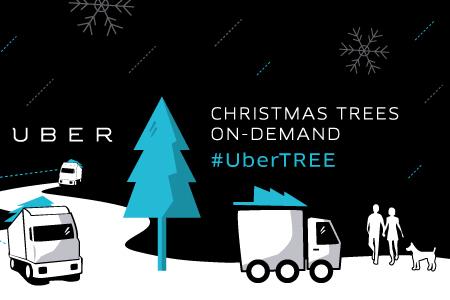
Starting tomorrow, Uber is partnering with retail giant Home Depot to deliver Christmas trees to people living in ten major cities. These cities include Atlanta, Boston, Chicago, Dallas, Los Angeles, New York City, Philadelphia, San Diego, San Francisco and Washington DC.
Recommended Videos

uber-treesAfter downloading the Uber app to an iPhone, Android phone or BlackBerry, Uber users will be able to place an order for a Christmas tree between 11am and 8pm on Thursday, December 4.

While availability is limited, Uber users will receive a 7 to 8 foot netted tree, a tree stand and a special monogrammed Uber scarf for making the purchase. The majority of cities will offer a Fraser Fir tree, but Uber users in San Diego and San Francisco will receive a Noble Fir tree.

Similar to other Uber transactions, users can pay with a credit card, Paypal or Google Wallet using their mobile device. Of course, getting a tree delivered by Uber won’t be cheap. While a typical 7 to 8 foot tree costs between $40 to $80 depending on the area of the country, the Uber tree will cost $135. Of course, that also means that you won’t have to strap a giant tree to the top of your vehicle and drive it home yourself.

While Home Depot does deliver Christmas trees to customers on their own, delivery typically takes a couple days to occur. When asked about the promotion by the Chicago Tribune, Home Depot spokewoman Katherine Ellison said “Both companies saw it as a natural fit  … a chance to do something fun and unexpected for customers.” 

Mike Flacy
By day, I'm the content and social media manager for High-Def Digest, Steve's Digicams and The CheckOut on Ben's Bargains…
Topics
Snapchat Planets Meaning: Order, Rankings, and How Friend Solar System Works
Snapchat Planets turns your best friends list into a solar system, and yes, your orbit says a lot
Snapchat Planets being shown on the Snapchat app on iPhone.

Snapchat+ includes several exclusive features, but few have generated as much curiosity as Snapchat Planets. Part of the app's Friend Solar System, it transforms your Best Friends list into a planetary ranking, assigning each of your top eight friends a planet based on how often you interact.

From Mercury, which represents your closest friend, to Neptune, which represents your eighth closest, the system offers a quick visual snapshot of your interactions. But what do the different planets actually mean, and how does Snapchat decide who gets which one?

Read more
How to use WhatsApp Web
We'll show you how to use WhatsApp on your desktop or laptop
WhatsApp Web

As one of the most popular messaging services, you’ve already heard of WhatsApp. From its humble beginnings in 2009—two years before Apple introduced iMessage—to its acquisition by Facebook (now Meta) in 2014, WhatsApp has become the dominant messaging platform around the globe.

In recent years, it's grown even more potent with new features like video messages, self-destructing voice messages, the ability to edit sent messages, and more. We even finally got an WhatsApp iPad app in May 2025.

Read more
What is WhatsApp? How to use the app, tips, tricks, and more
From setting it up to mastering hidden features, here is your complete guide to WhatsApp.
WhatsApp app store listing open on iPhone

There's no shortage of messaging apps out there. The past decade has given us more options than we know what to do with, largely because smartphones demanded something better than plain old SMS.

Both the App Store and the Play Store are packed with apps that promise to revolutionize the way we communicate. Most of them didn't make it. The truth is, a messaging app is only as good as the number of people using it, and most apps never cross that threshold.

Read more