  1. Home
  2. Phones
  3. Mobile
  4. News

Apple hikes Apple Music price for students in U.S., Canada, and U.K.

Add as a preferred source on Google

Apple has increased the monthly fee for U.S.-based students using Apple Music.

Spotted by AppleInsider, the price hike means students in the U.S. will now be charged $5.99 a month for the streaming service, marking a $1 increase.

Recommended Videos

The change hasn’t been officially announced by Apple but appears to have been added to its website on Wednesday or Thursday of this week.

The student fee for Apple Music has also been increased by a similar amount in Canada and the U.K. and follows last month’s price hike for the streaming service in other markets, including Australia, New Zealand, South Africa, India, Kenya, Israel, Singapore, and Saudi Arabia.

At that time, Apple sent out an email to notify student subscribers of the increase in the monthly fee. It’s not clear if it has yet sent a similar email to student subscribers of Apple Music in the U.S., Canada, or the U.K.

Aside from the rather limited Voice plan for Apple Music at $4.99 a month, students still get the best rate for Apple’s music streaming service. Alternative tiers include Individual, which costs $9.99 a month, and Family, which offers unlimited access for up to six people for $14.99 a month.

Students looking for a free music streaming service could try Spotify’s ad-supported tier, though it comes with limitations. Listening on mobile, for example, involves random track selections from among your liked songs rather than allowing you to make your own choices. However, Spotify’s desktop version does let you freely choose what you listen to. For something similar to Apple Music in terms of features, Spotify charges students $4.99 a month, a dollar less than Apple Music’s equivalent offering and half the price of Spotify’s Premium service.

Trevor Mogg
Contributing Editor
Not so many moons ago, Trevor moved from one tea-loving island nation that drives on the left (Britain) to another (Japan)…
Could the Galaxy Z Flip 8 be Samsung’s last compact foldable? A new leak says yes
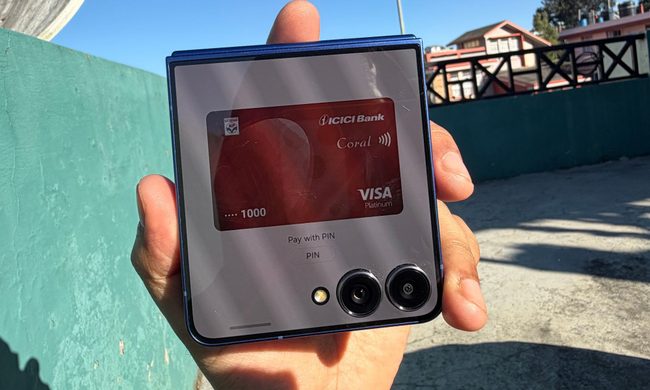
Credit card on cover screen of Samsung Galaxy Z Flip 7.

Samsung will unveil the Galaxy Z Fold 8, Galaxy Z Fold 8 Ultra, and Galaxy Z Flip 8 at its July 22 event in London. But ahead of the launch, tipster Ice Universe has made a surprising claim: the Galaxy Z Flip 8 could be Samsung’s last compact foldable. That rumor feels hard to believe at first. While Samsung’s Fold models get plenty of attention for their tablet-like screens, the Flip series has always felt like the more mainstream option. It’s smaller, easier to carry, and usually costs less than the Fold. More importantly, it’s a phone that usually catches people’s attention in everyday life.

The compact design, the cover display, and even the “cute factor” have helped Samsung attract buyers who would never consider a bulky foldable. In my experience, I’ve seen far more Flip phones in the wild than Fold models. That doesn’t mean the Fold isn’t popular, but the Flip seems to appeal to a broader audience.

Read more
Halide 3.1 update brings straighter photos, a warmer look, and smarter focus taps
A few weeks after launch, Halide is already leveling up with new tools and a warmer look.
Halide 3.1

Smartphone photography has become an over-processed mess, prioritizing algorithms over authenticity. I recently saw an Instagram post comparing iPhone 6 Photos to iPhone 17 Pro photos, and honestly, in some shots I preferred the results from the decade-old camera. It’s one of the reasons why apps like Halide have become so popular. 

People prefer authenticity now, and Halide’s Process Zero mode, which strips away all the extra processing Apple piles onto your photos, is a breath of fresh air. A few weeks back, Halide released its Mark III update that introduced features like Looks, a set of film-inspired color profiles, along with a full Photo Lab for editing RAW files, complete with a histogram, a Film tab for grain and vignetting, and support for importing RAW files from external cameras.

Read more
Your child isn’t the only one addicted to a phone, says new study
Researchers say parents' screen habits could have long-lasting effects on their children's emotional development.
Father and son bonding over smartphones while relaxing on a comfortable couch at home

For years, conversations around screen time have focused almost entirely on children. How much YouTube is too much? Should teenagers be on social media? When should a child get their first smartphone? A new study suggests we may have been asking the wrong question.

According to research published last month in the peer-reviewed journal Frontiers in Psychology (via Bloomberg), it's not just children's screen habits that matter. Parents who are constantly distracted by their phones may unintentionally weaken their emotional bond with their children, potentially leaving lasting developmental and psychological effects. The study surveyed 600 U.S. adolescents aged 12 to 17, many of whom reported feeling ignored or sidelined when their parents were absorbed in their devices.

Read more