Like clockwork, Apple’s Tim Cook took the stage in its nearly two-hour-long annual hardware event on Tuesday to unveil a series of new products, including new iPhones, an Apple Watch, and the AppleTV+ streaming service. But one announcement was almost unheard of in Apple’s history: the price of the .
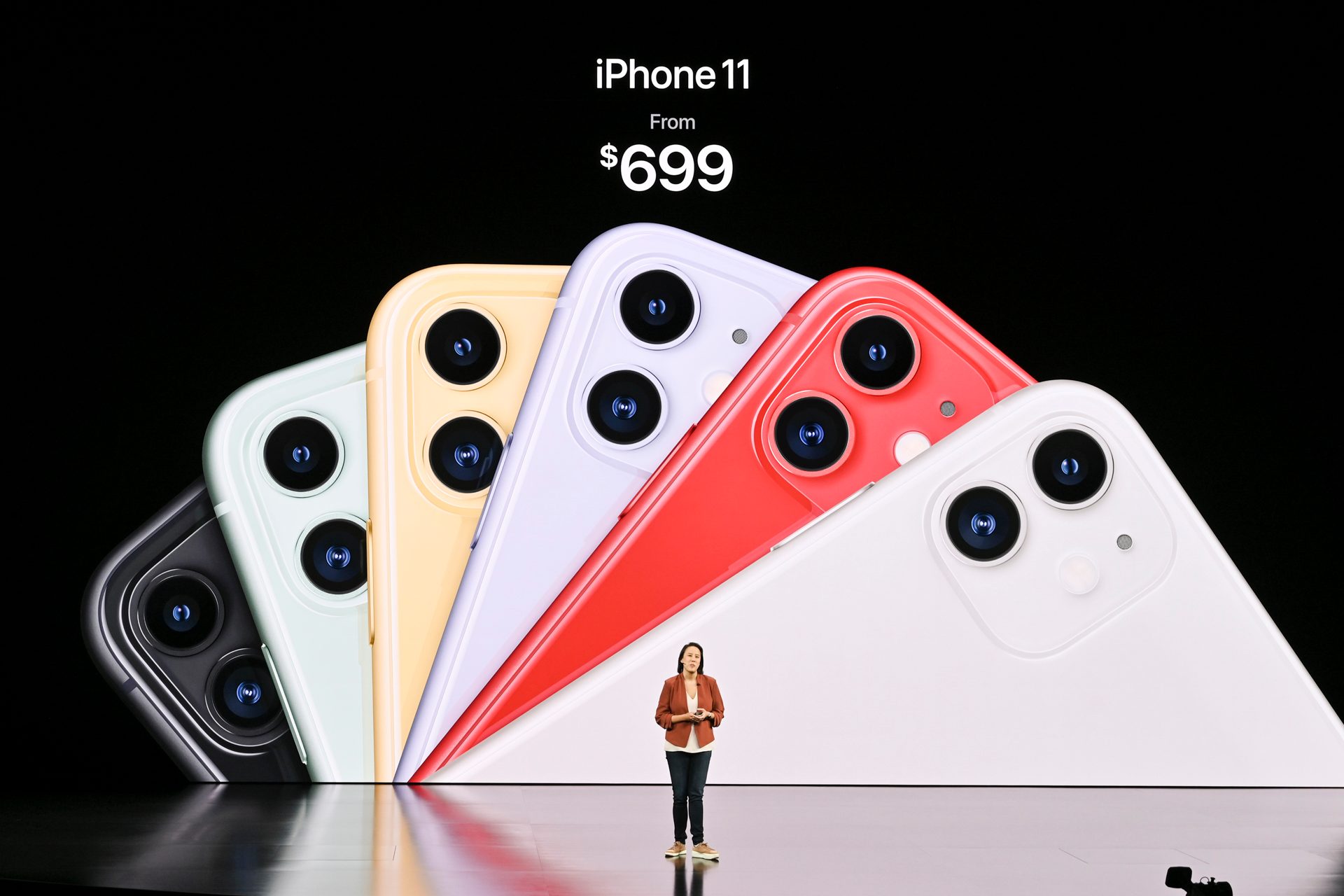
Apple’s latest iPhone starts at $699 — $50 less than its predecessor from last year, the iPhone XR. The upgraded base iPhone is also at least $50 cheaper than the starting variants of nearly every other Android flagship. The Samsung Galaxy S10e launched at $749, Google’s Pixel 3 is $799, and the Huawei P30 starts at €799 (~$900) in Europe. It also matches the OnePlus 7 Pro’s cost — and that phone is supposed to be an affordable alternative to the big guns.
The move represents a paradigm shift for Apple, whose most lucrative business is today more vulnerable than ever. iPhone numbers across the globe have been plummeting since late 2018. For the first time ever in years, iPhone sales made up for less than half of Apple’s revenue in the third quarter of 2019.
Two years after the iPhone X launch, Apple is realizing that its thousand-dollar iPhones will no longer sell the way it wants, especially in cut-throat smartphone markets like India where affordable alternatives abound. Analysts say we can expect to see even more lower-price iPhones in the future.
In a recent company performance report filed by Apple with the US Securities and Exchange Commission (SEC) said: “iPhone net sales decreased during the second quarter and first six months of 2019 compared to the same periods in 2018 due primarily to lower iPhone unit sales in all the reportable geographic segments.”
In an effort to assuage the impact of its declining market share, Apple actively began to scramble for solutions in 2018 and it found one in the iPhone XR. With a series of substantial discounts, the iPhone XR emerged as the best-selling smartphone globally in the first half of 2019. In India, for instance, the iPhone XR’s starting price was quickly slashed by 25% — an unprecedented cut for an iPhone that was only a couple of months old.
Expect to see Apple launch even more affordable phones. The iPhone 11’s $699 price tag and iPhone XR’s permanently discounted $599 starting cost are a hint of Apple’s future and suggest it’s doubling down to regain its lost market share. On top of that, a recent report claimed that Apple might launch a new, mid-range iPhone next year.
However, it’s not clear if this would bring back Apple’s dominance of the smartphone market.
“At launch, iPhone 11 is priced lesser than the iPhone XR,” Navkendar Singh, IDC Research Director of Devices and Ecosystem for India and South Asia, told Digital Trends. “However, it remains very high for a market like India. Apple saw some success and volumes in Q2 in India, due to price correction of XR. There will certainly be consumers looking to upgrade from iPhone 6 and 7 and with the iPhone XR being continued, we should see further price reduction and volumes coming from the iPhone XR rather than the iPhone 11.”,
Counterpoint Research’s Jeff Fieldhack agrees: “It would take devices in the sub $250 price level to start moving the needle.”
“For this, Apple will have to rely on refurbished/used iPhones to grow its base in emerging markets,” he told Digital Trends.
Fieldhack also argues that since none of the new iPhones support 5G, Apple will have a hard time selling refurbished 4G phones a year or two down the road. “Since Qualcomm has announced over 150 5G design wins, there will be plenty of options for 5G devices from Chinese vendors that will hit prices of two-year-old LTE iPhones.”, he added.
Despite the price drop, Apple has managed to add a bunch of significant upgrades to the iPhone 11 including a secondary wide-angle camera, more color options, a faster A13 Bionic chip, a better 12-megapixel selfie camera, and a longer-lasting battery.