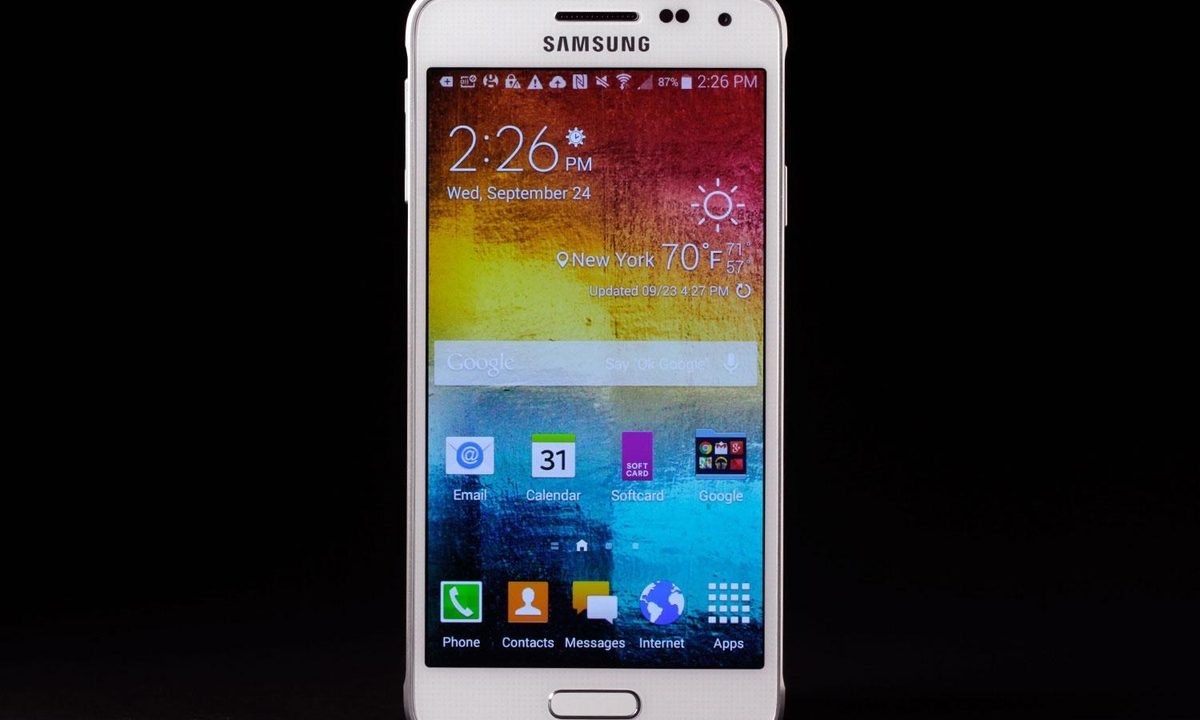

“The Galaxy Alpha is Samsung’s concession to those who want real metal incorporated into the design. The result is a fantastic high-end Android phone with a mid-range screen. And it looks almost exactly like an iPhone.”
- High-end feel with metal frame
- Super powerful processor
- Fingerprint sensor and heart rate monitor
- Good camera
- Small battery only lasts a day
- Oversaturated Super AMOLED screen
- Not waterproof
“Why you can trust Digital Trends – We have a 20-year history of testing, reviewing, and rating products, services and apps to help you make a sound buying decision. Find out more about how we test and score products.“
Samsung proudly makes plastic phones. It loves making plastic phones, and over the years, it’s made plastic backs with a ton of different textures, ranging from faux leather to Band-Aid. The Galaxy S5 even has a dimpled golf ball look. But that changes now. The Galaxy Alpha is Samsung’s concession to those who want a more high-end smartphone with real metal incorporated into the design. The result is a high-end Android device with a mid-range screen and a few special features. And it looks almost exactly like an iPhone.
The Galaxy Alpha is a meeting of two worlds — it has a metal frame and a plastic back. It matches the iPhone 6 almost spec for spec, but how does it compare in terms of real world performance? Also, does it meet our expectations for what makes a great Samsung smartphone?
Hands on video
Is that a bulgy iPhone I see?
Wait — is that an iPhone? No, it’s the Samsung Galaxy Alpha. Samsung finally caved and created a smartphone that has a real metal frame. The back is still made of plastic, but the edges of the device are definitely metal and they even have the same polished edges and brushed center as those on the iPhone 5S.
If it weren’t for the Samsung branding, you’d never guess that the Galaxy Alpha is not an iPhone.
If it weren’t for the narrow, oval-shaped home button and the Samsung branding on the front, you’d never guess that the Galaxy Alpha is not an iPhone. Naturally, since it mimics Apple’s design elements, the Galaxy Alpha is beautiful. It also feels more premium in your hand than most any other Samsung device.
It sounds remarkably shallow, but metal edges do make a difference. You can feel the metal’s heft, its slightly cold and sharp texture — it thinks different. The back is still plastic, so Samsung certainly didn’t go whole hog with the Alpha. However, the part that your hand actually touches is the metal frame, and boy does it feel nice. No more floppy, easy-to-scratch plastic pretending to be metal.
In addition to actually feeling premium, the Galaxy Alpha is also remarkably thin and light. At 5.21 × 2.58 × 0.26 inches, it’s smaller and thinner than the iPhone 6, which happens to have the same screen size. It also weighs less, at 4.06 oz, as opposed to the iPhone 6’s 4.55 oz, but that’s what you get when you add a plastic back instead of metal.
Since the Alpha has a larger screen than the iPhone 5S, the 5S is slightly smaller in every dimension except width. The Alpha is almost the same weight as the 3.95-oz iPhone 5S, too. In other words, the Alpha is super thin and very light, especially when you consider its metal frame.


Of course, to achieve that level of thinness, Samsung had to allow a bulge or two to appear on the back of the device. The camera sticks out, just like it does on the iPhone 6, but the area near the Micro USB charging port also pops up slightly, as does the headphone jack at the top. The bulges feel odd, but quickly become unnoticeable. Overall, the Alpha is just the right size and sits comfortably in any size hands.
Samsung’s bubbly user interface
The Galaxy Alpha is running Android 4.4 KitKat with Samsung’s TouchWiz UI on top. There are a few extra Samsung apps, including S Health, Galaxy Apps, and S Voice onboard. Of the three, we found S Health the most useful. The app monitors your calories, steps, and heart rate, via the heart rate sensor that’s incorporated into the flash on the back of the phone next to the camera.
We prefer a more pure version of Android, but Samsung fans will feel right at home on the Alpha.
TouchWiz also adds a widget called My Magazine, which is a lot like HTC’s BlinkFeed. But in reality, it’s Flipboard in disguise. Every time you tap on a story, you actually read it on Flipboard. If you haven’t set up a Flipboard account yet, you’ll be prompted to create one. The app takes up an entire home page with the latest news. You can choose from several categories and add social network accounts like Twitter, Tumblr, Google+, LinkedIn, and more to My Magazine.
TouchWiz also changes the look of the notifications center and the settings app. When you take a look at Settings, you feel as though you dropped into a world of circles. Samsung’s UI is either loved or hated — there is no inbetween. We prefer a more pure version of Android, but Samsung fans will feel right at home on the Alpha.
A powerfully fast phone
When it comes to specs, the Galaxy Alpha certainly isn’t the ultra high-end smartphone many expected from Samsung. Even so, the only really mid-range thing about the Alpha is its screen. The 4.7-inch Super AMOLED screen only has a 1,280 × 720 pixel resolution with a density of 312ppi (pixels per inch), which is lower than the 326ppi screen in the iPhone 6 and 5S.
The Alpha isn’t Full HD or even as pixel dense as the iPhone 6, but it’s almost impossible to tell. Still, Samsung’s screen suffers from the same problems its other Super AMOLEDs have before. The colors look overly saturated, the whites and blacks aren’t as crisp, and the screen looks slightly dimmer than the iPhone 6 screen overall. But it’s a decent screen that won’t upset most people.

Even though the screen isn’t top-notch, Samsung did pack in a lot of power. The Galaxy Alpha has a zippy 2.5GHz Qualcomm Snapdragon 801 quad-core processor onboard along with 2GB RAM and 32GB of storage. We found the Alpha fast and responsive when browsing the Web, downloading apps, and streaming videos on YouTube. There were no glitches or delays while performing everyday tasks.
The Galaxy Alpha also performed well in benchmark tests. The Alpha blew away the iPhone 6’s score of 17,309 on the 3D Mark Ice Storm Unlimited benchmark test, with its 20,448 score. That score also bests the 2014 Moto X’s 19,395 and the Samsung Galaxy S5’s 18,500. The Galaxy Alpha also scored high on the Quadrant benchmark, coming in at 23,334.
Benchmarks aren’t everything, but we found the Alpha quicker than most phones we’ve tried lately.


The Galaxy Alpha also sports a heart rate monitor on the back, next to the camera and a fingerprint sensor on the Home button. The only thing the Alpha is really missing is a waterproof rating. We were disappointed that this feature wasn’t included, as it’s the most useful of the bunch. We’d rather have a waterproof phone than one with a heart rate monitor.
A great camera in the rain
The Galaxy Alpha comes with a decent 12-megapixel camera on the back and a 2-megapixel front-facing camera. The back camera took very good shots when we tested it on a rainy day in New York. The camera adjusted well to the poor lighting conditions and managed to capture colors accurately.


We compared it to the iPhone 6 camera and were surprised to find that the Alpha takes comparable photos, at least when it cloudy and rainy outside. The iPhone 6 tended to shoot dark photos or bleach out the details when we focused on a different part of the image. However, the iPhone took far better photos indoors and when it came to close ups, it bested the Alpha’s camera easily. The Alpha’s camera bleached out colors indoors, resulting in washed out pictures. Reds also looked slightly magenta and not as richly saturated as in comparable images taken with the iPhone 6. The Alpha has a good camera, but it is somewhat inconsistent.
Calling & Data speed
As expected, the Galaxy Alpha handled phone calls like a pro. We even conducted an interview using the device. Our interviewee said the call came through crystal clear in spite of the poor cell reception in her office. Data was also fast on AT&T’s network. We had no problems using apps, but streaming video resulted in some buffering at first. After a few moments, it leveled out and played smoothly.
Battery
Samsung didn’t exactly pack the largest battery into the Alpha. The Galaxy Alpha has a 1,860mAh battery under the hood, which is ironically, just a tad larger than the iPhone 6’s 1,810mAh battery, which has been called measly and too small. Just like the iPhone 6, the Alpha will last you through a full day of use, but it probably won’t make it beyond that unless you’re a very light user.
Conclusion
The Galaxy Alpha is an unlikely smartphone to see from Samsung. It puts a top-of-the-line processor and gorgeous, though clearly derivative design, together with a middle-of-the-road screen and average battery. The Alpha also lacks the pizazz we’ve come to expect from Samsung. It’s not waterproof and special features are limited to a fingerprint sensor and heart rate monitor. For most smartphone manufacturers that would be no big deal, but for Samsung, it is.
Some Samsung fans pinned their hopes on the Alpha, believing that it would be the super high-end, premium, metal smartphone they’ve all been waiting for, but that’s not what it is. The Galaxy Alpha is a smartphone that’s caught between two worlds: It’s neither high-end, nor mid-range; it’s not all metal, nor all plastic; it is, what it is.
If you’ve been pining after a metal Samsung smartphone and you don’t mind charging your phone every night, the Galaxy Alpha could be the one for you. It offers superior processing power, a fingerprint sensor, and one of the nicest designs we’ve seen from Samsung yet.
Highs
- High-end feel with metal frame
- Super powerful processor
- Fingerprint sensor and heart rate monitor
- Good camera
Lows
- Small battery only lasts a day
- Oversaturated Super AMOLED screen
- Not waterproof