1. Home
  2. Phones
  3. Android
  4. Mobile
  5. Photo Galleries
  6. News

Huawei’s MediaPad X2 is a dream phone … if you’re in the NBA

Add as a preferred source on Google
MWC 2026
Read our complete coverage of Mobile World Congress

When does a phablet become a tablet? Huawei is pushing the limits of the category with the MediaPad X2. It’s packing a 7-inch IPS display with a resolution of 1,200 x 1,920 pixels. Huawei has done what it can to cut the MediaPad down to size. It is super svelte at just 7.28mm, and the screen goes edge to edge with fairly minimal bezels top and bottom, which scores it a screen to body ratio of 80 percent.

It’s just about as slim and compact as you could expect a device with a screen this size to be. But let’s be honest here, most people will feel silly holding it up to their face to make a call, and Huawei is stretching credulity to breaking point when it claims that the borderless design makes it “easy for single-handed operation.” — maybe if you’re in the NBA.

As befits a monstrous phablet like this, there’s some serious power lurking within the premium aluminum body. It has a 64-bit octa-core processor, the 2GHz Kirin 930, backed by 2GB or 3GB of RAM, depending on whether you opt for the standard silver, or the premium gold finish.

We went hands-on with the more expensive gold version, though the pricing is yet to be revealed, and it was silky smooth and lightning fast. It’s running Android 5.0 Lollipop with Huawei’s EMUI on top, which I can only describe as slick, iOS-inspired, and colorful.

The larger than life design extends to the power because this bad boy is packing an unrivaled 5,000mAh battery, which brings the MediaPad name into sharp relief. It can stream video all day long. In fact, you can expect 12 hours of Netflix before it needs a charge. Throw in the latest dual LTE and dual Wi-Fi antennas and the DTS surround sound, and you have yourself a great device for watching movies.

The MediaPad X2 also has a 13-megapixel main camera and a 5-megapixel selfie cam, but sadly you’ll look almost as daft taking photos or shooting video on a device this big as you will making a call.

There’s no denying this is a stylish device and that screen is impressively sharp up close and personal (we’re talking 323ppi just like the Nexus 7). The metal finish feels expensive, if a little cold, and it’s a more compact design than Google’s tablet, but at the end of the day it does still feel like you’re holding a tablet. You will not be able to use this one-handed without contortions or accidental drops. Even die-hard phablet phans will have a tough time adjusting.

The ever-increasing display size trend shows no signs of abating, but surely you have to draw the line somewhere? Officially the phablet/tablet border is supposed to be 7-inches, and having handled the MediaPad X2 we think it’s a line that shouldn’t be crossed.

Simon Hill
Former Associate Mobile Editor
Simon Hill is an experienced technology journalist and editor who loves all things tech. He is currently the Associate Mobile…
Samsung’s risky move with the Galaxy Z Fold 8 is paying off threefold
Samsung’s passport-shaped Fold is leaving last year’s bestseller in the dust
Samsung Galaxy Z Fold 8 Inside Screen View

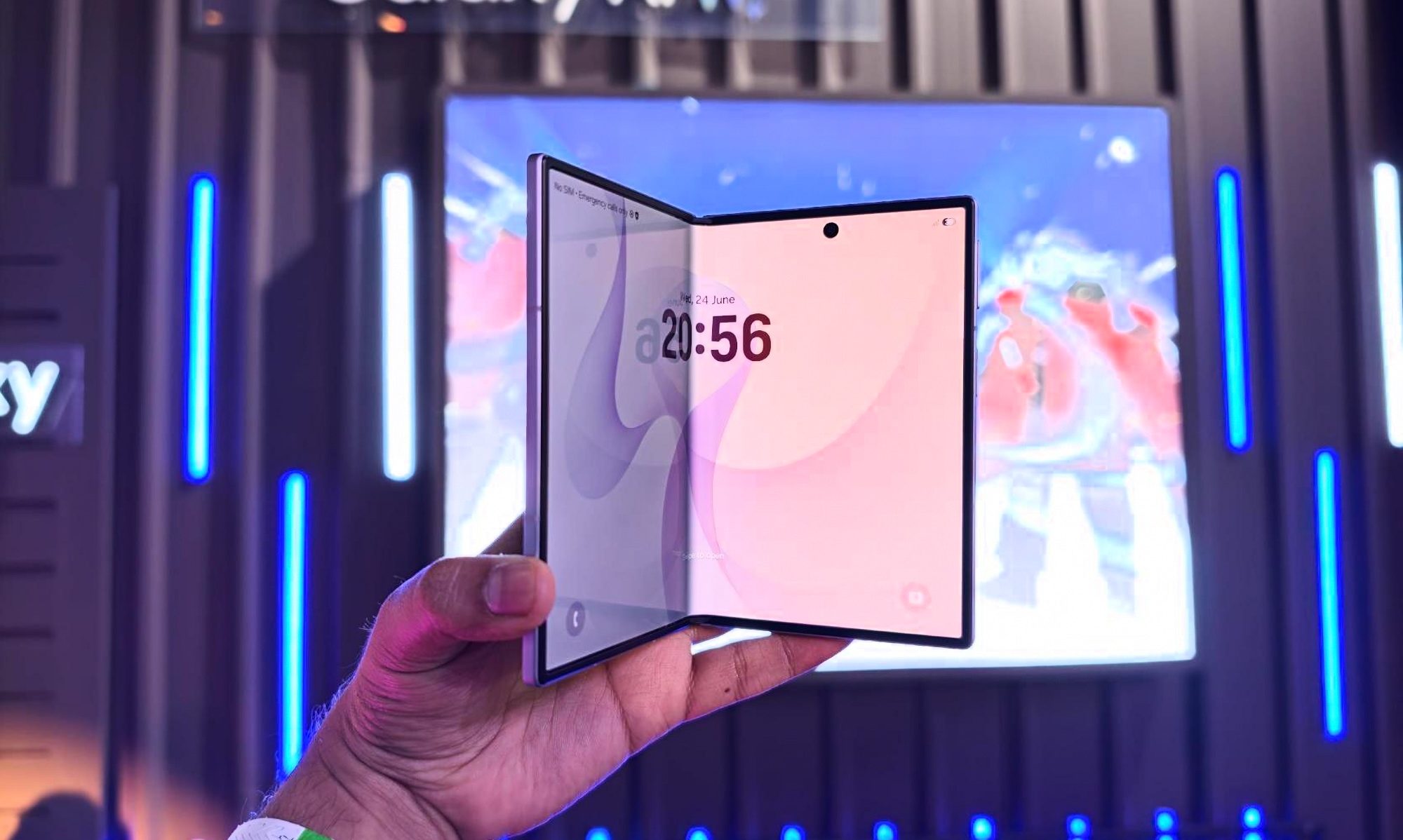
For a brand that's stuck to safer updates for most of its annual updates, Samsung’s odd new passport-shaped foldable was a surprisingly risky move--and it seems like that gamble is paying off. Early demand suggests the company may have underestimated just how many buyers wanted something different.

According to a BusinessPost report, the Galaxy Z Fold 8 is selling at roughly three times the pace of the Galaxy Z Fold 7 during the comparable early sales period. Demand has reportedly caught Samsung off guard, leaving the company working to increase production and get more units into stores.

Read more
China’s latest LPDDR6 memory breakthrough could be good news for phone buyers
China’s CXMT moves closer to producing cutting-edge smartphone RAM
Electronics, Hardware, Computer Hardware

China’s largest homegrown DRAM manufacturer is getting close to producing the memory that could power the next generation of flagship phones, and the timing could hardly be better for buyers.

According to China Business News, ChangXin Memory Technologies, better known as CXMT, has nearly completed R&D verification for LPDDR6. This is one of the final major technical stages before small-scale trial production, and the company could begin mass production during the second half of this year. Its current design reportedly reaches speeds of up to 12.8Gbps.

Read more
Apple may give the iPhone 18e one extra gigabyte and call it an AI upgrade
Apple's cheapest iPhone is getting a RAM upgrade.... in this economy.
Apple iPhone 17e on gradient background

Apple’s cheapest new iPhone could receive one of the strangest specification upgrades in the company’s recent history. But rather than going from 8GB to a more typical 12GB of RAM, the iPhone 18e is reportedly landing with an odd 9GB of memory.

GF Securities analyst Jeff Pu expects the iPhone 18e to include 9GB of RAM, according to MacRumors. His prediction backs up an earlier report from TF International Securities analyst Ming-Chi Kuo, giving the unusual memory configuration considerably more credibility. Apple is expected to release the phone around March 2027 alongside the standard iPhone 18. The current iPhone 17e has 8GB of RAM, which is also the minimum required to run Apple Intelligence.

Read more