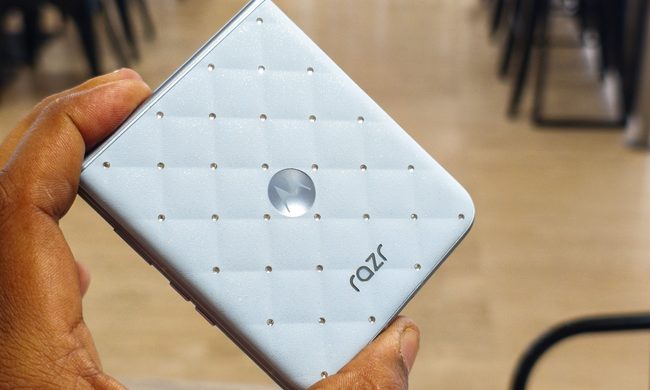
Samsung is widely regarded as having kick-started the folding phone industry, and the original Galaxy Z Flip proved that folding phones have two widely accepted form factors: book-style and clamshell. Shortly after, Motorola made its long-awaited comeback with a revamp of the iconic Razr V3.
Fast forward a few years, and the flip phone industry looks very different. The Galaxy Z Flip 6 follows the same mold as its predecessors, but unlike the rest of Samsung’s smartphone lineup, it is not the market leader. That falls to Motorola, which just unveiled three new flip phones to challenge the upcoming Galaxy Z Flip 7.
The Razr 2025 and Razr Plus 2025 follow the mold of previous generations, but this year, there’s also the Razr Ultra 2025, the first time we’ve seen a three-tier setup in flip phones, and the first true flagship flip phone.
How does the Razr Ultra 2025 compare to the Galaxy Z Flip 6, and which one should you buy? Let’s take a look at the similarities and the differences.
Motorola Razr Ultra 2025 vs Galaxy Z Flip 6: specs
| Moto Razr Ultra 2025 | Galaxy Z Flip 6 | |
| Dimensions | Open: 171.5 x 74 x 7.2 mm Closed: 88.1 x 74 x 15.7 mm | Open: 165.1 vs 71.9 x 6.9 mm Closed: 85.1 x 71.9 x 14.9 mm |
| Weight | 199 grams | 187 grams |
| Display | Main: 7-inch, foldable pOLED 1224 x 2912 pixels, 464 ppi HDR10+, Dolby Vision, 165Hz 4,500 nits peak brightness Cover Display: 4-inch LTPO AMOLED 1272 x 1080 pixels, 417 ppi HDR10+, Dolby Vision, 165Hz 2,400 nits peak brightness Gorilla Glass Ceramic | Main: 6.7-inch, Dynamic AMOLED 2X 1080 x 2640 pixels, 426 ppi HDR10+, 120Hz 2,600 nits peak brightness Cover Display: 3.4-inch AMOLED 720 x 748 pixels, 426 ppi, 60Hz 1,600 nits peak brightness Gorilla Glass Victus |
| Performance | Qualcomm Snapdragon 8 Elite | Qualcomm Snapdragon 8 Gen 3 |
| Storage & Memory | 16GB RAM 512GB / 1TB UFS 4.0 storage | 12GB RAM 256GB / 512GB UFS 4.0 storage |
| Software | Android 15 | Android 14 |
| Connectivity & Sensors | Wi-FI 7, dual-band / tri-band Bluetooth 5.4, aptX Lossless NFC, USB Type-C 2.0, OTG GPS, GLONASS, BDS, GALILEO, QZSS Side-mounted fingerprint reader | Wi-Fi 6e, tri-band Bluetooth 5.3 NFC, USB Type-C 3.2, OTG GPS, GLONASS, BDS, GALILEO, QZSS Side-mounted fingerprint reader |
| Battery | 4,700 mAh 68W wired charging 30W wireless charging 5W reverse charging | 4,000 mAh Lithium-Ion 25W wired charging 15W wireless charging 4.5W reverse wireless charging |
| Colors | Pantone (Rio Red, Scarab, Mountain Trail, Cabaret) | Yellow, Blue, Black, White Samsung exclusive: Silver, Mint, Blue |
| Price | $1,299.99 | $1,099.99 |
Motorola Razr Ultra 2025 vs Galaxy Z Flip 6: design and display
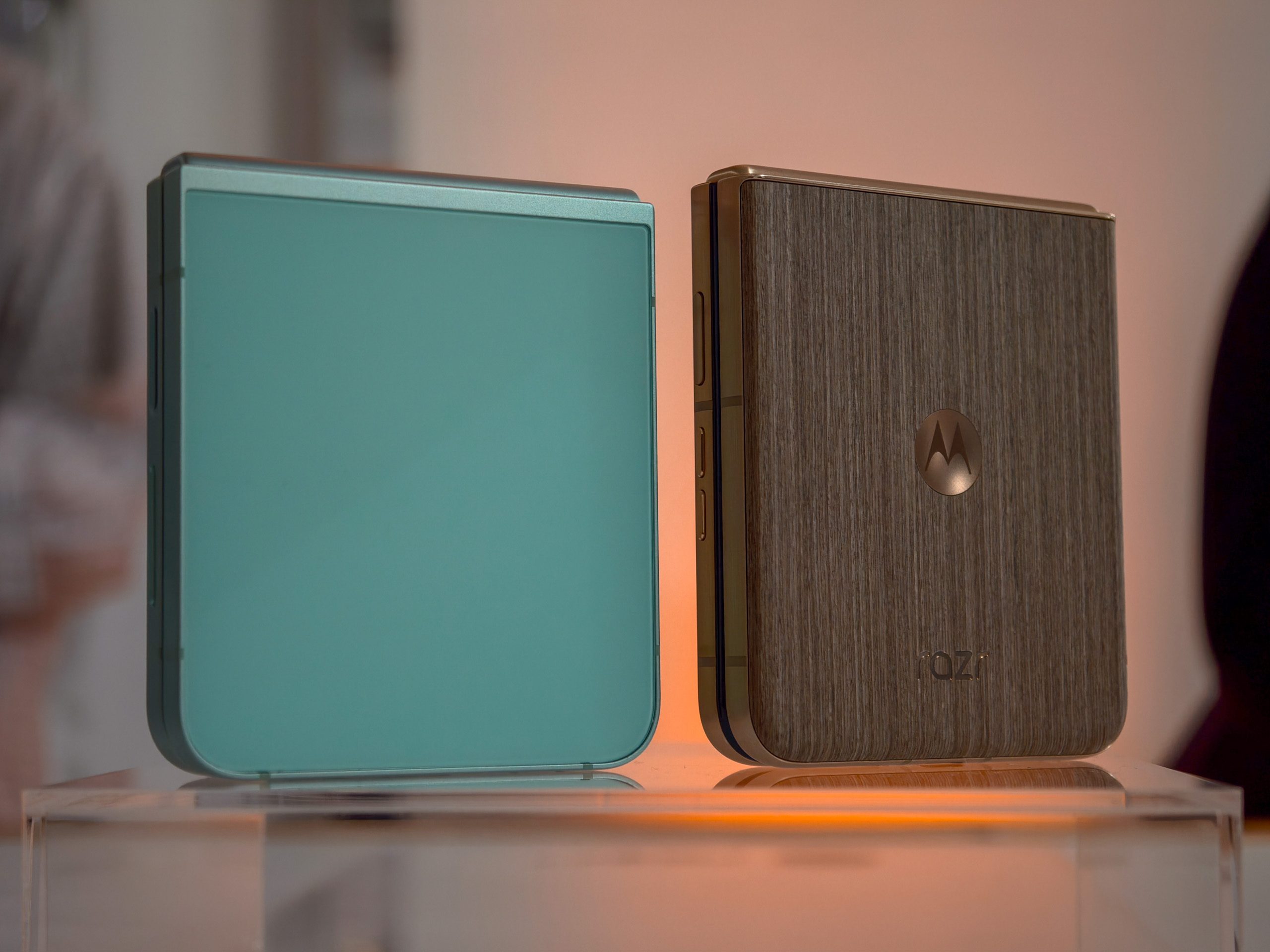
The Razr Ultra 2025 doesn’t look that different from the Razr Plus 2024, which was widely regarded as the best flip phone last year. It also shares a similar design with the Galaxy Z Flip 6, but several design language differences directly impact how you use your flip phone.
The Razr Ultra 2025 features a 4-inch AMOLED Cover Display that takes up the entire front of the phone. The Cover Display supports Dolby Vision and HDR10+, features a dynamic refresh rate of up to 165Hz, and offers a peak brightness of up to 3,000 nits. The resolution is 1272 x 1080 pixels, which equates to a pixel density of 417 pixels per inch (ppi).
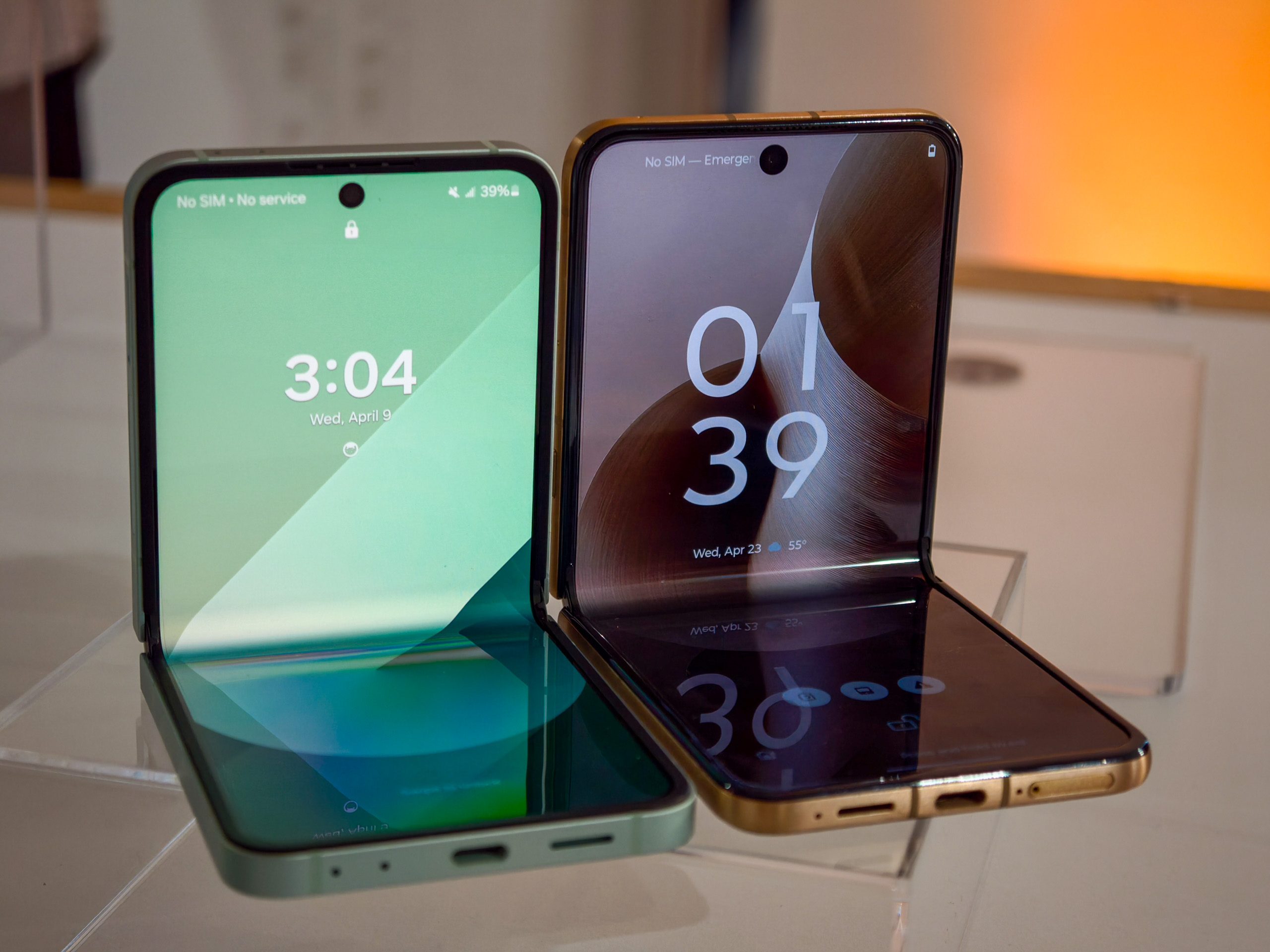
Meanwhile, the Galaxy Z Flip 6 features a smaller 3.4-inch Super AMOLED display arranged in a folder-like design. It offers a resolution of 720 x 748 pixels at a density of 306 ppi, a refresh rate up to 60Hz, and a peak brightness of just 1,600 nits.
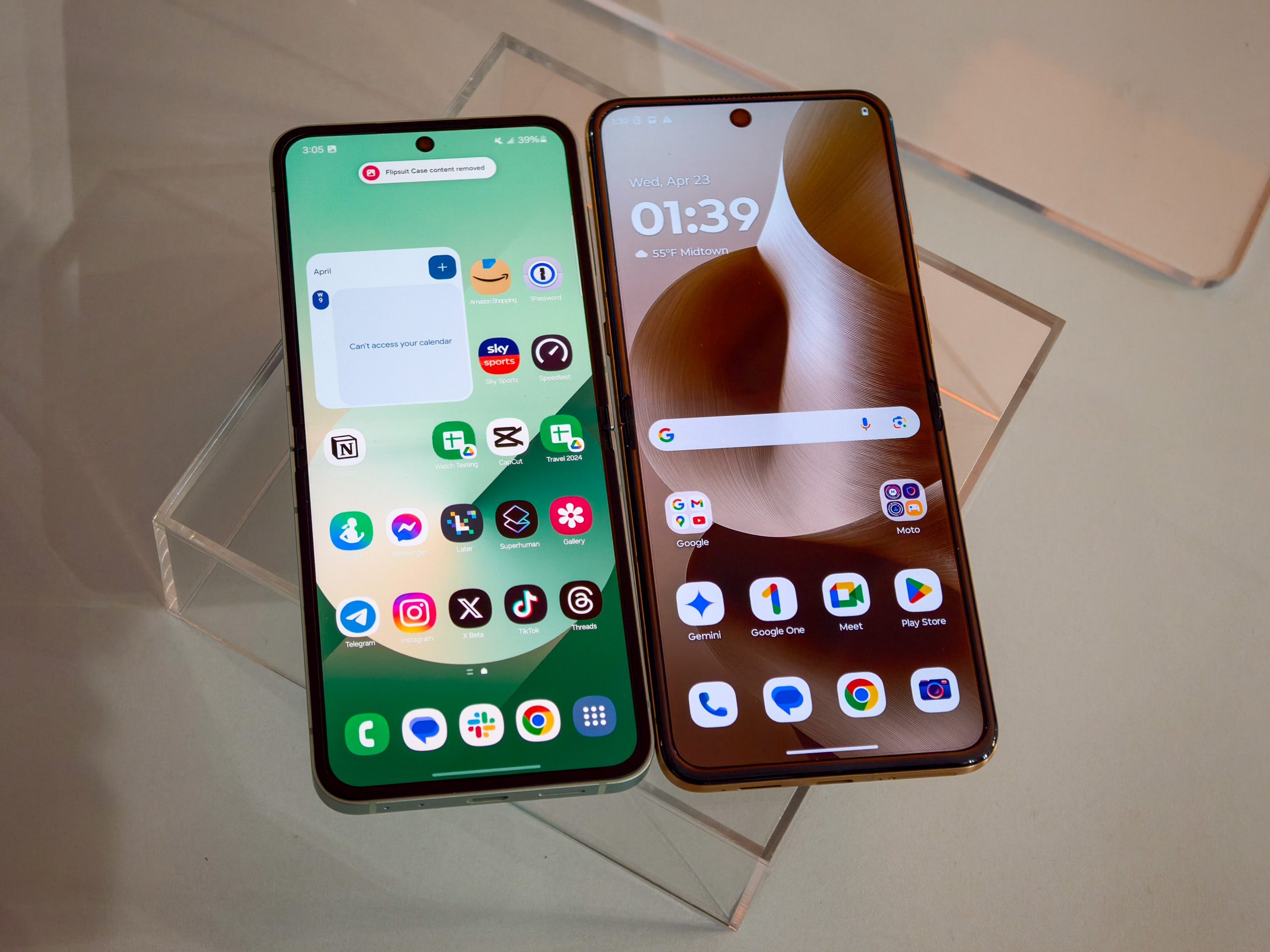
Unfold the Razr Ultra 2025 and you’ll get treated to a 7-inch foldable LTPO AMOLED display with a refresh rate of up to 165Hz. The main display on the Razr Ultra 2025 supports Dolby Vision and HDR10+, has a resolution of 1,224 x 2,912 pixels at a density of 464 ppi, and a peak brightness of up to 4,500 nits.
In comparison, the Galaxy Z Flip 6 features a smaller 6.7-inch foldable Dynamic AMOLED 2X display with a refresh rate of up to 120Hz, supporting HDR 10+. It offers a resolution of 1080 x 2640 pixels at a density of 426 ppi and a peak brightness of up to 2,600 nits.
Both phones feature a titanium hinge for added durability and support IP48 ingress protection, which shields against dust particles larger than 1mm. Additionally, they can be immersed in water up to 1.5 meters for up to 30 minutes. Gorilla Glass Victus protects the Galaxy Z Flip 6 displays, while the Razr Ultra 2025 is the first clamshell phone to use the more durable Gorilla Glass Ceramic.
Winner: Razr Ultra 2025. The Galaxy Z Flip 6 struggled against the Razr Plus 2024, and the Razr Ultra 2025 is even better, with a slightly larger main display and the redesigned titanium hinge. This is no contest; both Razr Ultra 2025 displays are better in every way. The Razr Ultra 2025 is thicker, taller, and wider, but this comes with additional benefits.
Motorola Razr Ultra 2025 vs Galaxy Z Flip 6: performance and battery
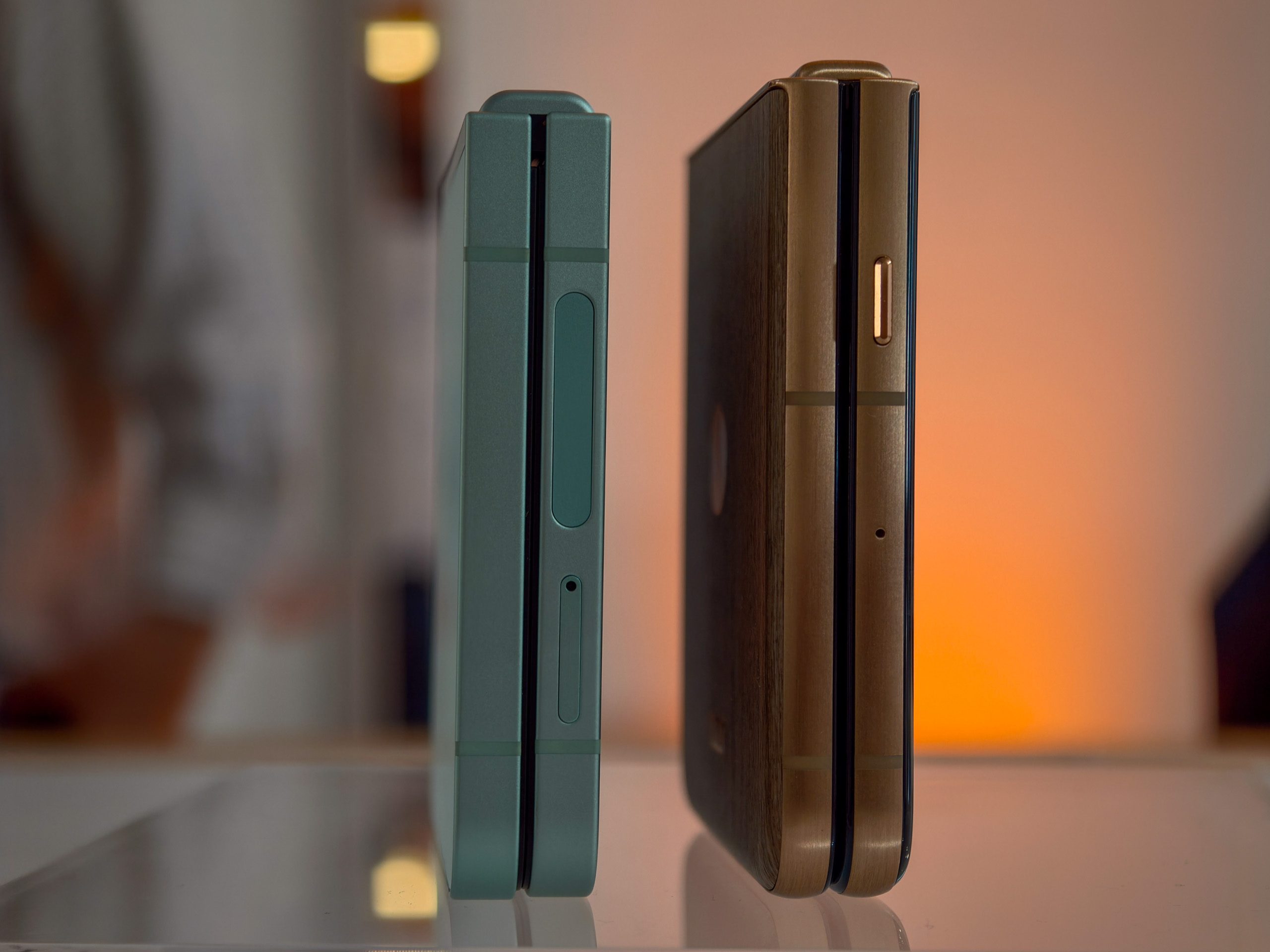
Two of the biggest challenges with flip phones are performance and battery life, particularly as there is a desire to make them as thin as possible. Motorola has sought to fix both of these by sacrificing the thickness of the Razr Ultra 2025 in favor of upgraded internals.
The Galaxy Z Flip 6 is powered by the previous generation Snapdragon 8 Gen 3 processor. In contrast, the Razr Ultra 2025 replaces the mid-range processor from the Razr Plus 2024 with the latest Snapdragon 8 Elite chipset. It’s the first clamshell phone to run this chipset, which also powers the best Android phones.
The Galaxy Z Flip 6 pairs the processor with 12GB of RAM and either 256GB or 512GB of storage, while the Razr Ultra features 16GB of RAM and either 512GB or 1TB of storage. The Snapdragon 8 Elite has yielded significant performance improvements over the competition when we’ve tested other phones, and the Razr Ultra 2025 is likely to be considerably more powerful, especially for on-device AI tasks.
There are also considerable differences in the battery. The Galaxy Z Flip 6 has a 4,000 mAh battery and supports 25W wired charging, 15W wireless charging, and 4.5W reverse wireless charging. Meanwhile, the Razr Ultra 2025 features a significantly larger 4,700 mAh battery, as well as 68W charging, 30W wireless charging, and 5W reverse charging.
Winner: Razr Ultra 2025. There’s no contest here: the Razr Ultra 2025 is better than the Galaxy Z Flip 6 in every facet of performance and battery.
Motorola Razr Ultra 2025 vs Galaxy Z Flip 6: cameras
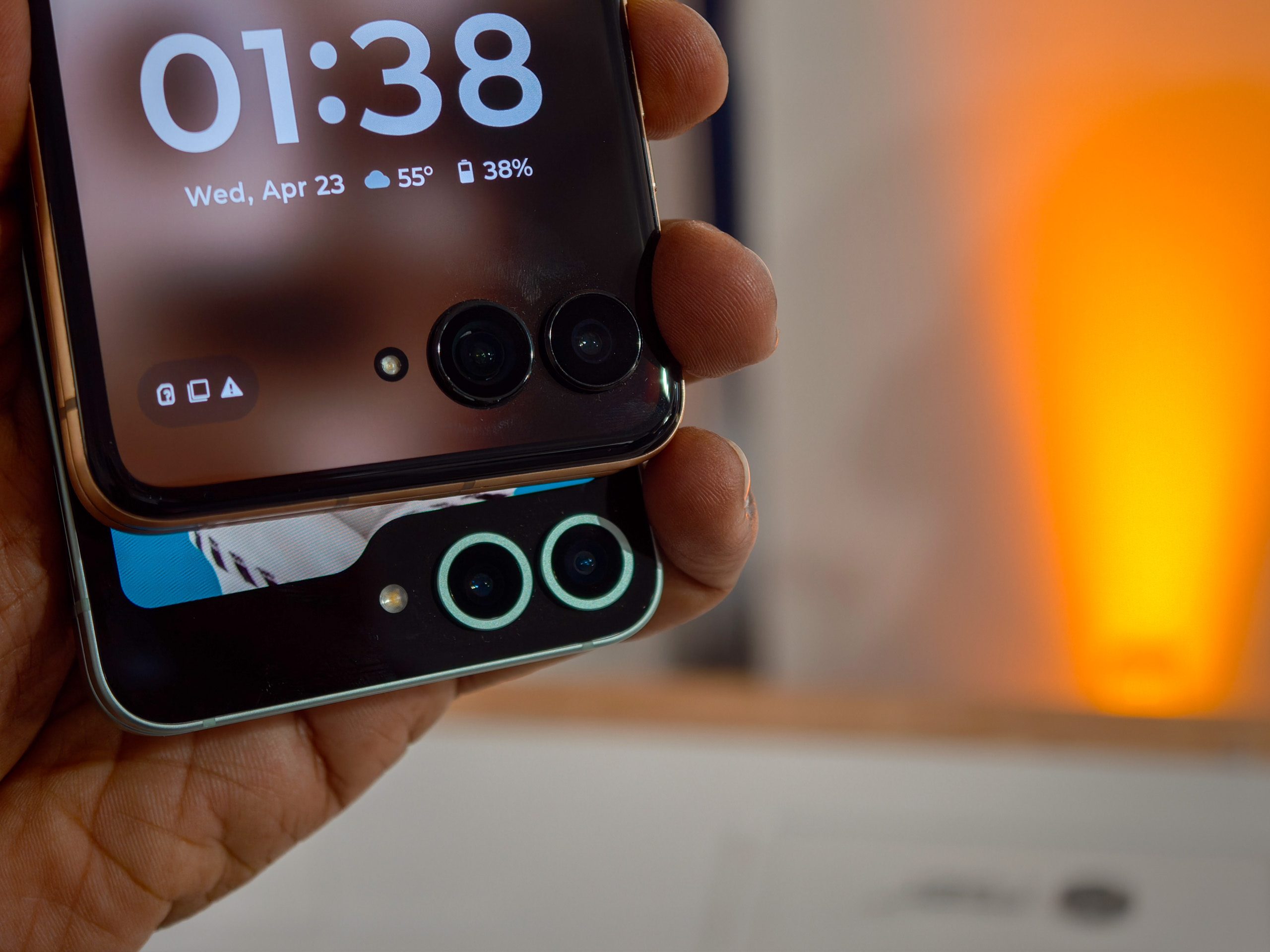
Both of these phones feature a dual camera setup, paired with an additional selfie camera positioned above the main display.
The Galaxy Z Flip 6 features a 50MP main camera with an f/1.8 aperture.0µm pixel size, dual pixel phase detection autofocus (PDAF), and OIS. This is paired with a 12MP ultrawide camera that offers a 123° field of view and a pixel size of 1.12 µm. Above the internal display, you’ll find a 10MP with an f/2.2 aperture and 1.22 µm pixel size.
In comparison, the Motorola Razr Ultra 2025 features a triple 50MP setup. There’s a 50MP main camera that’s identical to the one on the Galaxy Z Flip 6, but it utilizes pixel binning to combine four pixels into one, capturing 12.5MP photos with a larger pixel size for improved light capture. Motorola also uses in-sensor cropping to offer a 2x optical zoom using the main camera.
This is paired with a 50MP ultrawide sensor featuring an f/2.0 aperture and a 122° field of view. Above the main display, you’ll find the third 50MP sensor for selfies, which has an aperture of f/2.0 and a pixel size of 0.64 µm.
Winner: Razr Ultra 2025. The main camera is similar on both devices, but the Razr Ultra offers a 2x in-sensor optical zoom, as well as much better ultrawide and selfie cameras.
Motorola Razr Ultra 2025 vs Galaxy Z Flip 6: software and updates
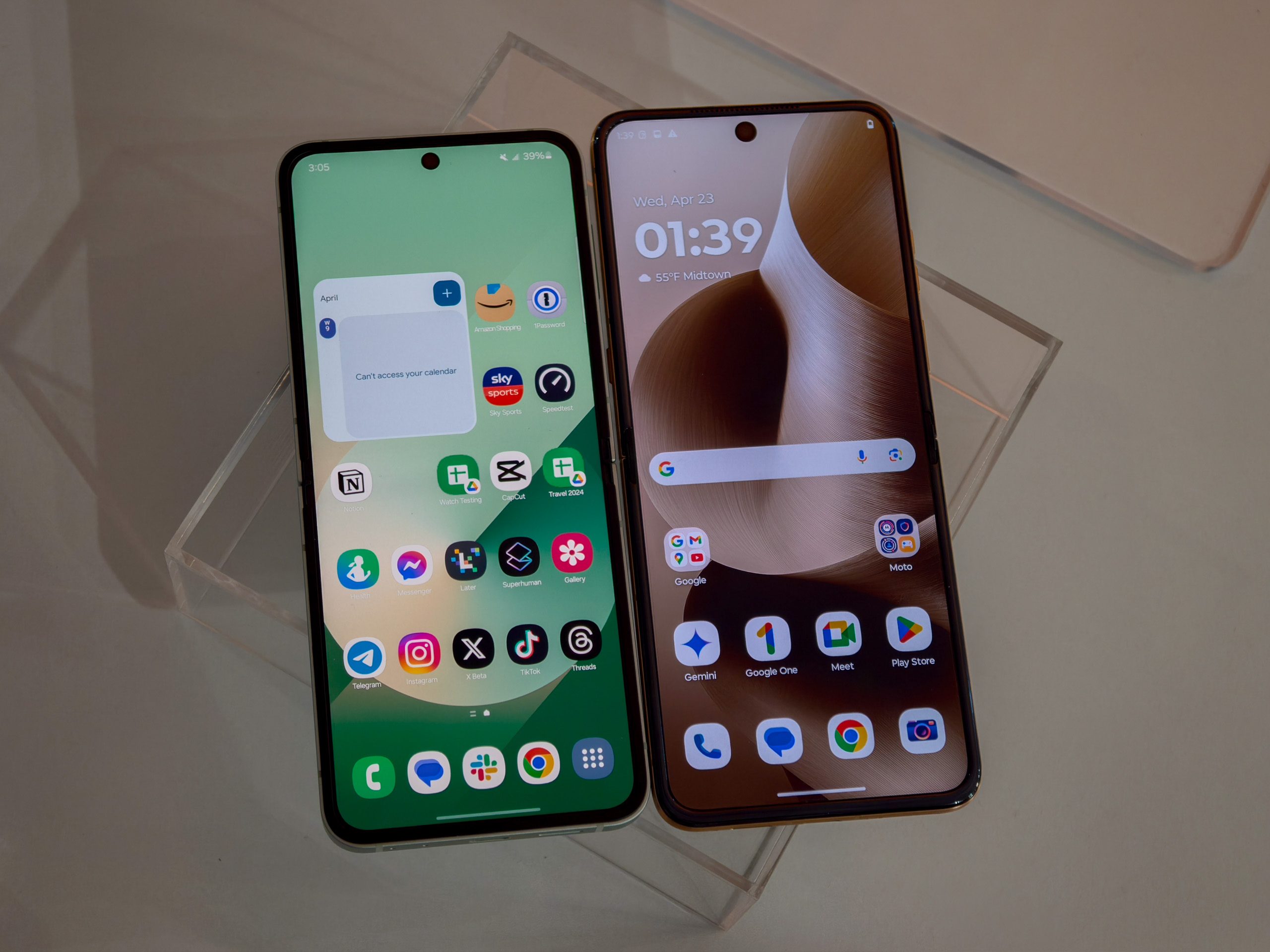
Samsung has made significant strides in increasing the longevity of its products, and the Galaxy Z Flip 6 is no different. It runs Android 14 out of the box with One UI on top, but it comes with a guarantee of seven years of software and security updates, meaning it should be updated to Android 21.
In contrast, the Razr Ultra 2025 comes with a much leaner software commitment. It runs Android 15 out of the box, but is only guaranteed three years of Android updates, and four years of security updates, meaning it’ll only be updated to Android 18.
There are considerable differences between how the two phones approach the front display. The Galaxy Z Flip 6 offers a more curated Cover Display experience, featuring select apps and functioning as an advanced smartwatch. Meanwhile, the Razr Ultra 2025 features Motorola’s excellent Cover Display experience, which allows you to use your entire phone from just the front screen.
Both companies have heavily focused on AI in their smartphones as well. The Galaxy Z Flip 6 comes with Galaxy AI, featuring Circle-to-Search, various generative AI capabilities, and a suite of writing tools designed to enhance your writing. Samsung pairs a lot of Google Gemini features with a few features it built on its own.
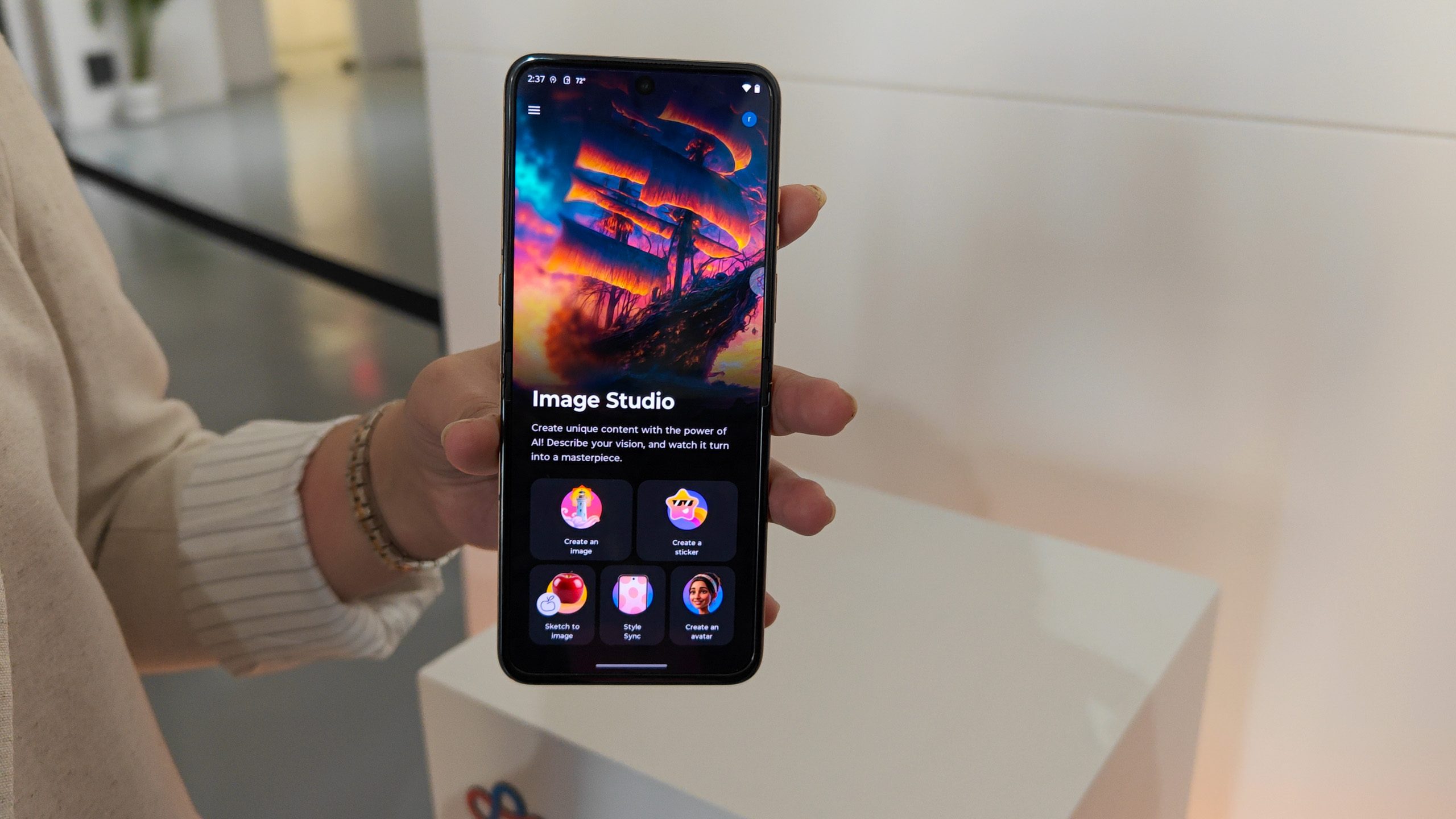
Meanwhile, the Razr Ultra 2025 also offers the same Gemini features, but pairs them with a host of Moto AI features developed by Motorola. The Moto AI suite includes features such as Catch Me Up, which summarizes recent notifications, Pay Attention to start a voice recording with transcription, and Remember This, which captures a screenshot and saves it alongside your notes.
The Razr Ultra 2025 features a dedicated AI key to the left of the phone, and it also comes equipped with new Moto AI 2.0 features, including Next Move, which recognizes what’s on your screen and suggests actions to take next. This can include saving important information and making it easy to recollect later, creating an image, sticker, or wallpaper with Image Studio, or building a playlist in Playlist Studio.
Winner: Razr Ultra 2025 with one key caveat. The Razr Ultra 2025 offers a significantly improved Cover Display experience and more practical AI features, but features a much shorter update cycle. If updates and longevity are your top priorities, consider the Galaxy Z Flip 6; however, the Razr Ultra 2025 offers a significantly better overall software experience.
Motorola Razr Ultra 2025 vs Galaxy Z Flip 6: Price and Availability
The Galaxy Z Flip 6 starts at $1,099 for 256GB of storage, with the 512GB model costing $1,219.99. It’s available in four colors: green, white, black, and yellow.
Meanwhile, the Razr Ultra 2025 is more expensive, starting at $1,299.99 with 256GB of storage. It comes in four colors and finishes that match Pantone colors. Scarab is a dark green that features Italian Alcantara leather, a first for smartphones. Rio Red and Cabaret (pink) feature beautiful leather finishes like last year. Mountain Trail reintroduces FSC-certified wood to Motorola smartphones for the first time in a decade.
Motorola Razr Ultra 2025 vs. Galaxy Z Flip 6: Which Should You Buy?
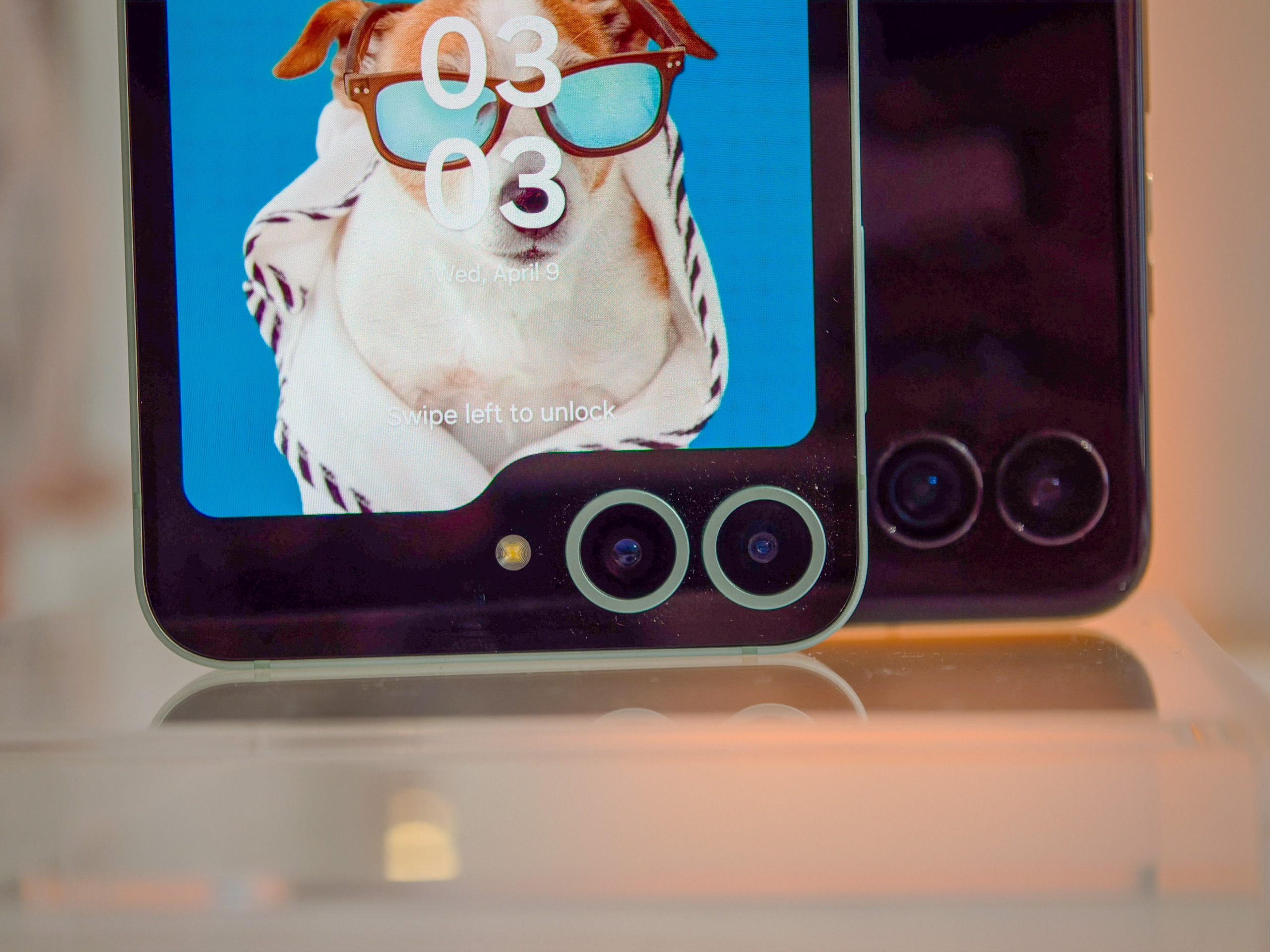
For many comparisons, this often requires careful consideration, but there is no contest: the Razr Ultra 2025 is superior to the Galaxy Z Flip 6 in every key area. Unless you value software updates above all else, you shouldn’t buy the Galaxy Z Flip 6 over the Razr Ultra 2025.
However, the Galaxy Z Flip 6 is also a year old and is likely available at a lower price on sale than the Razr Ultra 2025. This may influence your decision, but unless the Galaxy Z Flip 6 is significantly discounted, the Razr Ultra 2025 will be a better overall purchase.