Oppo has spoken out about what it feels must change before more folding smartphones can be widely launched, and it’s less to do with the hardware and more to do with the software. The comments came from Oppo’s Vice President of Overseas Sales and Service, Billy Zhang, during a roundtable meeting about the company’s recent performance and news of a greater push into the European market.
The Oppo Find N, the company’s first folding smartphone, was released at the end of 2021 and remains only available in China. It has seen considerable success, though, propelling the company to third in overall global foldable shipments for the first half of 2022, according to data it presented during the meeting. The Find N is great and has the potential to challenge Samsung’s dominant Galaxy Z Fold 4, due to its different size and impressive hardware.

As Oppo’s planning a big push into Europe, will the Find N, or a successor to it, be made available?
In response to Digital Trends’ question, Zhang said:
“When evaluating whether to bring a foldable to the global market, it has to do with overall thinking, as it’s not just about hardware,” Zhang explained. “Hardware-wise, we need to think about how to reduce the crease visibility or to improve the Flex Mode. From a software perspective, we need to think about how we can improve compatibility with third-party apps.”
Android 12L and apps
Zhang continued to add that he believes third-party developers need to improve the overall app ecosystem for foldables, and by doing so, this would really help the success of the Find N overseas. Currently, the Find N does not include Google Mobile Services (GMS), as it’s designed only for China. Adding GMS would be essential if the Find N is to see wide success internationally.
If you want a folding smartphone with GMS, you’re pretty much limited to the Samsung Galaxy Z Fold 4 or Galaxy Z Flip 4 at the moment, the former of which uses Google’s Android 12L software specifically designed for large-screen devices. It’s also no secret Google has worked closely with Samsung to make more apps work on the unusual screens, and that it has done so since the launch of the original Galaxy Fold. It seems outside of this, third-party app developers have been slow to create or update apps to make them suitable for foldable devices.
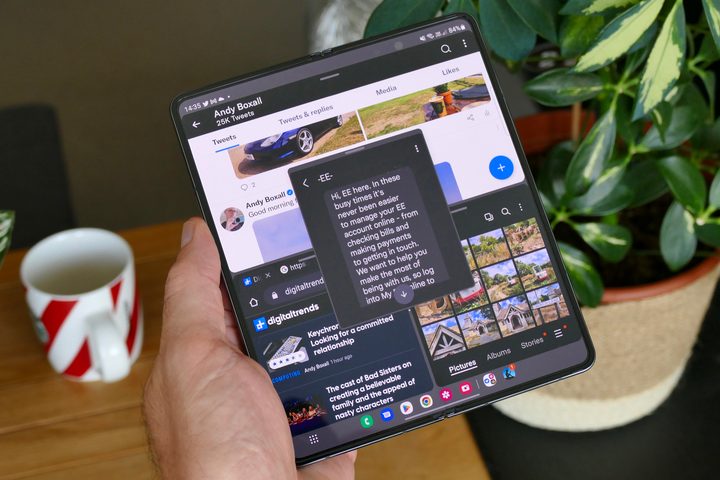
It’s understandable in a way, as foldables represent a small section of the market, so committing to building apps made for the new format may not be the best use of time for many developers. However, this may be hindering the development and launch of new devices by companies that manage multiple operating systems made for different regions, depending on how you interpret Zhang’s words. Oppo continues to support the Find N itself, though, and the phone will be one of the first with ColorOS 13, based on Android 13.
Find N Fold and Find N Flip
Does that mean Oppo’s holding back on making a new folding smartphone? Not according to Zhang, who also shared what the company plans to improve on an as-yet unofficial Find N’s successor.
“Even though we have had success with the Find N, there is always room for improvement,” Zhang said. “For the next generation, we want to continue to improve the crease invisibility, develop better interactions, and to improve the battery life of the foldable. Please stay tuned for more progress.”
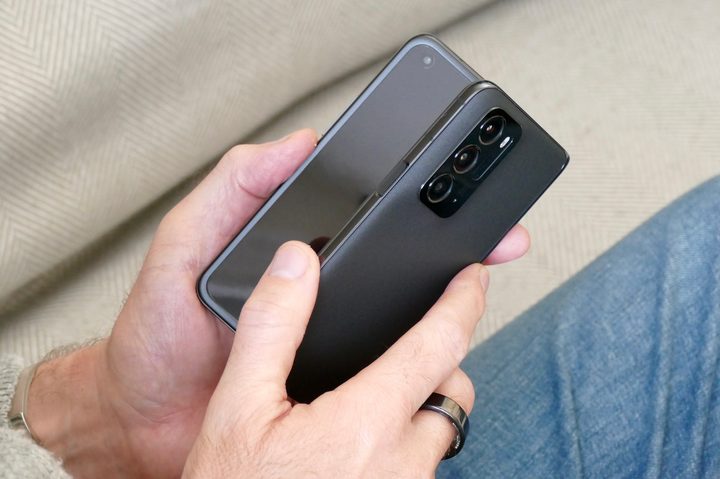
While there’s nothing official about the next Oppo folding phone, rumors have gathered over the last months. It’s possible the company plans to launch two new models, potentially called the Find N Fold and the Find N Flip, mirroring Samsung’s approach to the market with two different types of devices. Although no dates are confirmed, they may arrive before the end of the year. However, unless the software situation dramatically changes soon, it appears China may be the only place to buy them.