Qualcomm’s Snapdragon X70 5G modem, announced earlier this year, is already picking up new features before it’s even available in phones. In addition to the latest advancements in spectrum utilization and AI processing, Qualcomm is now adding what it calls “Smart Transmit 3.0” as well as standalone mmWave 5G capability and new Sub-6 5G carrier aggregation.
Smart Transmit 3.0
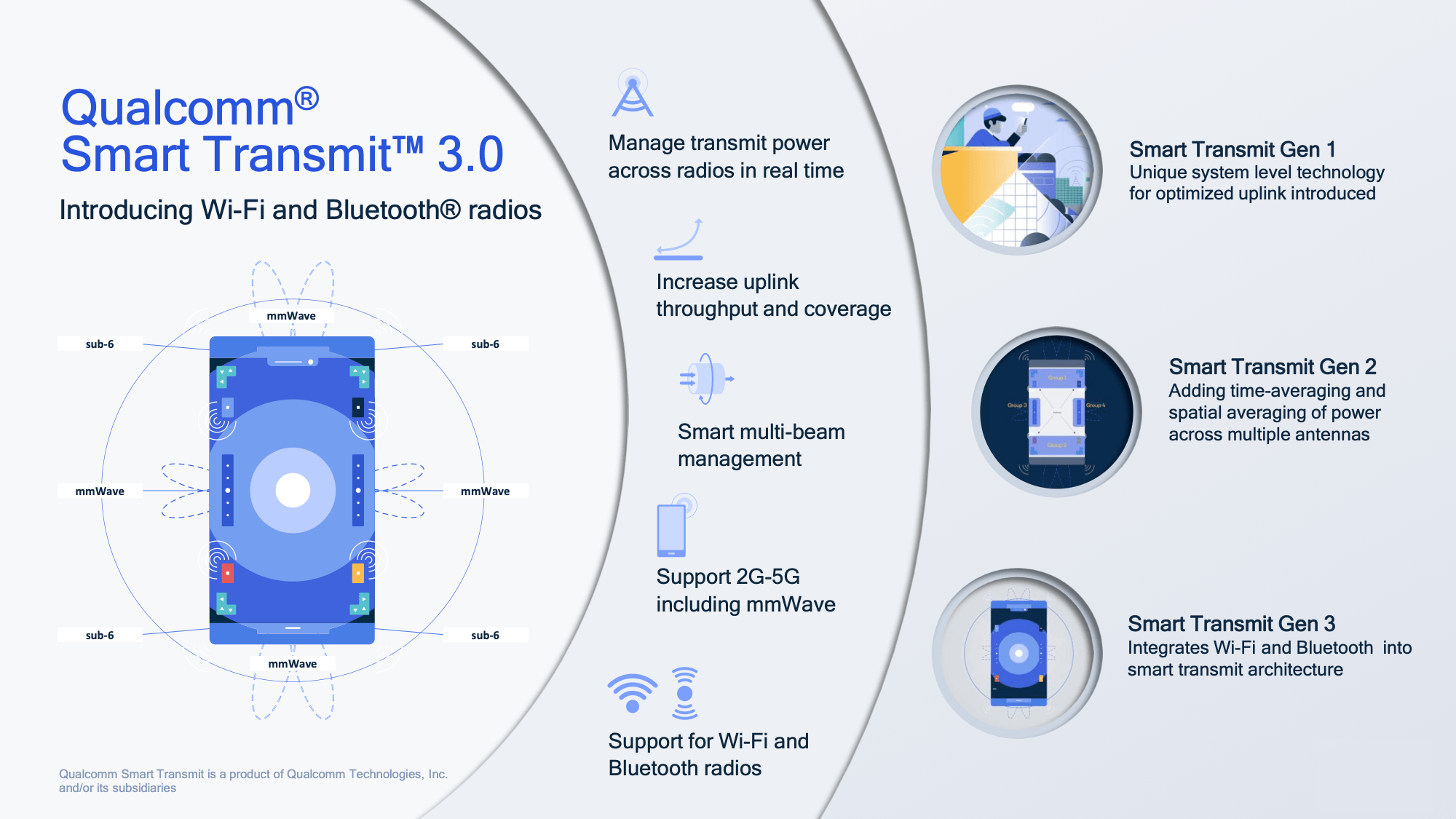
Qualcomm’s Smart Transmit is a base-level set of features available in Qualcomm’s chipsets that smartly manages the radios, power, network choices, and more to provide the best overall network experience. Version 3.0 is a simple evolution. For version 3.0, Smart Transmit now integrates Wi-Fi and Bluetooth into the architecture. Why? Well, it’s basically the last area Smart Transmit hasn’t touched.
The X70 chipset can now leverage the Wi-Fi and Bluetooth radios to gather even more data to understand the world around the device and make better decisions about what to do to get the best possible network connection. Knowing what Wi-Fi networks and Bluetooth devices are available may seem minuscule to a high-powered 5G chipset, but every little bit counts.
Standalone mmWave 5G
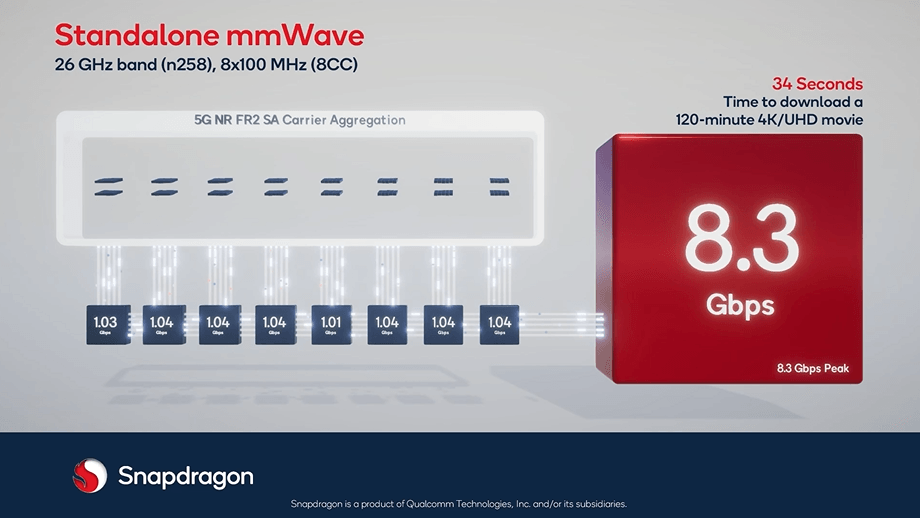
Devices using the X70 chipset will be able to establish an mmWave 5G connection independent of any other connection — what’s known as a “standalone” or “SA” connection. Up until this point, in order to use an mmWave 5G connection, the network and device had to first have a Sub-6 5G (or 4G LTE) connection as an initial link before deciding that mmWave was available and transitioning over for higher speeds.
Now, with the right network configuration, a device can just go straight to mmWave 5G, quickly taking advantage of its higher speeds and greater network efficiency. That’s critical because waiting for the handoff from Sub-6 to mmWave can often negate the potential benefits of getting those higher speeds in the first place; and if you’re on the move with a phone, you may lose the connection before data even transfers.
Given the inherent limitations of mmWave — which struggles with maintaining connections over distance and around obstacles — there likely aren’t many mobile use-cases for standalone mmWave 5G. But this development could be incredibly important for fixed wireless access 5G in homes and businesses where the base station moves infrequently (or not at all), as well as 5G mobile hotspots and laptops with built-in 5G.
Sub-6 5G 3x carrier aggregation
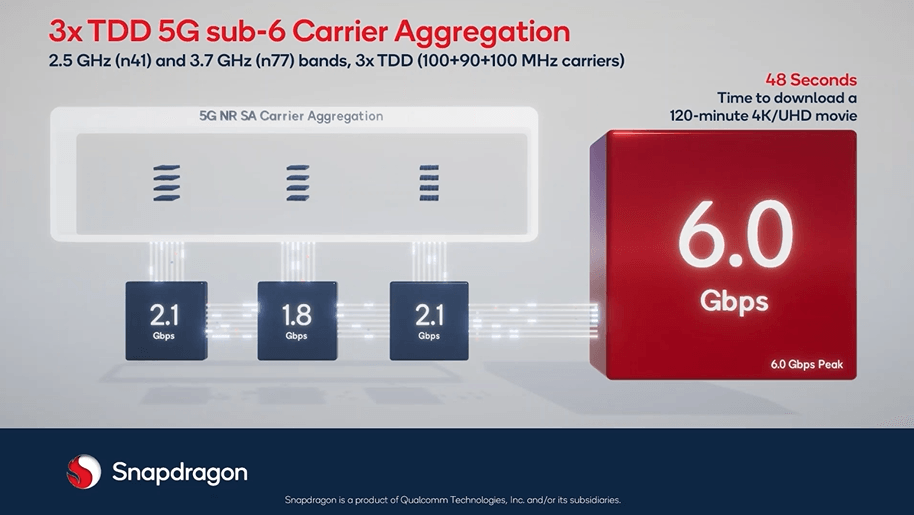
Sub-6 5G is the more ubiquitous, longer-range segment of 5G that uses spectrum under 6Ghz. The Snapdragon X70 is now capable of pulling together three different chunks of spectrum within the Sub-6 range to provide even faster speeds. Qualcomm quotes up to 6Gbps downloads — enough to download a 2-hour 4K movie in less than a minute — when all of the conditions are just right.
These are speeds (albeit theoretical ones) that are above what we even see for mmWave 5G with current networks and devices, so this is a huge jump forward in capability. Though the theoretical capabilities of mmWave networks are astounding, most have come to the realization that the 5G networks they’ll experience in the real world for the foreseeable future will be running in Sub-6 spectrum. Seeing this level of advancement in Sub-6 is frankly most important to consumers in the near term.
The Snapdragon X70 isn’t yet available in phones — even the latest devices are still using the X65 — but it’s a good bet that this will be the modem of choice for Qualcomm-powered devices launching late this year and throughout 2023, likely including the Galaxy S23 series.