1. Home
  2. Phones
  3. Mobile
  4. Music
  5. Web
  6. News

Spotify’s Discovery Weekly serves up new tunes tailored just for you

Add as a preferred source on Google

Contrary to what some doomsayers would have you believe, Spotify’s still very much alive and kicking in the wake of Apple Music. But despite an influx of new cash and subscribers, the streaming music service isn’t resting on its laurels — the company is going at Apple Music head on. Starting today, Spotify’s rolling out Discover Weekly, a personalized compilation of songs updated each Monday just for you.

Discover Weekly, which Spotify says will roll out to all users within the next few weeks, uses algorithms to base musical recommendations on both your listening history and the tastes of people who tend toward the same genres and artists as you.

Recommended Videos

The feature appears at the top of Spotify’s playlists tab on both mobile apps and the Web. The feature gives preferential treatment to newer releases — it’ll try to serve up albums and artists you haven’t played before, Spotify says — but won’t completely exclude old favorites. That’s important, because there’s no way to fine tune the music Discovery Weekly playlists.

Spotify’s betting you’ll trust Discovery Weekly to know what you like. But the subscription service is also attempting to simplify music discovery, which before pretty much required a tedious, cyclical trudge through a litany of sources — Spotify’s new releases, activity and mood-based lists, curated collections, and perhaps even friends’ top plays. Discovery Weekly, in theory, aggregates the best of everything into a single playlist.

Spotify’s continued success (i.e., $562 million in new funding and 75 million active users worldwide) hasn’t stopped the service from aggressively targeting would-be defectors. The company recently sent out a guide to iPhone customers who pay through the Apple store to help them avoid the higher rates by subscribing through Spotify’s website.

Spotify has also partnered with Uber to power music in the former’s cars and Starbucks to become your coffee shop jukebox. And back in May, the streamer announced the rollout of a new platform with podcasts, exclusive “video capsules” from Vice, Comedy Central, and the Nerdist, and Spotify Running, a music feature that recommends music based on the tempo of your steps. 

If the fierceness of the streaming music competition wasn’t already palpable, it definitely is now.

Kyle Wiggers
Kyle Wiggers is a writer, Web designer, and podcaster with an acute interest in all things tech. When not reviewing gadgets…
OnePlus is gone, and Android phones just became more boring in the US
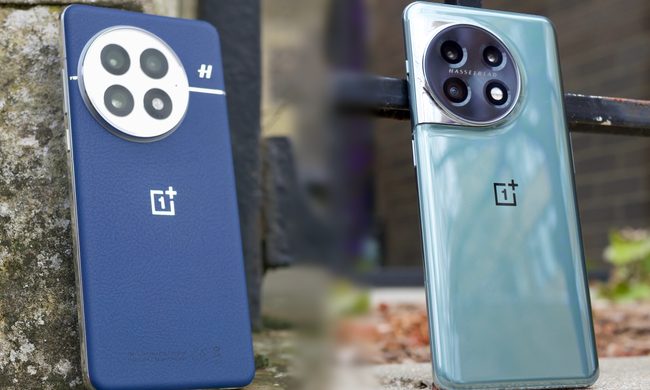
OnePlus 13 vs OnePlus 11.

I wasn't expecting a smartphone brand's exit to hit me this hard, but OnePlus leaving the US and Europe genuinely did. The company has already confirmed that it will no longer launch new products in either market, although existing customers will continue receiving software updates and after-sales support. So while OnePlus isn’t disappearing altogether, it is walking away from two of the biggest smartphone markets in the world.

To be honest, the Android market in the US already feels limited. If you’re shopping for a flagship, your realistic choices almost always begin with Samsung and end with Google. OnePlus was one of the very few brands sitting in between, offering something that didn’t quite look or feel like everything else. And that’s exactly what I’m going to miss.

Read more
A niche iPhone browser quietly fixes my biggest problem with Google Search
Quiche Browser open on iPhone

If there's a new browser, email app, or note-taking app to try, chances are I've already installed it. Like every other productivity nerd, I'm always chasing the perfect setup. That's how I stumbled upon Quiche Browser. It was already close to replacing the Arc Search for me on the iPhone, but its latest update finally pushed it over the edge, earning it a spot as my default browser.

What makes Quiche so good

Read more
Google has to play fair with AI rivals on Android, and that could be good news for your wallet
A new ruling strips Gemini of its exclusive access to deep Android integration, opening the door for cheaper AI models to offer similar functionality for less.
A person using Google Gemini on the Google Pixel 9a.

After forcing Google to open up Android to third-party app stores, the EU is back with a new target, and this time it's Gemini's home-field advantage. The European Commission ordered Google on July 16 to give rival AI apps the same deep access to Android that's currently exclusive to Gemini. The order falls under the EU's Digital Markets Act (DMA), and it directs Google to stop treating its own assistant as a first-class citizen on a platform it controls.

What Google now has to hand over

Read more