After months of anticipation, Apple’s big “It’s Glowtime” event arrived today, and it brought the eagerly awaited news of when to expect the iPhone or iPad to get the update to iOS 18 and iPadOS 18, respectively.
Announced at the Worldwide Developers Conference (WWDC) in June, iOS 18 is the biggest update to the iPhone in years. At its big event today, Apple confirmed that iOS 18 and iPadOS 18 are both officially being released on September 16. They bring many customization options, like the ability to move apps freely on the home screen and change the lock screen shortcuts, as well as all-new themes, including being able to choose colors, styles, and designs as you wish. Widgets can now be resized dynamically using a handle that surfaces when you’re in edit mode, and instead of having to delete and read a widget in a different size, you can resize it on the fly.
There’s also the revamped Control Center with new pages, shortcuts, and the ability to make it truly yours. Different pages provide quick and easy access to everything from connectivity and home controls to music, favorites, and more. Big changes have also come to the Phone app, where you can record calls, transcribe voicemails, and quickly search for a contact using T9 dialing. RCS is now available in the Messages app, which lets you use any emoji as a tap-back reaction. Big improvements have also come to the Calendar, Notes, Maps, and Journal apps. And there are more Accessibility options than ever before.
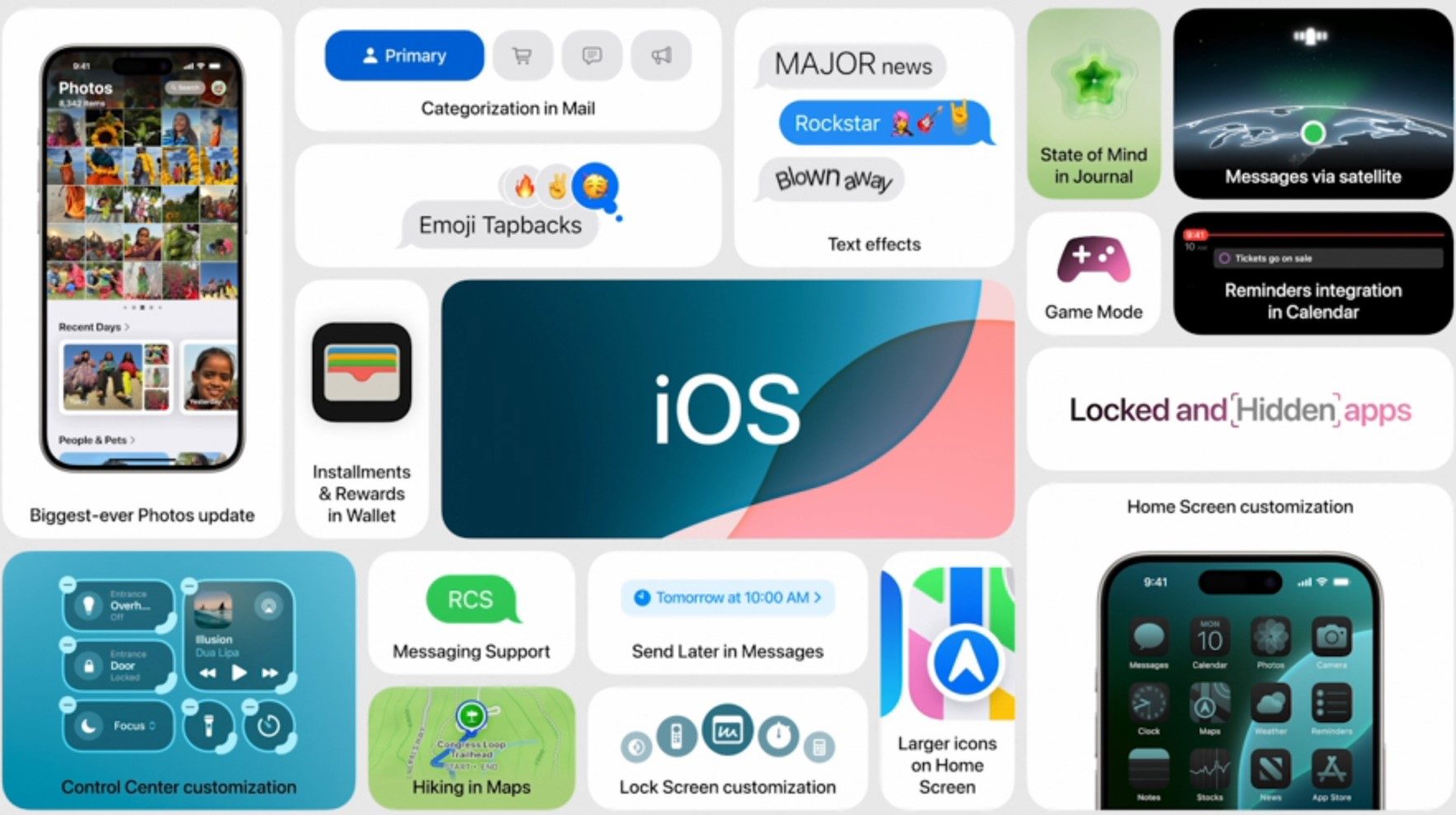
Privacy is a big part of iOS18, iPadOS 18, and Apple Intelligence. You can lock apps so no one else can access them and even hide them entirely from your App Library. There’s also a revamped Passwords app that aims to replicate the functionality of the best password apps. The Privacy and Security section now shows you how many apps have access to each permission, and you can choose to give apps access to specific contacts only.
All of these improvements bring considerable quality-of-life enhancements to the iPhone and iPad. The new iPhone 16, Plus, Pro, and iPhone 16 Pro Max will all run iOS 18 at launch, and the update will be available for the following iPhones on September 16:
- iPhone 15
- iPhone 15 Plus
- iPhone 15 Pro
- iPhone 15 Pro Max
- iPhone 14
- iPhone 14 Plus
- iPhone 14 Pro
- iPhone 14 Pro Max
- iPhone 13
- iPhone 13 mini
- iPhone 13 Pro
- iPhone 13 Pro Max
- iPhone 12
- iPhone 12 mini
- iPhone 12 Pro
- iPhone 12 Pro Max
- iPhone 11
- iPhone 11 Pro
- iPhone 11 Pro Max
- iPhone XS
- iPhone XS Max
- iPhone XR
- iPhone SE (2nd generation)
- iPhone SE (3rd generation)
The iPadOS 18 update will launch on September 16 via a software update. iPadOS 18 is compatible with:
- iPad Pro (M4)
- iPad Pro 12.9-inch (3rd generation and later)
- iPad Pro 11-inch (1st generation and later)
- iPad Air (M2)
- iPad Air (3rd generation and later)
- iPad (7th generation and later)
- iPad mini (5th generation and later)
If you have an older iPhone or iPad, we have bad news: the new update won’t be compatible. The good news is that a new iPhone means great deals on older models, and there’s never been a better time to upgrade.