  1. Home
  2. Social Media
  3. Legacy Archives

Facebook wants to know how you’re feeling with new, experimental status updates

Add as a preferred source on Google
Image used with permission by copyright holder

According to TechCrunch, Facebook is testing out default emotive status updates that might encourage users to throw in additional context to what they’re doing.

More and more, Facebook is getting into the business of emotions. When Facebook introduced Timeline, it was compelling users to share bits and pieces about their lives and to be the de facto platform for cataloging life’s milestones. The social network has also introduced emojis into its messaging platform. Still, it appears that Facebook wants us to share more about ourselves, and to do so the platform is experimenting with structured status updates that asking how we’re feeling. 

techcrunch expressive status update
Image used with permission by copyright holder

If this update rolls out to everyone, users can add details like how we’re feeling, what we’re watching, what we’re reading, what we’re listening to, and other minor details that may seem small but actually are of critical importance to Facebook.

facebook expressive status update watching via techcrunch
Image used with permission by copyright holder

These emotive status updates are like mini life events, and by encouraging you to add more details about your life, Facebook is able to better gauge your immediate interests that can’t be figured out by simple “Likes.” In fact, Mark Zuckerberg during the Q4 earnings call, mentioned in passing a key detail about Facebook’s strategy moving forward. Facebook in 2013 is making an effort with scraping the content that you’re publishing on its platform. For instance, based on an example Zuckerberg provided, he said that if you haven’t identified your location, but shared it in an update, Facebook will be able to figure out where you are. This same strategy applies to this personalized status update that Facebook is experimenting with. If you’re sharing immediate interests via emotive status updates, Facebook would be able to better target its ads accordingly.

Recommended Videos

In response to discovering the test, Facebook had this to say:

“It’s just a new way for people to visually represent what they’re doing and how they’re feeling through their Facebook posts. It will only be available to small set of people. This isn’t integrated into Graph Search. It’s just a small test to see if people are interested in sharing their actions in a more visual way.”

What are your thoughts on this type of status update?

Francis Bea
Former Digital Trends Contributor
Francis got his first taste of the tech industry in a failed attempt at a startup during his time as a student at the…
Topics
After YouTube, TikTok is testing its own AI likeness detection tool
TikTok's new tool lets creators flag AI deepfakes of themselves directly.
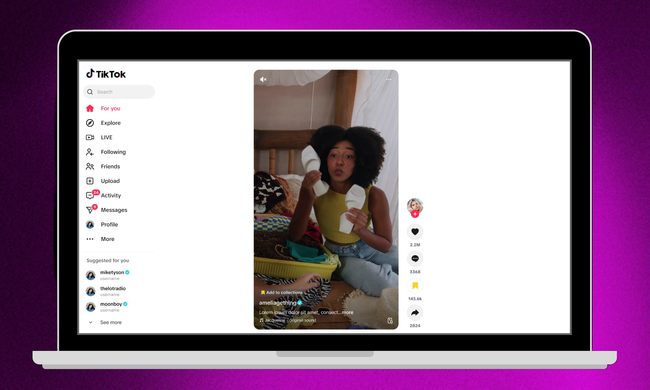
Home page of TikTok on Web.

AI deepfakes have become a headache for creators, and TikTok is finally stepping up to fight back. Social media consultant Matt Navarra spotted the platform quietly testing a new opt-in tool that hunts down AI-generated content mimicking a creator's face, giving them the power to flag it directly.

https://twitter.com/MattNavarra/status/2078129989128450064

Read more
You can now generate songs in your iMessage chats
iMessage users can now turn chats into short AI-generated songs
Text, Business Card, Paper

Suno has added an iMessage extension to its iOS app, letting users generate 30-second songs from voice recordings or typed prompts inside a Messages conversation.

The feature is available in the latest version of the Suno app and requires both people in the chat to have it installed. Users can access Suno from the plus menu in Messages, create a track, and share it without opening the standalone app.

Read more
The UK just proposed a midnight social media curfew for teens that they can bypass in seconds
The government wants 16- and 17-year-olds off apps like Instagram, TikTok, and YouTube from midnight to 6 AM, but the restriction has a built-in workaround.
Girl using a black phone while lying down

The UK just proposed a midnight social media curfew for teenagers, but it comes with a built-in escape hatch. According to the BBC, the UK government plans to restrict social media access for 16- and 17-year-olds between midnight and 6 AM, preventing them from using apps like Instagram, TikTok, and YouTube. But getting around it will take nothing more than a few taps.

A curfew teens can switch off

Read more