  1. Home
  2. Social Media
  3. Legacy Archives

Instagram is becoming an online hangout for terrorists

Add as a preferred source on Google
terrorist-instagram-account
Image used with permission by copyright holder

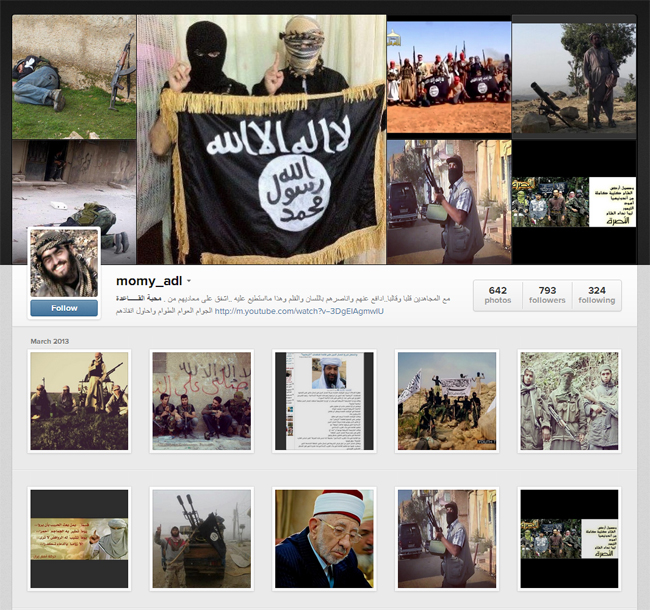
Be careful on your next Instagram exploration – you might find yourself exposed to graphic photos depicting terrorist activity. The Middle East Media Research Institute (MEMRI) – an independent, non-profit organization – released a report recently alerting that Instagram is home to “a tremendous increase [of use] by online jihadis.”

This follows the rather morbid increase of martyrdom posts on micro-blogging site Twitter in which photos of departed members of jihadi organizations are displayed, sometimes with the dead’s last wishes and calls to action addressed to terrorist factions. Also recently, Twitter was used as a tool to instigate real-life war between the Israeli Defense Forces and Hamas. Similar activity appears to be infiltrating Instagram as well.

Recommended Videos

MEMRI has been monitoring the photo-sharing app for four months now, and various allusions to the Al-Qaeda cause have been springing up often, whether they’re quotes from the likes of Osama bin Laden, Anwar Al-Awlaki, Abu Mus’ab al-Zarqawi, and Ayman Al-Zawahiri or the veneration of jihadis who have been captured or were successful in attacking Americans.

MEMRI was able to amass quite a few Instagram accounts that regularly posted terrorism-related content, and they included this information in their report as a reference, in case they are systematically taken down. What’s taking Instagram so long in barring this sort of use? A quick visit to the site’s community guidelines will tell you that “illegal content” is prohibited, which includes “photographs of extreme violence or gore.” Anybody who has seen the list of offending accounts can verify that it is rather disturbing to see snapshots of child jihadi fighters wielding rifles or dead Al-Qaeda leaders amid pictures of food and cute pets.

Aside from account suspension, according to the guidelines, appropriate action includes being reported to “the authorities.” For now, all we can do is wait for Instagram to decide whether or not terrorist propaganda and photos of dead jihadis actually warrant account deletion. Our gut says “yes.”

Jam Kotenko
When she's not busy watching movies and TV shows or traveling to new places, Jam is probably on Facebook. Or Twitter. Or…
Instagram and WhatsApp lead in sextortion reports, iMessage is weaponized against teenagers: Report
Over 2,000 complaints in six months, and the platforms are still playing catch-up.
Child using a blue phone

If you use Instagram, WhatsApp, or iMessage, you need to know what is happening on these platforms. Australia's online safety regulator, eSafety, has published a new transparency report, and the findings are grim. 

As reported by The Guardian, the regulator found significant gaps in how the biggest tech companies are handling online sexual extortion and child sexual exploitation, even as the reports keep climbing.

Read more
Europe plans a wide social media ban for children
The plan would bar kids under 13 from social media completely, with looser rules for teens up to 18.
Child using a red iPhone

Europe is taking its biggest step yet toward keeping kids off social media entirely. A panel of experts today handed the European Commission a report recommending sweeping new age restrictions, according to a New York Times report. Commission president Ursula von der Leyen is expected to turn those recommendations into a formal law proposal in September.

What the proposal aims to restrict

Read more
The days of unrestricted social media for children may be coming to an end
Social media could soon look very different for younger users
Social Media

What started as a policy experiment in Australia has quickly turned into a global movement. Governments around the world are increasingly questioning whether children should have unrestricted access to social media, with more than 20 countries now either enforcing, proposing, or actively debating age-based restrictions. According to an AFP tally, at least five countries already have nationwide restrictions in force, while many others - including several European nations - are preparing to follow suit.

The momentum comes amid growing concerns over the impact of social media on children's mental health, online safety, sleep patterns, and exposure to harmful content. Policymakers are also under pressure to address addictive recommendation algorithms, cyberbullying, and the growing use of AI-generated content that can make online platforms even harder for young users to navigate.

Read more