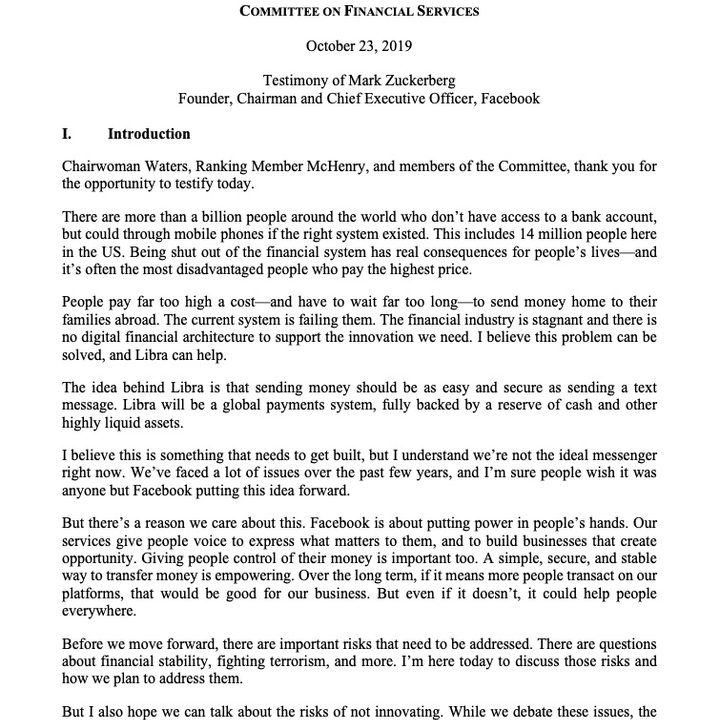
Facebook CEO Mark Zuckerberg will argue before Congress on Wednesday, October 23 that the social network’s cryptocurrency, known as Libra, is essential to expanding banking access around the globe, according to a written version of his testimony released Tuesday.
“There are more than a billion people around the world who don’t have access to a bank account, but could through mobile phones if the right system existed,” Zuckerberg said. “This includes 14 million people here in the U.S.”
Zuckerberg plans to argue that Libra is the solution, essentially a bank that exists in your phone that’s easy to use and works anywhere.
The seven-page testimony talks about Libra’s benefits in banking access, as well as the issues that would need to be addressed in order for a cryptocurrency backed by Facebook to work.
“We’ve faced a lot of issues over the past few years, and I’m sure people wish it was anyone but Facebook putting this idea forward,” Zuckerberg said.
Zuckerberg said that Libra is “about promoting financial inclusion through a safe, low-cost, and efficient way of sending and receiving payments around the world.”
Over the past few weeks, Visa, Mastercard, eBay, PayPal, and a number of Facebook’s other original 21 financial partners have dropped out of the Libra Association, according to the Financial Times. Lawmakers have largely come out against the cryptocurrency, arguing that Facebook has been irresponsible with user data and shouldn’t be allowed to have its own currency. Even President Donald Trump has attacked the plan, saying he’s not a fan of the idea.
Still, Zuckerberg’s testimony shows that he remains optimistic about Libra, despite worries that the currency could be used in money laundering operations.
“We understand that whatever approach we take to promote financial inclusion must address regulatory concerns, including money laundering and terrorism financing, sanctions, and potential currency disruption and systemic risk,” he said. “I know that the Libra Association is mindful of those things as it proceeds, and at Facebook, we’re focused on those concerns as we explore what we can do as a company to address financial inclusion. We also understand the importance of being transparent about our efforts.”
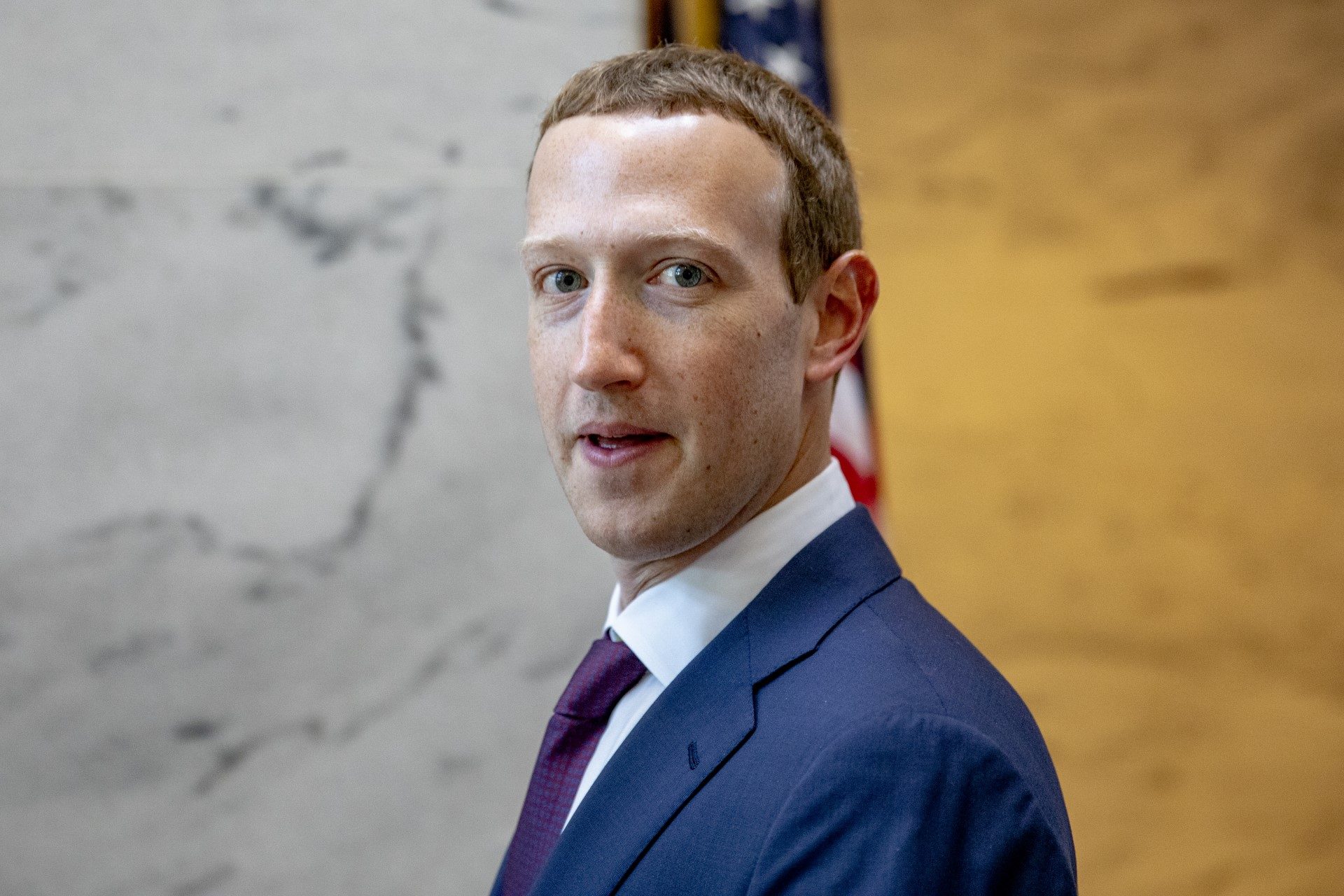
Zuckerberg added that he supports delaying Libra’s launch until it has been fully addressed by regulatory concerns. He also added that Libra is not meant to compete with sovereign currencies.
“[The Libra Association] will work with the Federal Reserve and other central banks responsible for monetary policy to make sure that is the case. We expect the regulatory framework for the Libra Association will ensure that the Association cannot interfere with monetary policy,” he said. “Libra is also being designed with economic security and stability in mind, and it will be fully backed through the Libra Reserve.”
Zuckerberg’s testimony will begin at 7 a.m. on Wednesday you can watch it live on Digital Trends’ livestream.