1. Home
  2. Space
  3. Emerging Tech
  4. News

Want a future-proof degree? Head to Colorado for asteroid mining

Add as a preferred source on Google

Are you a high schooler wondering what career to pursue that won’t be gobbled up by robots in the next few years? Are you an engineering grad, economist, physicist, or policy analyst looking to become an expert in a new, but fast-developing discipline? If so, the Colorado School of Mines has the perfect answer for you: You should totally take up space mining.

No, we’re not kidding. While the idea of extracting water, minerals or even metals from an asteroid sounds like the stuff of far-future science-fiction, it’s likely to actually happen in the coming decades — and Colorado School of Mines’ newly launched “Space Resources” course will help you get in on the ground floor.

Recommended Videos

“Space Resources is an area that includes identifying the resources there are in space, and working out how to collect, extract and utilize them,” Dr. Angel Abbud-Madrid, director of the Center for Space Resources and Research Associate Professor in Mechanical Engineering at Colorado School of Mines, told Digital Trends.

Students on the course can earn post-baccalaureate certificates, master’s degrees, and doctoral degrees through the interdisciplinary program. It will cover the responsible exploration, extraction, and use of resources on the moon, Mars, asteroids, and even further afield locations. The courses will include guest speakers from a variety of mining and aerospace companies.

“I would compare this to aviation,” Abbud-Madrid continued. “The first academic programs started just a few years after the Wright brothers [pioneered the first airplanes]. People realized quickly that this was no longer just the field of daredevils and people looking for entertainment; it was going to become very important. The same thing happened with academic aerospace programs shortly after the launch of Sputnik. Even though going to the moon looked far away, there was a realization that this would happen. Universities have to be ahead of the curve so they can start preparing people to enter [new] fields.”

While the first year’s course officially kicked off this week, it’s never too early to start thinking about next year. Could 2019 be the year you start your new career as an asteroid mining student? The decision is in your hands.

Luke Dormehl
I'm a UK-based tech writer covering Cool Tech at Digital Trends. I've also written for Fast Company, Wired, the Guardian…
Space is becoming Bezos and Musk’s next data center site, and we have every reason to worry
The AI boom is coming for the night sky
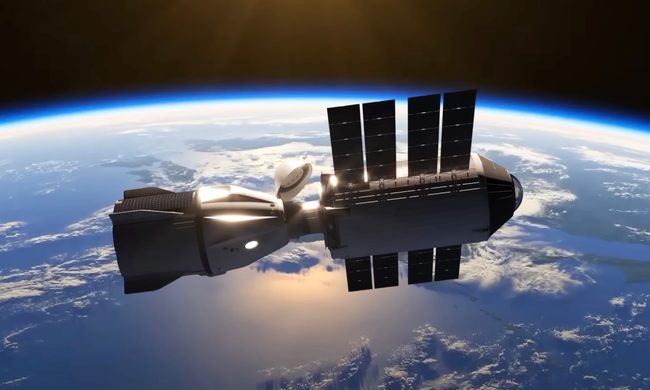
How Vast's space station will look in orbit.

AI data centers already consume vast amounts of electricity and water on Earth, so Silicon Valley has begun looking somewhere considerably more spacious... literally.

Elon Musk's SpaceX and Jeff Bezos' Blue Origin, along with several other companies, have proposed enormous constellations of satellites designed to operate as orbital data centers. However, environmental groups and former space officials are now warning that putting them into orbit at the proposed scale could have severe consequences for Earth's atmosphere and the night sky.

Read more
The first possible exomoon is here, and it makes our Moon look hilariously tiny
Scientists may have found the first exomoon, except this one is the size of Jupiter
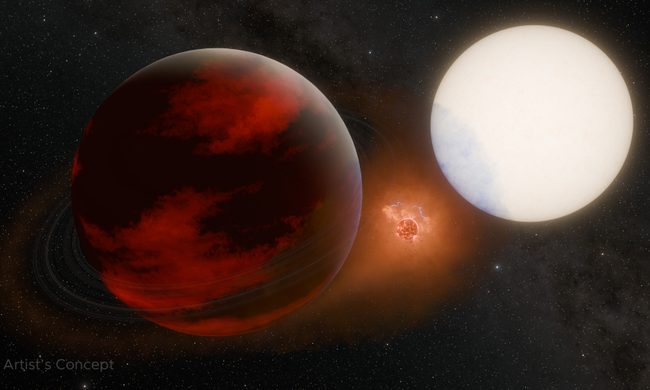
This artist’s concept depicts a potential volcanic moon between the exoplanet WASP-49 b, left, and its parent star. New evidence indicating that a massive sodium cloud observed near WASP-49 b is produced by neither the planet nor the star has prompted researchers to ask if its origin could be an exomoon.

We have already discovered more than 6,000 planets outside of our immediate neighborhood. Yet, finding a moon orbiting one of those distant worlds has proved considerably harder. Astronomers may finally have something close to the real deal, but this particular object stretches the word “moon” almost beyond recognition.

Using the European Southern Observatory’s Very Large Telescope in Chile, researchers detected strong evidence for a moon-like object in the CD-35 2722 system. Further observations are still necessary to confirm the discovery, but it could become the first confidently detected natural satellite outside our solar system. There is still one tiny complication though. This moon is apparently massive.

Read more
China’s answer to SpaceX’s reusable rockets literally catches boosters in a net
SpaceX catches boosters on legs. China just used a net.
Ammunition, Missile, Weapon

SpaceX's playbook for recovering a rocket booster generally involves legs, a precisely controlled vertical landing, and either a concrete pad or a drone ship. 

China just managed to pull off something similar, but in a slightly different way, and on July 10, it tested the method as well.

Read more