  1. Home
  2. Space
  3. News

Crew-1 astronauts splash down safely off the Florida coast

Add as a preferred source on Google

NASA astronauts Shannon Walker, left, Victor Glover, Mike Hopkins, and Japan Aerospace Exploration Agency (JAXA) astronaut Soichi Noguchi, right are seen inside the SpaceX Crew Dragon Resilience spacecraft onboard the SpaceX GO Navigator recovery ship shortly after landing in the Gulf of Mexico off the coast of Panama City, Florida, at 2:56 a.m. EDT May 2, 2021.
NASA astronauts Shannon Walker, left, Victor Glover, Mike Hopkins, and Japan Aerospace Exploration Agency (JAXA) astronaut Soichi Noguchi, right are seen inside the SpaceX Crew Dragon Resilience spacecraft onboard the SpaceX GO Navigator recovery ship shortly after landing in the Gulf of Mexico off the coast of Panama City, Florida, at 2:56 a.m. EDT May 2, 2021. NASA/Bill Ingalls

The four astronauts of the Crew-1 mission have made it home safely from the International Space Station, splashing down in the ocean off the coast of Florida early this morning at 2:56 a.m. ET. They traveled home in the SpaceX Crew Dragon spacecraft, completing the return journey for the first full operational mission of the new craft.

Recommended Videos

NASA astronauts Michael Hopkins, Victor Glover, and Shannon Walker, as well as Soichi Noguchi of the Japan Aerospace Exploration Agency (JAXA), have spent 168 days in space, during which time they orbited the Earth 2,688 times. During their approximately six months on the ISS, they worked on five spacewalks, including those to prepare the station’s power system for the installation of new solar panels later this year and to install the new Bartolomeo science platform.

The astronauts entered the Crew Dragon and undocked from the space station at 8:35 p.m. ET on Saturday, May 1. They traveled back to Earth over Saturday evening before landing in the early hours of Sunday in the Gulf of Mexico off the coast of Panama City, Florida. This was an unusual nighttime splashdown, and the astronauts were secured using the Go Navigator recovery ship and two fast boats before being taken for a medical checkup by helicopter.
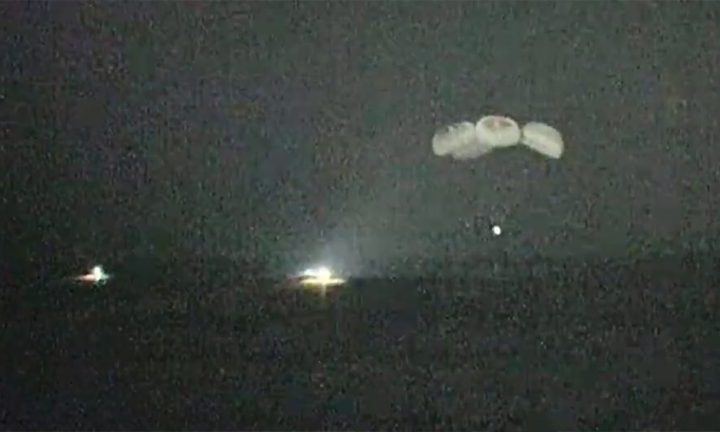
A night-vision camera captures the SpaceX Crew Dragon parachuting to splashdown in the Gulf of Mexico as fast boats arrive to retrieve the crew.
A night-vision camera captures the SpaceX Crew Dragon parachuting to splashdown in the Gulf of Mexico as fast boats arrive to retrieve the crew. NASA TV

The new NASA Administrator, Sen. Bill Nelson, welcomed the crew home and hailed the completion of their mission. “Welcome home Victor, Michael, Shannon, and Soichi, and congratulations to the teams at NASA and SpaceX who worked so hard to ensure their safe and successful splashdown,” he said in a statement. “We’ve accomplished another incredible spaceflight for America and our commercial and international partners. Safe, reliable transportation to the International Space Station is exactly the vision that NASA had when the agency embarked on the commercial crew program.”

Georgina Torbet
Georgina has been the space writer at Digital Trends space writer for six years, covering human space exploration, planetary…
SpaceX Starship reaches orbit for the first time but its historic flight ends early
Starship reaches orbit for the first time and deploys 26 Starlink satellites before an early splashdown.
spacex-starship

After 13 suborbital test flights and more than $15 billion in development costs, SpaceX's Starship has finally reached orbit. The 407-foot megarocket, the most powerful ever built, lifted off from Starbase, Texas, on Monday and delivered its first real payload on it's 14th attempt. The celebration came with an asterisk, though, since SpaceX had to cut the planned 10-hour mission to roughly three hours.

https://twitter.com/SpaceX/status/2104601695711904180

Read more
Starship is finally going orbital, and SpaceX has picked September 22
Flight 14 is aiming for orbit, Starlink V3 deployment and a very long day in space.
Starship rocket.

SpaceX is finally ready to give Starship its biggest test yet. The company says the massive rocket's 14th test flight is scheduled for September 22, when it will attempt to put the upper stage into Earth orbit for the first time. The launch is currently pending regulatory approval, with a 75-minute window opening at 7:15 a.m. CT.

Starship has 26 Starlink satellites to deliver

Read more
Want a city on the Moon? Scientists say there’s not enough water
A billion tons still comes up short
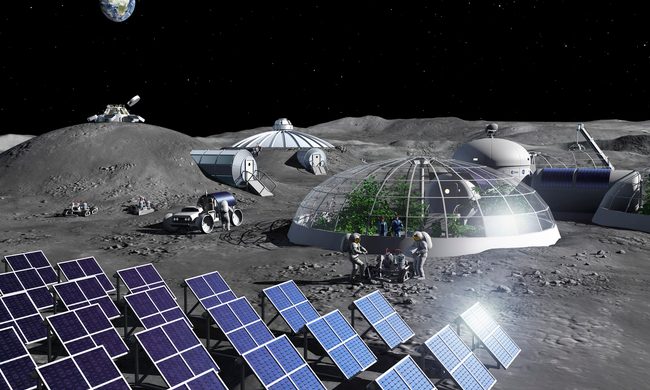
Artist impression of activities in a Moon Base.

For decades, humanity has looked up at the Moon and wondered what it would be like to live on it. Think sprawling cities, factories, research centers, and permanent human settlements. Unfortunately, there is one fairly fundamental problem with that vision.

A new study published in Frontiers in Space Technologies argues that even the Moon's potentially enormous reserves of frozen water may be nowhere near enough to support city-sized populations sustainably. Researchers Martin Elvis and Jonathan McDowell estimate that the permanently shadowed regions near the lunar poles could contain roughly one billion tons of water. It sounds like an extraordinary amount until you put a million thirsty humans next to it.

Read more