1. Home
  2. Space
  3. Photography
  4. News

These amazing Earth photos from the ISS look more like works of art

Add as a preferred source on Google

Two images of Earth captured from the International Space Station (ISS) look more like works of art than real landscapes.

The beautiful photos were taken in recent days by European Space Agency (ESA) astronaut Matthias Maurer from 250 miles up.

Recommended Videos

“I took these colorful pictures of the Arabian Peninsula, but I also wonder what these shapes and lines in the desert are,” Maurer wrote in a tweet accompanying the images, shown below.

A view of Saudi Arabia and Kuwait from the space station.
An image taken from the ISS showing part of Saudi Arabia, Kuwait, and the Persian Gulf. ESA/Matthias Maurer
A view of Saudi Arabia from the space station.
An image captured from the ISS shows the Saudi Arabian desert. ESA/Matthias Maurer

Several people were quick to reply that the dark line running across the top image appears to show the border zone between Saudi Arabia and Kuwait, a suggestion backed up by a quick look at the area on Google Earth.

The striking rusty reds in the second image, on the other hand, appear to be part of the ad-Dahna desert close to the Saudi Arabian city of Buraydah, some 200 miles northwest of the capital, Riyadh.

With the space station orbiting Earth every 90 minutes or so, the constantly changing scenery presents plenty of amazing photo opportunities for astronauts to take advantage of during their downtime.

Most of the Earth photos are taken from the Cupola, the orbiting outpost’s seven-window module that provides panoramic views of our planet and beyond.

Astronauts have the pick of professional Nikon cameras and telephoto lenses for their space-based photography sessions, with the best photos shared on NASA and ESA’s various social media channels.

Recent space station inhabitant Thomas Pesquet also posted some incredible Earth shots during his six-month stint in space. The French astronaut revealed the extra work that he put in to give himself the best chance of grabbing the best images.

Interested to find out more about daily life on the space station? Then check out these insightful videos made by visiting astronauts over the years.

Trevor Mogg
Contributing Editor
Not so many moons ago, Trevor moved from one tea-loving island nation that drives on the left (Britain) to another (Japan)…
SpaceX Starship reaches orbit for the first time but its historic flight ends early
Starship reaches orbit for the first time and deploys 26 Starlink satellites before an early splashdown.
spacex-starship

After 13 suborbital test flights and more than $15 billion in development costs, SpaceX's Starship has finally reached orbit. The 407-foot megarocket, the most powerful ever built, lifted off from Starbase, Texas, on Monday and delivered its first real payload on it's 14th attempt. The celebration came with an asterisk, though, since SpaceX had to cut the planned 10-hour mission to roughly three hours.

https://twitter.com/SpaceX/status/2104601695711904180

Read more
Starship is finally going orbital, and SpaceX has picked September 22
Flight 14 is aiming for orbit, Starlink V3 deployment and a very long day in space.
Starship rocket.

SpaceX is finally ready to give Starship its biggest test yet. The company says the massive rocket's 14th test flight is scheduled for September 22, when it will attempt to put the upper stage into Earth orbit for the first time. The launch is currently pending regulatory approval, with a 75-minute window opening at 7:15 a.m. CT.

Starship has 26 Starlink satellites to deliver

Read more
Want a city on the Moon? Scientists say there’s not enough water
A billion tons still comes up short
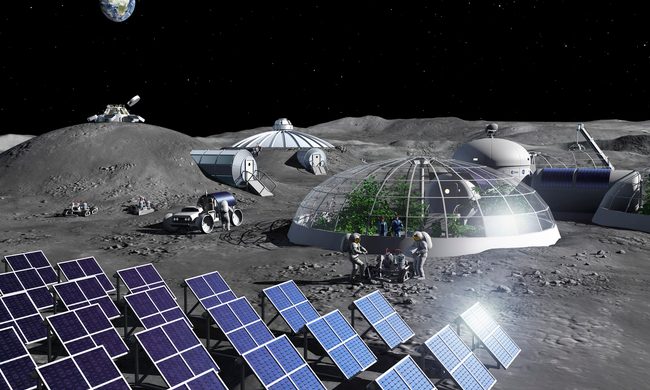
Artist impression of activities in a Moon Base.

For decades, humanity has looked up at the Moon and wondered what it would be like to live on it. Think sprawling cities, factories, research centers, and permanent human settlements. Unfortunately, there is one fairly fundamental problem with that vision.

A new study published in Frontiers in Space Technologies argues that even the Moon's potentially enormous reserves of frozen water may be nowhere near enough to support city-sized populations sustainably. Researchers Martin Elvis and Jonathan McDowell estimate that the permanently shadowed regions near the lunar poles could contain roughly one billion tons of water. It sounds like an extraordinary amount until you put a million thirsty humans next to it.

Read more