1. Home
  2. Space
  3. Emerging Tech
  4. News

Spacesuit-inspired streetwear collection celebrates NASA’s 60th birthday

Add as a preferred source on Google

Some kids dream of being astronauts. Others dream of styling them.

Recommended Videos

For streetwear designer Heron Preston, that latter dream has finally come true. Sort of. After contacting NASA five years ago, offering to design their future spacesuits, Preston managed to swing a collaboration with the agency, releasing a new line of outerwear to celebrate 60 years of space exploration, reports Collection Space.

The collection — which can be found on Preston’s website — includes hats, T-shirts, jackets, hoodies, pants, socks, belt, and a backpack modeled off of the Apollo astronaut’s life-support system. To promote the line, Preston launched a streetwear-clad mannequin up to the stratosphere.

“I designed the entire collection based on their spacesuits and so I did a bunch of research,” Preston said in a video accompanying the launch. “These guys are going up to space to push humanity into the future.

ABOVE THE CLOUDS

“You have to move around a lot, you have to be able to hold tools, and so that is why the bag is designed to be multi-convertible, multi-functional into three parts,” he added. “It is a tote bag, the fanny pack and then it is also a backpack — all in one. And it is designed in the shape of a square, which is just like the backpacks that astronauts wear when they do spacewalks.”

It should come as no surprise that working with NASA entail a few constraints. For one thing, Preston had to follow strict guidelines put in place by the space agency when it reintroduced of the iconic “worm” logo used from 1976 to 1992. Colors were limited to red, gray, white, and black print — and the iconic NASA logo couldn’t sit alongside any other logo or shape.

For Preston, the opportunity to work with NASA was well worth whatever creative restrictions he faced. “I think one of the first exciting moments of working with NASA was just getting a reply that they were open to doing to the project with me,” he said.

The designer even went out of his way to ensure some factual accuracy. ”This is the Fall/Winter 2018 collection,” Preston said, “but it says ‘Fall/Winter 1990’ in respect to the actual time that the logo was actually used. 1990 was one of the last years they could use the ‘N-A-S-A’ logo.”

The collection went on sale at his website and fashion retailers on July 27 (NASA was founded on July 29, 1958.). But, if you’re interested, be prepared for astronomical prices. The parka retails for $1,878, the sweatpants for $422, and the socks for $85.

Dyllan Furness
Former Contributor
Dyllan Furness is a freelance writer from Florida. He covers strange science and emerging tech for Digital Trends, focusing…
SpaceX Starship reaches orbit for the first time but its historic flight ends early
Starship reaches orbit for the first time and deploys 26 Starlink satellites before an early splashdown.
spacex-starship

After 13 suborbital test flights and more than $15 billion in development costs, SpaceX's Starship has finally reached orbit. The 407-foot megarocket, the most powerful ever built, lifted off from Starbase, Texas, on Monday and delivered its first real payload on it's 14th attempt. The celebration came with an asterisk, though, since SpaceX had to cut the planned 10-hour mission to roughly three hours.

https://twitter.com/SpaceX/status/2104601695711904180

Read more
Starship is finally going orbital, and SpaceX has picked September 22
Flight 14 is aiming for orbit, Starlink V3 deployment and a very long day in space.
Starship rocket.

SpaceX is finally ready to give Starship its biggest test yet. The company says the massive rocket's 14th test flight is scheduled for September 22, when it will attempt to put the upper stage into Earth orbit for the first time. The launch is currently pending regulatory approval, with a 75-minute window opening at 7:15 a.m. CT.

Starship has 26 Starlink satellites to deliver

Read more
Want a city on the Moon? Scientists say there’s not enough water
A billion tons still comes up short
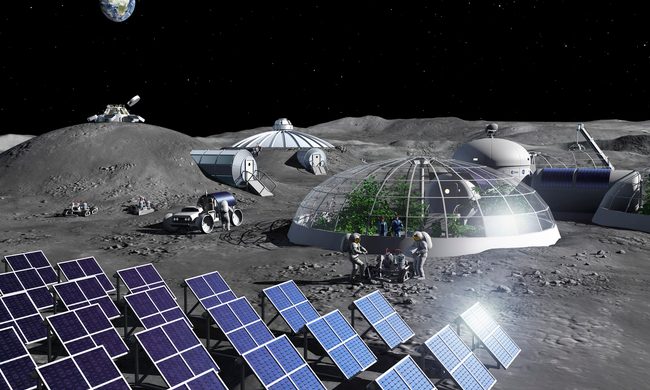
Artist impression of activities in a Moon Base.

For decades, humanity has looked up at the Moon and wondered what it would be like to live on it. Think sprawling cities, factories, research centers, and permanent human settlements. Unfortunately, there is one fairly fundamental problem with that vision.

A new study published in Frontiers in Space Technologies argues that even the Moon's potentially enormous reserves of frozen water may be nowhere near enough to support city-sized populations sustainably. Researchers Martin Elvis and Jonathan McDowell estimate that the permanently shadowed regions near the lunar poles could contain roughly one billion tons of water. It sounds like an extraordinary amount until you put a million thirsty humans next to it.

Read more