1. Home
  2. Space
  3. Emerging Tech
  4. News

How to watch NASA’s first all-female spacewalk on the ISS online

Add as a preferred source on Google

NASA’s first all-female spacewalk is going on outside of the International Space Station (ISS) right now on Friday, October 18 — and you can watch the whole thing live right here on Earth.

NASA will begin livestreaming coverage on NASA Television and the agency’s website beginning at 3:30 a.m. PT on Thursday. The first all-female spacewalk was originally set to take place in March, but had to be delayed because of an issue with spacesuit sizing and a lack of spare parts.

Recommended Videos

Astronauts Christina Koch and Jessica Meir will be conducting the spacewalk, though there’s a chance it might be delayed once again. Assuming everything works out, the actual spacewalk should kick off at 4:50 a.m. PT on Friday, and you can watch it in the player below. 

NASA Live: Official Stream of NASA TV

The pair will venture outside of the ISS to make repairs — specifically, they’ll be installing new batteries. This will be Meir’s first and Koch’s fourth spacewalk.

When asked about whether it was important for her work to be recognized because of her gender, Koch said the following in a video posted to Twitter: “I think it’s important because of the historical nature of what we’re doing. There are a lot of people who derive motivation from inspiring stories from people that look like them, and I think it’s an important aspect of the story to tell.”

According to space.com, of the 566 people who have flown to space, only 64 of those have been women, and of the 38 currently active NASA astronauts, only 12 are women. 

The significance of an all-female spacewalk — aside from it never being done before — is that it will pave the way for more female astronauts to make it to the ISS and beyond. 

NASA astronaut Christina Hammock Koch
NASA astronaut Christina Koch, who will take part in the first all-female spacewalk. STR/ AFP / Getty Images

NASA has plans to land humans on the moon once again by 2024, including the first woman to go to the moon. 

“I have a daughter. She is 11 years old, and I want her to see herself in the same position that our current, very diverse astronaut corps currently sees itself — having the opportunity to go to the moon,” NASA Administrator Jim Bridenstine said in a town hall in May. ”In the 1960s, young ladies didn’t have the opportunity to see themselves in that role. Today they do, and I think this is a very exciting opportunity.”

Allison Matyus
Former Digital Trends Contributor
Allison Matyus is a general news reporter at Digital Trends. She covers any and all tech news, including issues around social…
SpaceX Starship reaches orbit for the first time but its historic flight ends early
Starship reaches orbit for the first time and deploys 26 Starlink satellites before an early splashdown.
spacex-starship

After 13 suborbital test flights and more than $15 billion in development costs, SpaceX's Starship has finally reached orbit. The 407-foot megarocket, the most powerful ever built, lifted off from Starbase, Texas, on Monday and delivered its first real payload on it's 14th attempt. The celebration came with an asterisk, though, since SpaceX had to cut the planned 10-hour mission to roughly three hours.

https://twitter.com/SpaceX/status/2104601695711904180

Read more
Starship is finally going orbital, and SpaceX has picked September 22
Flight 14 is aiming for orbit, Starlink V3 deployment and a very long day in space.
Starship rocket.

SpaceX is finally ready to give Starship its biggest test yet. The company says the massive rocket's 14th test flight is scheduled for September 22, when it will attempt to put the upper stage into Earth orbit for the first time. The launch is currently pending regulatory approval, with a 75-minute window opening at 7:15 a.m. CT.

Starship has 26 Starlink satellites to deliver

Read more
Want a city on the Moon? Scientists say there’s not enough water
A billion tons still comes up short
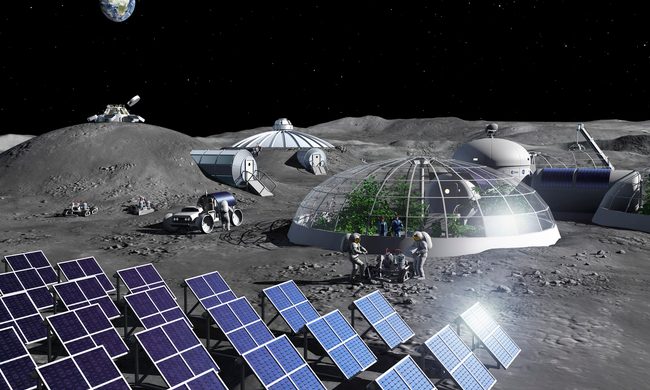
Artist impression of activities in a Moon Base.

For decades, humanity has looked up at the Moon and wondered what it would be like to live on it. Think sprawling cities, factories, research centers, and permanent human settlements. Unfortunately, there is one fairly fundamental problem with that vision.

A new study published in Frontiers in Space Technologies argues that even the Moon's potentially enormous reserves of frozen water may be nowhere near enough to support city-sized populations sustainably. Researchers Martin Elvis and Jonathan McDowell estimate that the permanently shadowed regions near the lunar poles could contain roughly one billion tons of water. It sounds like an extraordinary amount until you put a million thirsty humans next to it.

Read more