1. Home
  2. Space
  3. Emerging Tech
  4. News

SpaceX just sent up two rockets in 48 hours — and landed them again

Add as a preferred source on Google

SpaceX has been following through on its promise to ramp up its mission rate with its reusable rocket technology, over the weekend nailing two launches and landings in the space of just 48 hours.

The private space company’s busiest schedule to date began in Florida on Friday, June 23 when it successfully launched a Bulgarian communications satellite into orbit. The mission marked the second reflight of a Falcon 9 rocket after previously supporting the Iridium-1 mission at the start of this year.

Recommended Videos

Friday’s mission presented a major challenge as the Falcon 9 deployed the satellite into an orbit higher than usual for SpaceX. That meant the rocket would have to endure extra heat and other forces on its descent toward the drone ship in the Atlantic. SpaceX CEO Elon Musk said beforehand that there was a “good chance” the rocket wouldn’t make it back.  In the event, it performed a heavier-than-usual landing, but appeared largely unscathed.

On Sunday SpaceX turned its attention to Vandenberg Air Force Base in California, where it launched another rocket (above), this one deploying 10 satellites for communications company Iridium. Extreme conditions, including fog, wind, and rough seas, meant this mission also faced challenges. Indeed, the team was forced to reposition the drone ship in the Pacific, but in the end the landing was perfect. A little while later, Musk posted a sped-up video (below) of the successful landing with footage captured by a camera attached to the rocket.

Sped up version of today’s rocket landing on the Droneship Just Read the Instructions (guess it did)

A post shared by Elon Musk (@elonmusk) on Jun 25, 2017 at 2:41pm PDT

Flying a used rocket just six months after its first flight — as it did on Friday — marks real progress for SpaceX, which took a year to refurbish its first relaunched rocket back in March. Fast turnaround time is important if it is to achieve its ambition of efficient space flight, with the aim to have boosters ready to fly again in just days rather than months.

Riding high

SpaceX is riding high following a number of recent high-profile successes, which besides its March reflight and landing include its first-ever reuse of a cargo ship that’s currently docked at the International Space Station.

It all looked very different just nine months ago when SpaceX suffered a major setback after one of its Falcon 9 rockets exploded on a Cape Canaveral launchpad. But after months of investigation, the team fixed the issue and has now been enjoying a string of successes as it continues its quest to perfect its reusable rocket system in preparation for more ambitious missions into deep space.

Trevor Mogg
Contributing Editor
Not so many moons ago, Trevor moved from one tea-loving island nation that drives on the left (Britain) to another (Japan)…
SpaceX Starship reaches orbit for the first time but its historic flight ends early
Starship reaches orbit for the first time and deploys 26 Starlink satellites before an early splashdown.
spacex-starship

After 13 suborbital test flights and more than $15 billion in development costs, SpaceX's Starship has finally reached orbit. The 407-foot megarocket, the most powerful ever built, lifted off from Starbase, Texas, on Monday and delivered its first real payload on it's 14th attempt. The celebration came with an asterisk, though, since SpaceX had to cut the planned 10-hour mission to roughly three hours.

https://twitter.com/SpaceX/status/2104601695711904180

Read more
Starship is finally going orbital, and SpaceX has picked September 22
Flight 14 is aiming for orbit, Starlink V3 deployment and a very long day in space.
Starship rocket.

SpaceX is finally ready to give Starship its biggest test yet. The company says the massive rocket's 14th test flight is scheduled for September 22, when it will attempt to put the upper stage into Earth orbit for the first time. The launch is currently pending regulatory approval, with a 75-minute window opening at 7:15 a.m. CT.

Starship has 26 Starlink satellites to deliver

Read more
Want a city on the Moon? Scientists say there’s not enough water
A billion tons still comes up short
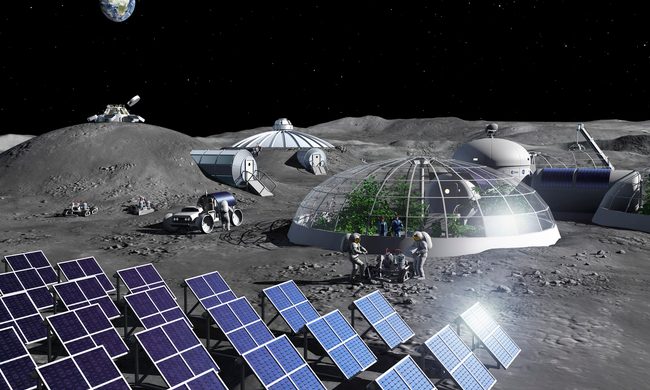
Artist impression of activities in a Moon Base.

For decades, humanity has looked up at the Moon and wondered what it would be like to live on it. Think sprawling cities, factories, research centers, and permanent human settlements. Unfortunately, there is one fairly fundamental problem with that vision.

A new study published in Frontiers in Space Technologies argues that even the Moon's potentially enormous reserves of frozen water may be nowhere near enough to support city-sized populations sustainably. Researchers Martin Elvis and Jonathan McDowell estimate that the permanently shadowed regions near the lunar poles could contain roughly one billion tons of water. It sounds like an extraordinary amount until you put a million thirsty humans next to it.

Read more