These last few days have been rocky for HTC, who not even a week ago was rumored to reveal the HTC Vive’s wireless sequel at CES 2017, only to debunk it moments later. Rest assured, the company by no means shied away from this year’s Consumer Electronics Show. In fact, HTC showcased not only a brand-new subscription service at its presser, but even introduced an assortment of hardware amenities.
Vive Tracker


For instance, HTC realizes that with more and more VR-related peripherals coming to market, demand for developer units continues to multiply. That’s why the company has decided to release the Vive Tracker, one accessory that will “make it even easier for developer to prototype and market” their products, according to Vive general manager Daniel O’Brien.
“The Vive Tracker is the first step in growing an ecosystem of third-party accessories that will change how we interact with virtual experiences and provide consumers and businesses with an unlimited amount of content opportunities,” he said.
The Tracker itself measures in at only 85 grams in weight, with a diameter of 99.65 millimeters, and a height of 42.27mm. At CES in particular, it was shown off in conjunction with a handful of properly equipped accessories such as the world’s first VR camera, numerous VR shooter rifles, haptic gloves, and training apps for both MLB players and firefighters.
HTC wants the Vive Tracker to spur a ecosystem of VR accessories. This is an area of potential that has been surprisingly barren so far, because accessories don’t have an established, standardized way to communicate with the headset and its sensors. Vive Tracker should solve that problem, at least for the HTC Vive.
It’s scheduled to release in the second quarter of 2017, though Valve says it’s giving away 1,000 to developers the coming days.
Vive Deluxe Audio Strap


Meanwhile, the Vive Deluxe Audio Strap is intended to improve the quality of 360-degree audio consumption by making it more comfortable and practical to use. Complete with a pair of built-in headphones, and a size dial for a speedier fit, O’Brien claims that the Deluxe Audio Strap will bring forth a “seamless audio solution that also fits more comfortably for Vive users.” This, too, is expected to launch in Q2 2017, though pricing is yet to be revealed.
Vive wireless adaptors


We may not be getting the HTC Vive 2 this year, but wireless is apparently “open-standard,” meaning third-party companies have collaborated with HTC to make it happen with the current head-mounted display. Because of the HTC Vive X accelerator program, which was announced earlier in the year, HTC was able to work with TPCast, who has devised the very first wireless adaptor for HTC Vive. This is coming in the second quarter of 2017 for a suggested retail price of $249. Unfortunately, it looks as though the battery life will only last users an hour and a half, though a five-hour XL version of the same battery will come out “at a later date.”
Viveport
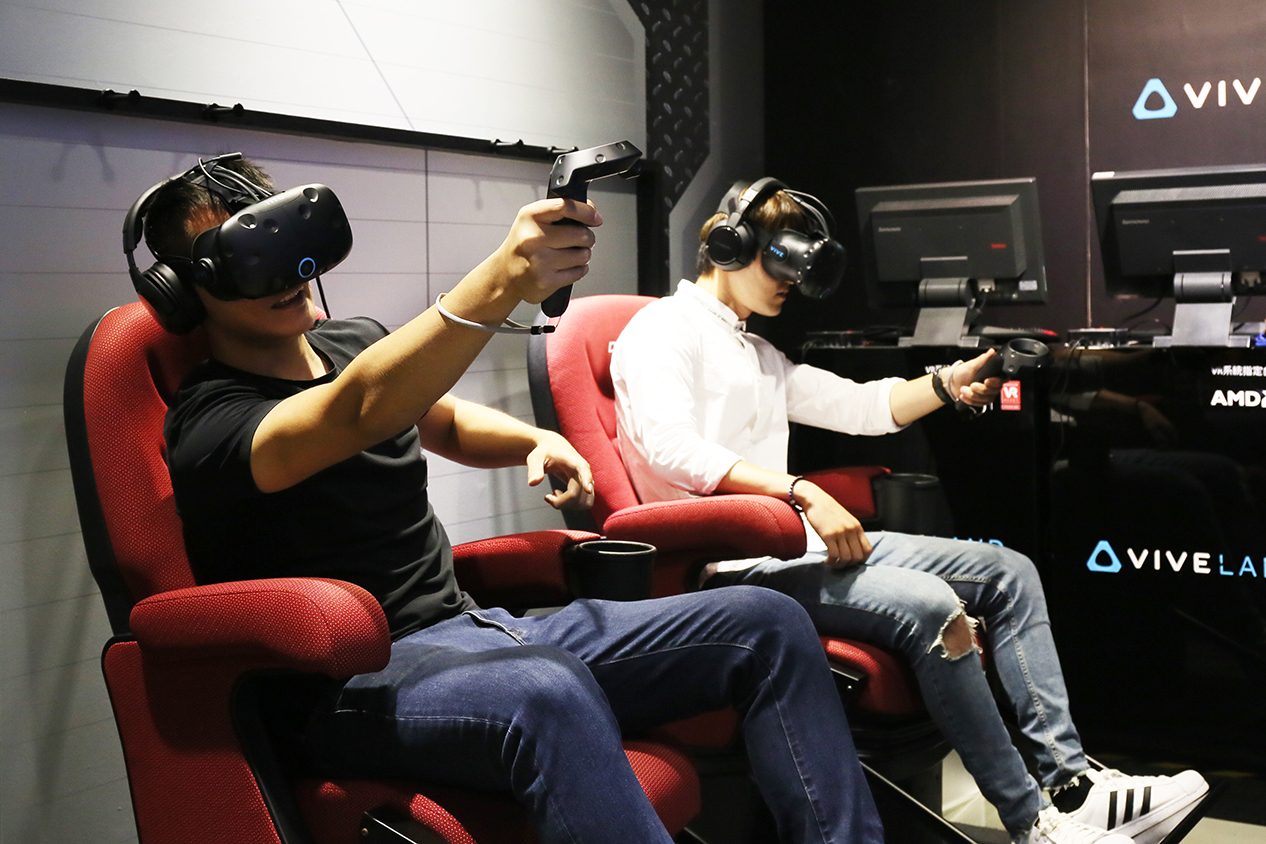
Lastly, HTC Viveport (the company’s VR storefront) will soon house a subscription-based platform announced for the company’s headset, which caters to VR arcades and other businesses around the world. What’s more, for developers, you don’t have to worry about your content being leased without your permission. Rather, Viveport supports an opt-in model, allowing devs to choose whether they want their apps on the marketplace.
“The Vive Tracker is the first step in growing an ecosystem of third-party accessories.”
“For developers, this is yet another opportunity for them to reach broader audiences,” said Viveport president Rikard Steiber. Meanwhile for VR users, he said that the “way they discover and consume content through popular subscription services for music, films, TV, and games is coming to virtual reality.”
HTC has also revealed that its dedicated Viveport Arcade app, which was unveiled last November, has expanded worldwide with over 1,000 VR arcade locations using the software. The company expects this number to grow to 5,000 by the end of this year.