1. Home
  2. Wearables
  3. Health & Fitness
  4. Outdoors
  5. News

Let your clothes be your personal trainer with smart fitness gear by Athos

Add as a preferred source on Google

Looking to improve your workouts at the gym? Don’t want to hire a personal trainer? With the smart fitness gear by Athos, you won’t have to.

These smart clothes are full of sensors that track how your different muscles are used during a workout. This data is then transmitted to a smartphone app and displayed with an easy-to-read diagram.

Recommended Videos

Let’s say you’re wearing an Athos shirt and you hop on the bench press. By checking the data sent to your phone, you can see if you are favoring one arm over the other. Similarly, the app can be used to make sure that squats are properly activating the glutes.

The teach was designed by Dhananja Jayalath and Christopher Wiebe, two students from the University of Waterloo in Ontario, Canada. After working out together at the gym, the pair came up with the idea. They weren’t sure if they were performing the exercises properly, but having a personal trainer was too expensive. The only solution was to make one themselves.

Athos clothing uses breathing and electromyography sensors sewn into the fabric. This gathers any electrical activity in the muscles and beams it to the app to be analyzed.

Currently, Athos only features a couple products for purchase. A men’s shirt and shorts will run you $696 while women’s leggings will cost $348. Because of the high price point, the company is focusing its attention on professional athletes from high school to the Olympics.

While it may seem cheaper to hire a personal trainer, there is hope. Athos is currently working to create more affordable options for the casual market. Also, if three products sound rather limited, they plan to increase the diversity of their gear as well.

With Athos smart gear, wearables are moving way beyond the simple step counter and heart monitor. By detecting which muscles are activated, our workouts can become much more efficient. it’s the next big step in increasing your performance.

Garrett Hulfish
Garrett is the kind of guy who tells you about all the tech you haven't heard of yet. He also knows too much about other…
This smart ring makes a blood pressure promise Apple and Oura still won’t
The $399 Signal Ring provides actual systolic and diastolic readings, but it’s launching as a wellness device without FDA clearance
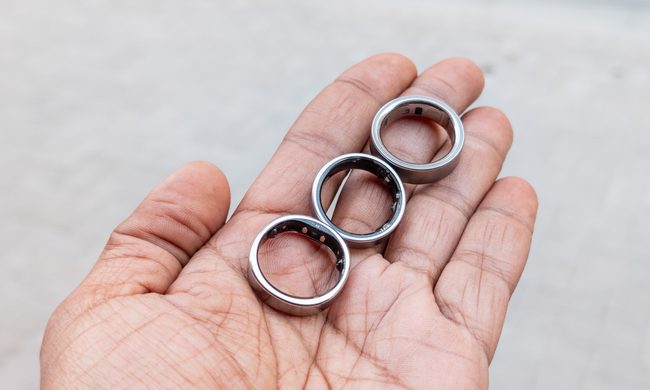
Oura Ring 4, Galaxy Ring and RingConn Gen 2 in the palm of a hand

Vital Signals has unveiled a $399 smart ring that goes further than Apple and Oura currently dare. The Signal Ring displays numerical blood pressure readings without requiring an arm cuff for initial or recurring calibration.

Bloomberg reports that preorders open July 16, with shipping scheduled to begin in October. The ring can collect readings during the day and overnight, then display the results through an iOS or Android app.

Read more
HTC’s smart glasses are apparently coming to the US, but HTC hasn’t said so
Amazon briefly listed the VIVE Eagle for a September 1 launch, while HTC still says the $499 glasses are only available in Taiwan
A woman wearing the HTC Vive Eagle smart glasses

HTC’s VIVE Eagle smart glasses could finally be heading to the US. Apparently, Amazon got the memo before HTC was ready to share it.

Notebookcheck spotted six versions available for preorder at $499, each carrying a September 1 release date. Amazon has since pulled the pages, so new orders are closed and anyone who already placed one is left wondering whether it still counts.

Read more
Don’t expect smartwatches and fitness bands with replaceable batteries anytime soon
Turns out even the EU thinks your smartwatch is too small for a battery swap.
Wristwatch, Arm, Body Part

The EU has a habit of pushing tech companies to adopt meaningful changes in their product. It's the reason your iPhone finally has a USB-C port, and it's also why companies now have to offer spare parts and repair support for electronics for several years after launch. So naturally, many of us assumed wearables were next in line for mandatory swappable batteries. Turns out, the EU just went the other way.

So what did the EU announce?

Read more