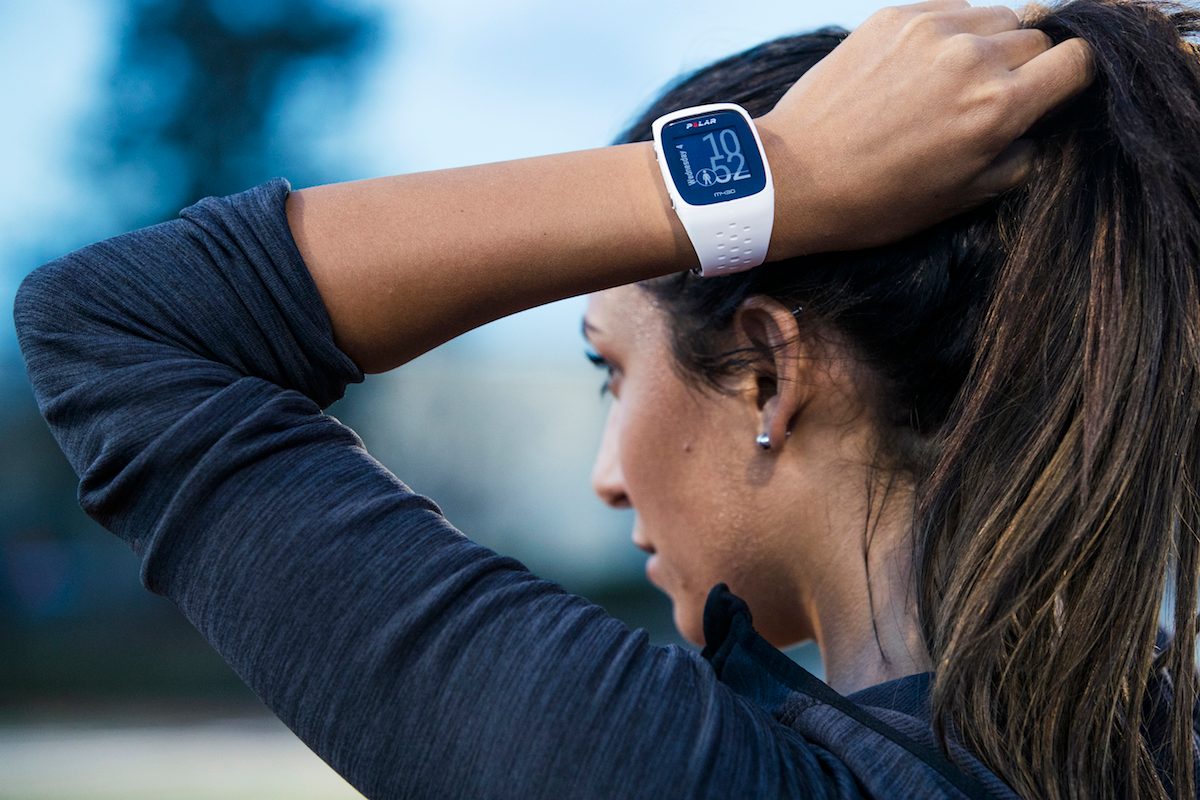
Fitness wearable manufacturer Polar has taken an exhaustive look at the workout data collected from active users of its devices and has discovered some very interesting findings. The study, which examines data collected from 45 million runs that took place between April 2017 and March 2018, indicates that even serious runners can see significant fitness gains by focusing on a heart rate-based training regimen. In fact, they can potentially lower their race times significantly without increasing their training time or intensity.
When defining the scope of this study, Polar created what it calls the Running Index, which tracks an athlete’s heart rate versus their speed in order determine just how effectively they are training. Those who can run at a faster pace, while maintaining a lower heart rate, will score better on the Running Index, indicating a higher level of fitness and VO2 max, which is often used as an indicator of cardiovascular efficiency.
Polar also broke down the athletes that were part of the study into three categories — ambitious, regular, and intensive. Those in the ambitious group were pro level runners who workout for nine or more hours in a given week. Meanwhile, those categorized as regular tended to run on average about four hours per week, while intensive runners also worked out about four hours a week, but did so at a faster pace. On average, the intense runners ran a minute faster per mile than those in the regular group. Each of the three types of runners spent different amounts of time in various cardio intensity zones, giving them each their own unique VO2 max profile.
When analyzing the data, researchers discovered that although the intensive runners were faster than their regular counterparts, they weren’t necessarily fitter. In fact, when using the Running Index as a basis for comparison, the regular runners achieved a score of 50, while the intensive group managed a score of 46. The takeaway here is that while both groups train the same number of hours, the regular runners spent more time in an efficient cardio zone — even at a slower pace — while the intensive group pushed themselves harder. That didn’t result in higher levels of cardio fitness, however, resulting in a lower Running Index score. For reference sake, the ambitious group of runners scored a 54 on the Running Index, unsurprisingly indicating that they are the most fit of all.
Athletes who use Polar wearables are also able to take part in the Polar Running Program, which helps them create a personal training regimen that is built specifically to meet their individual needs. Those who used this system became significantly more efficient runners as a result. The research data indicates that those who used the Polar Running Program saw impressive gains when training for, and competing in, races. So much so that 5k and 10k runners shaved more than six minutes off their times, while half-marathon runners improved by 23 minutes and full marathoners cut 45 minutes from their pace.
Polar credits these gains to athletes understanding how to race and train in the proper heart rate zone, which the company’s device can help runners measure and understand better. Some of those devices can even provide real-time feedback during a run to alert users when they are pushing themselves too hard or not hard enough.
To find out more about this research study, check out a recent post on the company’s blog.
Testing deeplink without true affiliate network connection–
Testing deeplink with true affiliate network connection–