
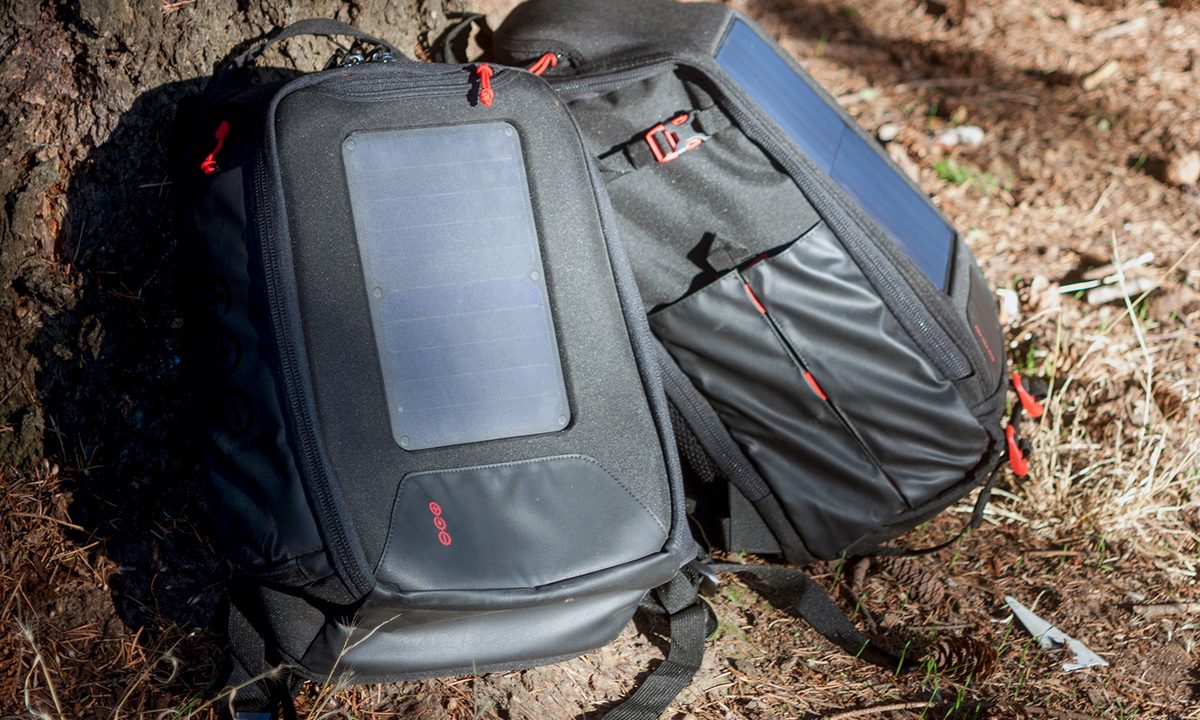

“With an upgraded panel, the OffGrid solar pack delivers real wattage away from the wall.”
- Functional build
- Efficient
- Great for extended outings
- Whale of a battery
- Pricey
- A little heavy
“Why you can trust Digital Trends – We have a 20-year history of testing, reviewing, and rating products, services and apps to help you make a sound buying decision. Find out more about how we test and score products.“
When we tested Voltaic Systems’ first generation OffGrid solar backpack we walked away with a rather lackluster feeling. After early Autumn rains in the Pacific Northwest subsided and the literal dust from regional wildfires settled, we had a chance to review the next generation OffGrid and give it a proper run through the ol’ gauntlet on the dusty trails of Oregon.
While the first iteration left us with plenty of complaints and little extra juice, our latest review finds the OffGrid to masterfully swerve many of these previous design flaws — it’s certainly no sophomore solar slouch. This time around, Voltaic finally ditched the blinding, highly reflective solar panel and beefed up the battery. Aside from that, however, the bag itself is virtually identical to its predecessor, for the better and for the worse. In fact, with the added functionality, the big boned build may actually be growing on us.
The OffGrid evolves… sort of
Overall, the original OffGrid was quite intelligently and aesthetically conceived. Design wise, our main complaint with the first OffGrid was the sheer size of the somewhat clunky bag. While Voltaic certainly didn’t attempt to reinvent the OffGrid with the follow-up model, the company did build on what actually worked and ditched what didn’t — for the most part.


The rigid body still makes the pack protrude clumsily from your back — even when completely empty — giving the bag the overall elegance of a svelte mini-fridge with straps. The newest OffGrid is just as tall and deep (19 inches by 7 inches) as the previous model, meaning you still have more than 25 litres of internal storage. While testing on a hike, we stowed a Yuneec drone, a change of clothes, a large water bottle, walkie talkies, snacks, and a faithful flask with ease.
The slide-in compartment in the back stows laptops up to 15 inches and the small, rubberized ports peppered throughout the bag make it easy to connect your devices to the internal battery (via USB) even when traversing multiple pockets and walls. Deep dimples along the mesh backside breathe adequately, while adjustable mesh shoulder and sternum straps add welcome ergonomic splashes to keep the 4-pound bag from weighing you down too much.
Note: It’s important to point out that the battery and panel are substantially larger this time around and weighs only a half pound more than the original. More on that below.
Thankfully, Voltaic also kept the slick, flat black color scheme with bold, blood red accents along the straps, buckles, and adjustable storage compartments. However, with the third generation (fingers crossed) the company may finally kill the reinforced bulbous compartment on the top of the bag. This protruding pocket continued to be in the way while biking — clipping our helmets with every pedal and push. It’s a convenient place to stow delicate items like sunglasses but it would be better suited in the pack and not on it.
A less obtrusive solar panel
What stands out most with the latest OffGrid is its new matte black 10 Watt/6 Volt solar panel. The last model used a heavily glossed, standard solar panel that glinted rather conspicuously front-and-center on the backpack. Its updated flat, black finish lacks the loud sheen of the first model, allowing the waterproof and UV resistant panel to blend in naturally with the surrounding matte pack without raising any eyebrows or blinding innocent bystanders. This time around, complete strangers reminded us that there was indeed a solar panel on our backpack exponentially less frequently.
It turns out the boxy build may actually have a use other than securing your gear on the go.
After about six hours into our hike, under fairly clear skies with minimal canopy overhead, the panel charged the new and improved battery more than 50-percent. This was rather impressive considering we were simultaneously charging an iPhone SE via one of the two USB battery outputs. It turns out the boxy build may actually have a use other than securing your gear on the go.
When the pack sits horizontally, we discovered the flat solar panel served as a solid level launch point for our Yuneec drone, keeping the blades and landing skids well above the mangy brush along some of our trails. This is more of a haphazard (albeit welcome) design bonus and less of a selling point given the very specific situational use, however, drone enthusiasts/photographers will certainly appreciate it.
A bigger battery
The new OffGrid boasts a massive Li-Polymer 12,000mAh capacity, 44 Watt hour V44 USB Battery, shoring up yet another of our prior gripes. The first generation featured a less-than-rousing V15 4,000mAh USB battery. The latest battery — with two USB ports (5V/2A and 5V/1A) and more than triple the original capacity — rejuvenates your smartphone, iPad, tablet, drone, or camera with plenty of juice leftover. Similar to the previous generation, a series of LEDs along the top clearly indicate the overall battery life.
Warranty information
Voltaic Systems bags and solar panels all carry a two-year warranty for “defects in materials and workmanship” and all Voltaic batteries carry a one-year warranty. The company will repair or replace any components which fail while undergoing “normal use during this time period.” Voltaic will also replace any part for 30-percent of the retail price after this warranty period — as long as Voltaic still has the part in stock and individuals can provide proof the bag was purchased new.
Our Take
With a more capable solar panel and a whale of a battery, the latest OffGrid actually feels like a solar equipped backpack designed to function in the field rather than an outdoor novelty item reserved for the most ardent of shameless technophiles. In a specialized market crowded with blase and all-out utilitarian models, the stylish OffGrid solar pack walks the walk without looking the part.

The only real drawback is once again the size and weight. Nonetheless, the bag does allow you to pack essentials for a weekend getaway and then some. However, doing so certainly pushes the four-pound base weight closer to 15 or 20 pounds in a hurry, which is certainly something to consider. A rather hefty base weight is more of an inherent issue with the technology itself and not a quandary reserved solely for the OffGrid by any means.
Is there a better alternative?
Look, there are plenty of solar panel backpacks available for under $100 — and some even under $50 — however, some of these high-rated packs come with shoddy panels and batteries with minimal storage capacity.
If you’re in the market for a barebones solar pack look elsewhere, there are plenty of budget options to choose from. That said, the OffGrid, with a rugged 10-Watt, 22-percent efficient solar panel, and a 12,000mAh battery pack to boot, is a solid bet.
Folks who are seeking a solar bag that won’t break the bank should consider Voltaic’s Converter Solar Backpack. You’ll make a few sacrifices when it comes to internal storage, battery capacity, and recharging, but you’re also saving a whopping $70 in the process.
For convenience and practicality sake, individuals who are simply looking for a little extra juice on the trailhead might be better off buying a dedicated portable charger to stow in their regular duffel.
How long will it last?
As with other solar products, this is a tough question to answer resolutely. The price of solar has dropped substantially over the past few years and, as demand increases, should continue to do so. However, we are discussing a $200 investment and not a new car. Simply put, casual hikers and even more adventurous outdoorsmen should get a couple years out of this pack before flirting with the idea of a replacement or upgrade.
Should you buy it?
If you’re in the market for a solar backpack more than capable of storing excess power (even while simultaneously charging other devices) you should buy this pack, plain and simple. In a market brimming with expensive imposters and cheap hacks, the OffGrid is the real [supersized] deal. While the OffGrid does make a solid daily duffel, don’t buy the OffGrid if you rarely need to utilize the solar component — shelling out $200 for a 9-to-5 bag, is a little impractical.


