For many car fans, it’s almost too painful to watch.
A Land Rover Defender, Britain’s classic off-road vehicle, is ripped apart by a giant metal claw (above) and deposited on top of a scarp heap like a head on a medieval pike outside a king’s castle. The people recording the proceedings declare it a victory for law and order. Golf clap.
The video of a pristine Defender being destroyed by U.S. Customs and Border Protection (CBP) has been making the rounds on YouTube, showing just how seriously the government takes illegally imported vehicles – when they locate them.
Emissions and safety regulations restrict which cars are sold in the U.S., and there are always a few good ones that get left out. That’s why someone was willing to risk having their new Land Rover crushed: they wanted a real-deal Defender, not an LR4.
Cars not officially sold in the United States are known as “grey market” imports. While there are plenty of reasons to want one, getting one can be very difficult.

Why go grey?
Grey market imports may be desirable, but they’re kept away from American dealers for a reason. In order to be legally sold in the United States, a car needs to comply with a long list of emissions and safety regulations.
Land Rover stopped selling the Defender here in 1997 because it didn’t want to modify it to meet new safety standards requiring driver and passenger front airbags and more robust side impact protection. That’s why the one the CBP found is being turned into paper clips.
Tailoring vehicles to a country’s specific regulations just doesn’t always make financial sense for carmakers, especially when those vehicles are low production models like the Defender or the Lotus Elise, which was pulled from the U.S. after a new law requiring dual-stage airbags was passed. But that hasn’t stopped people from trying to import their favorite foreign cars anyway.
In the 1990s, there was a performance boom in Japan, with high tech sports cars like the Nissan Skyline GT-R and special editions like the Honda Civic Type R tempting gearheads from afar. These Japanese Domestic Market (JDM) cars are still popular gray market imports today.
Weirdly, so are some Japanese cars from the other end of the spectrum. In Japan, tiny kei vehicles are preferred for their small size and cheap insurance, but Oklahoma farmers realized that they were also a good, fuel efficient alternative to full-size pickup trucks. After some lobbying, the kei trucks were legalized in Oklahoma and a few other states. But now, the Feds may have them in their sights as well.
Certain supercars, like the McLaren F1 and Porsche 959, also weren’t officially imported when new. However, in both cases owners found ways around that (more on those two later).
 Loophole 1: The 25-year exemption

So you want that unobtainable exotic sports car, or that unbelievably fuel efficient micro car? What should you do? The best bet is to wait.
After 25 years, a car is exempt from all National Highway Traffic Safety Administration (NHTSA) safety regulations (EPA emissions regulations expire after 21 years). In the eyes of the law, a 25-year-old car is an antique and thus eligible for more lenient treatment.
It may seem strange to label a brand new car “unsafe” while allowing a car from the Reagan Administration onto public roads, but the government isn’t making a direct comparison. The regulators are just assuming that most people won’t use their older cars as daily drivers, which, if you pay attention to what’s being driven on public roads, is clearly not the case.
Thanks to the exemption, formerly forbidden rides like the Ford Sierra RS500 Cosworth (pictured above) are now legal – if you can find a good one.
That’s what the importers of that unfortunate Defender were banking on. Since the Defender hasn’t changed much over the years, they backdated a newer model, even changing the VIN tag. Unfortunately for the owner who undoubtedly paid a hefty sum to modify, ship and attempt to import the Defender, the eagle-eyed CPB inspectors were not fooled. We’ll assume there was no refund clause in the attempt.
Loophole 2: “Show and Display”

However, some cars are literally just too cool to follow the rules. If the car you want is special enough, it just might qualify for importation. In this case, “special” mostly means “really expensive.”
Remember the Porsche 959? It wasn’t officially imported to the United States, but several Porsche fans, including Bill Gates, wanted one (or more). Gates’ 959 was impounded, convincing him to lobby for a special exemption for exotic cars called “show and display.”
To qualify for show and display, an owner must convince the NHTSA that a car “is of such historical or technological significance that it is worthy of being shown or displayed in this country.”
Since the car is ostensibly in the country for display only, the exemption also limits owners to 2,500 miles of driving on public roads per year, or about 200 miles a month. How close is NHTSA monitoring the odometer on Mr. Gates’ 959? We’ll likely never know so he can probably sneak in more than a few hours a month behind the wheel.
The list of cars that qualify for show and display reads like a dream garage. In addition to the 959, there are exotics like the Jaguar XJ220, Bugatti EB110 and Aston Martin DB7 Zagato.
Any car can theoretically be added to the list if the owner makes a strong enough case but, not surprisingly, importers seem to be focusing on cars that go fast. There doesn’t seem to be a big U.S. demand for Trabants.
Or, just make it legal

The McLaren F1 is also on the show and display list, but when it went on sale in the mid-1990s, the rule hadn’t gone into effect. Instead, a company called Ameritech converted individual cars to U.S.-spec, adding hideous bumpers and headlights to comply with the safety regulations.
1G Racing (now called Rossion) builds copies of British Noble supercars under license. Like the Ameritech McLarens, they’re modified to meet U.S. standards.
Another, more legally ambiguous method, is to try to convince the government that your car is actually a random collection of parts.
A Wisconsin man named Justin Beno bought two 1990s Nissan Skyline GT-Rs as bare shells, with the VIN tags shipped separately. He gradually assembled them from individually shipped parts.
This method might work for getting a car into the country, but it won’t work when it comes to getting it registered. Both of the Skylines were crushed after the Wisconsin Department of Transportation found out about them.
Forbidden fruit
Importing a new gray market car just isn’t that easy. After all, it’s illegal. Luckily, Americans aren’t missing out on as many cool cars as we used to.
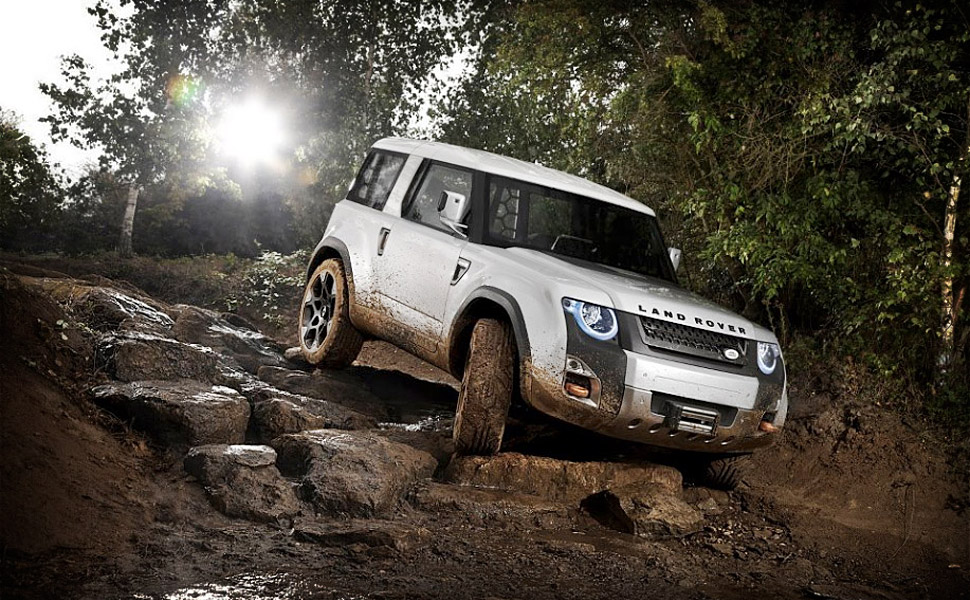
Many cars that used to be excluded from the U.S. are now sold here. The Nissan GT-R, Mitsubishi Lancer Evolution, and Ford Focus ST are just a few examples. Even the Defender will be making a comeback, possibly in 2014.
There may be even more on the way as carmakers work to meet standards that are becoming for standardized around the globe as time goes on.
The United States and the European Union are discussing a free trade agreement that would synchronize American and European emissions and safety standards. With the same standards in effect in both regions, carmakers wouldn’t have to build different versions of cars for different markets, making it easier for cars from Over There to come here.
Maybe someday, there won’t be a need to scarp innocent Land Rovers.
Do you have a favorite car that isn’t sold in the States? Tell us about it in the comments.


