1. Home
  2. Emerging Tech
  3. Health & Fitness
  4. News

Future contact lenses may measure glucose, detect cancer, monitor drug use

Add as a preferred source on Google

In the future, your contacts lenses may do more than help you see clearly — they may help save your life.

Engineers at Oregon State University are working to embed transparent sensors into contact lenses, which could then monitor biomarkers to track drug use, blood glucose levels, or even detect early signs of cancer.

Recommended Videos

“My group had been working on a different technology for glucose sensing … which is similar to what is used for glucose test strips,” Greg Herman, a chemical engineer who is leading the research, told Digital Trends. “On a separate project, we were working on transistors that can be transparent. It came to me that we could modify the transistor to be a sensor and make it fully transparent.” The step from conception to creation came quickly, he added.

In order to design the biosensors, Herman referred to indium gallium zinc oxide (IGZO), a compound he invented with some colleagues years ago while working in industry. IGZO has already revolutionized touchscreen sensitivity.

Instead of offering consumers higher resolution devices, Herman’s new use for IGZO enables continuous glucose monitoring by carrying an enzyme that reacts with glucose to change the lenses conductivity and signal a patient’s glucose level.

“The thought with the contact lens is that it will give diabetic patients more flexibility in managing their glucose levels,” he said.

Over 2,500 different biosensors could theoretically be embedded in a 1mm square of these contact lenses, according to Herman, detecting things like uric acid levels and cancer biomarkers. However, such a device is still some years off.

“We are still in the early stages, and it is difficult to say how long it will be before they are available commercially,” he said. “We have talked to a couple companies, and are hoping to work with them to accelerate the technology.”

Herman presented his research this week at a meeting of the American Chemical Society.

Dyllan Furness
Former Contributor
Dyllan Furness is a freelance writer from Florida. He covers strange science and emerging tech for Digital Trends, focusing…
OpenAI just made GPT-5.5 Instant more fun to talk to, and users may actually notice
The company says its most-used ChatGPT model is getting better at advice, decision-making, and everyday conversations.
Man using ChatGPT on a laptop

For years, AI companies have competed by talking about benchmarks, reasoning scores, and coding performance. OpenAI's latest ChatGPT update takes a different approach. Instead of focusing on raw intelligence, the company is making its most popular AI model more enjoyable to talk to.

OpenAI says GPT-5.5 Instant now better understands what users want

Read more
Claude can now join your Slack channels and work alongside your team
Laptop running Claude Fable

For years, AI assistants have been siloed. You open ChatGPT, Claude, Gemini, or Copilot, type a prompt, get an answer, and move on. Anthropic's new Claude Tag feature takes a different approach. Instead of making employees jump into a separate AI chat every time they need help, it brings Claude directly to where many teams already spend their day: Slack.

Add Claude to a channel, grant it access to needed tools, and tag @Claude for help — whether analyzing data, writing reports, reviewing code, or investigating incidents. But Claude Tag isn't just another chatbot integration. Its key differentiator is that Anthropic positions it as a digital coworker for your team, enabling seamless collaboration where multiple users can jointly interact with the same AI within their work environment.

Read more
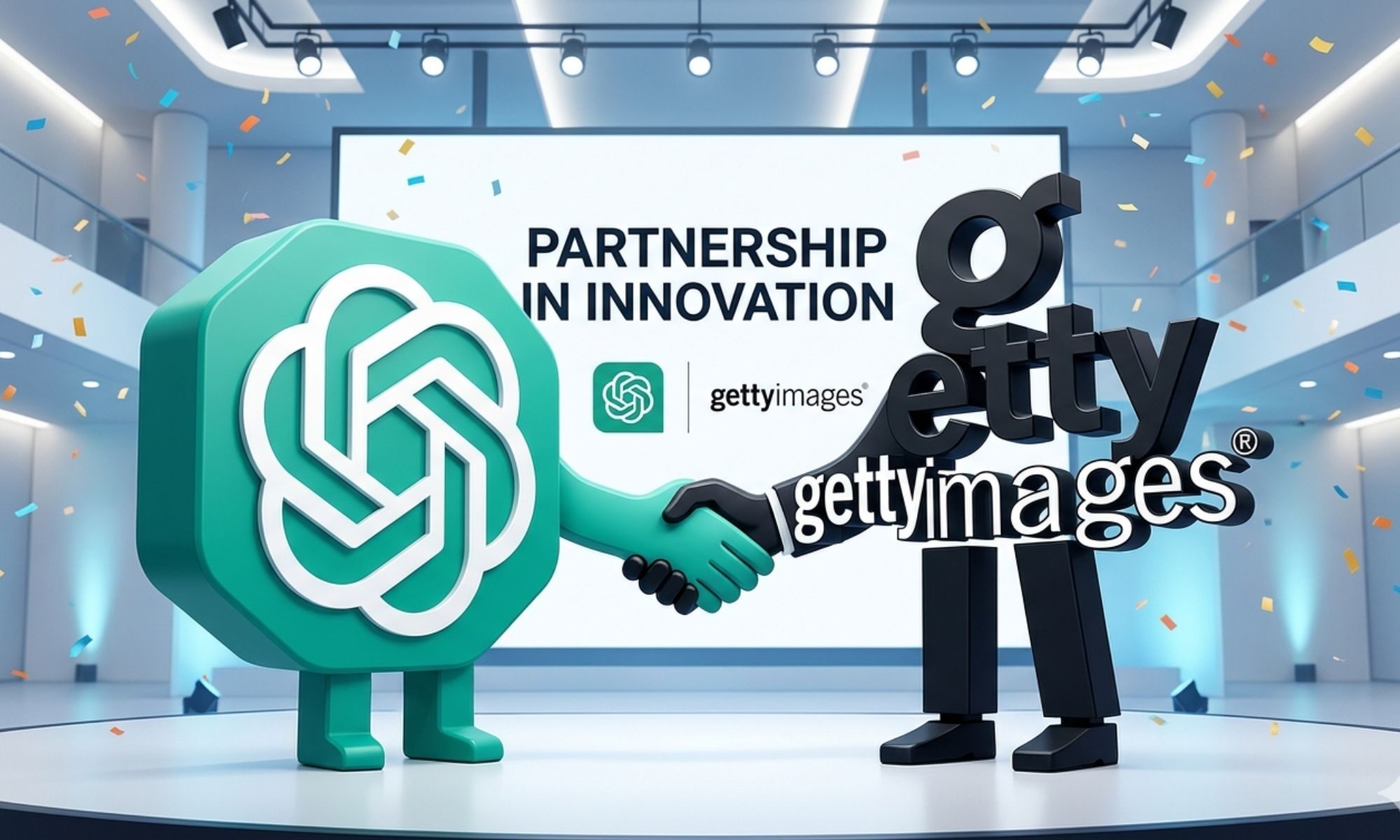
Getty Images accused AI of wholesale theft. It’s now an official ChatGPT image partner.
Advertisement, Shop, Clothing

The AI industry's most fascinating stories often come from unlikely alliances, and this is certainly one of them. Getty Images, a company that has spent years raising concerns about how AI models are trained and how creative work is used, is now officially partnering with OpenAI.

The new agreement will allow Getty Images' licensed content to appear across ChatGPT's search and discovery experiences. That means users may begin seeing Getty's professionally licensed photos and visual assets integrated into ChatGPT responses, adding more visual context to searches and AI-generated answers. Getty says the goal is to make AI-powered search more useful and trustworthy by relying on high-quality, licensed content rather than the murky sourcing practices that have sparked countless debates across the AI industry.

Read more