1. Home
  2. Emerging Tech
  3. News

NASA and Japan just released over 2.95 million thermal satellite photos of Earth, for free

Add as a preferred source on Google

Japan’s Advanced Spaceborne Thermal Emission and Reflection Radiometer (ASTER) instrument has been orbiting the Earth for the past 16 years collecting data about the Earth’s surface. Previously, anyone could access ASTER’s topographic maps for free, but individuals had to pay a fee to obtain more detailed data for analysis. Now, following an announcement by NASA and Japan, all of ASTER’s maps and data products are available to the public free of charge.

ASTER is one of five sensing instruments on NASA’a Earth Observing Terra Spacecraft and was developed as a cooperative effort between NASA, Japans’s Space Systems, and the Japan’s Ministry of Economy, Trade and Industry.  ASTER is capable of acquiring images in both visible and thermal infrared wavelengths with a resolution up to 50 feet. The data collected from the sensor has been used to generate land surface temperature, reflectance, and elevation maps.

venice-lagoon
Image used with permission by copyright holder

ASTER’s current database houses more than 2.95 million scenes, covering up to 99 percent of the Earth’s landmass. It includes historically significant events such as the eruption of Nicaragua’s Momotombe Volcano, the effects of an EF-5 tornado in Oklahoma and more. Each downloaded scene available to the public covers 37 by 37 miles with larger images available upon request.

Recommended Videos

NASA hopes this free access will encourage people to explore the data and use it in different ways. “We anticipate a dramatic increase in the number of users of our data, with new and exciting results to come,” said Michael Abrams, ASTER science team leader at NASA’s Jet Propulsion Laboratory in Pasadena, California. As part of this announcement, NASA and Japan also acknowledged ASTER’s contribution to our understanding of the Earth’s surface and confirmed the continued operation of the sensor, which has been collecting data far longer than its initial five-year life expectancy.


Kelly Hodgkins
Kelly's been writing online for ten years, working at Gizmodo, TUAW, and BGR among others. Living near the White Mountains of…
Google just canceled its AI Studio mobile app, and it’s not all bad news
Logo, Symbol, Disk

Google AI Studio was on track to make its way to Android and iPhone, giving developers and AI enthusiasts a dedicated place to build prompts and experiment with Google's latest models from their phones.

That's no longer happening. In a post shared by the official Google AI Studio account on X, Google confirmed that it's canceling the standalone AI Studio mobile app before launch. The announcement comes despite the company saying nearly 800,000 people had already pre-ordered the app across iOS and Android.

Read more
Google Earth’s AI misadventure lasted only a day. It was a tale of dangerous ignorance.
Nuclear reactors, tanks, and historical destruction on a life-like satellite map? Yeah, that's bad.
Nano Banana AI image generator representation.

Technology behemoths are clearly not reading the room, or they are just moving faster than they should when it comes to AI deployment. Google has already stuffed its Gemini AI in every corner of its software stack, from Android to daily productivity tools like Gmail that are used by hundreds of millions of users every day. AI is everywhere. Not all of it is bad, mind you. But in a few places, it just feels forced.

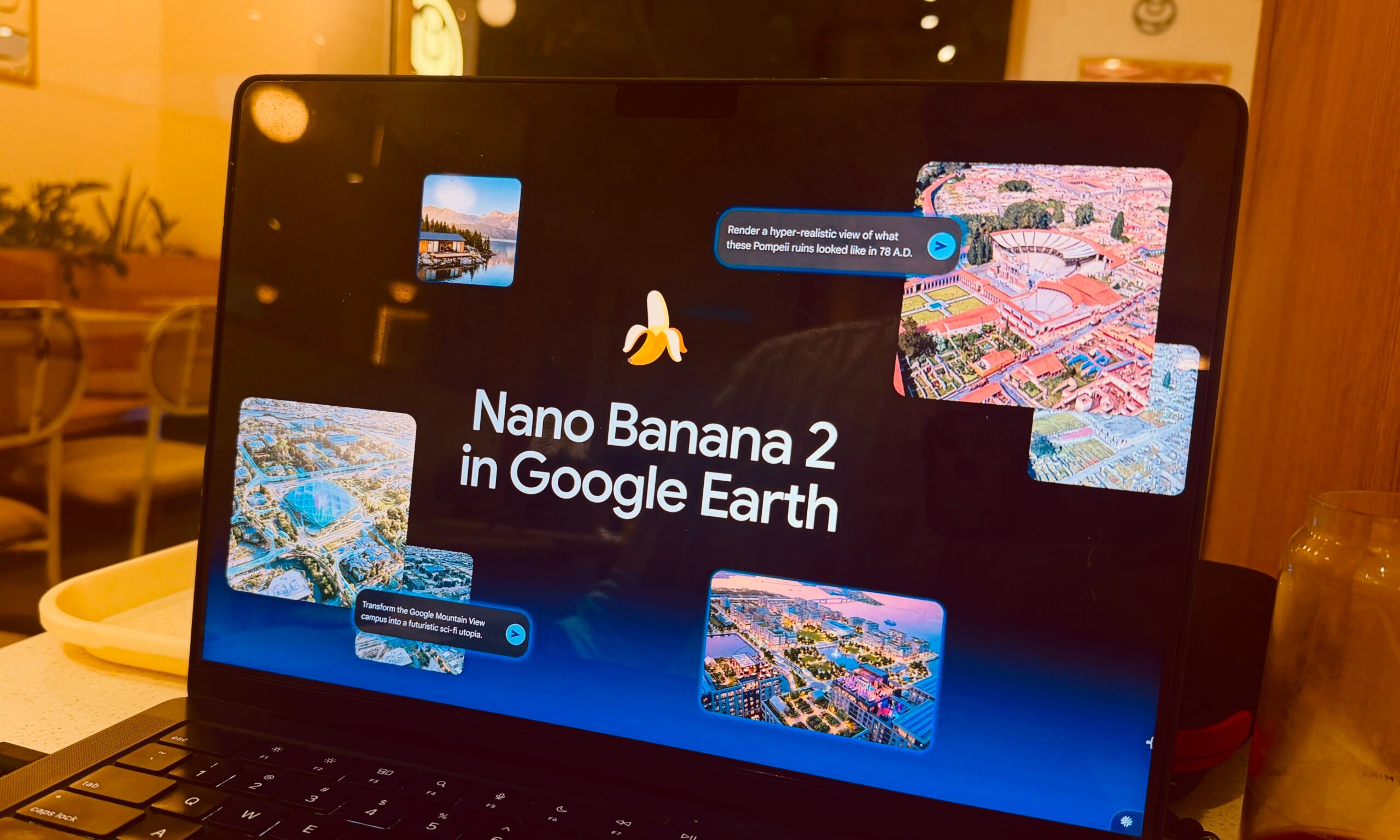
In its latest AI-fication experiment, the company targeted Google Earth. The idea was to let the audience use its Nano Banana 2 AI image generator and make images that can be placed on the map view. On paper, it's a cool idea. What would the Colosseum of Rome look like in your urban neighborhood? Yeah, fun stuff like that.

Read more
Google’s new AI gives robots better balance, smarter hands, and teamwork capabilities
Google just made robots a lot less clumsy and a lot more helpful.
Gemini robotics 2.0

Google DeepMind just brought sci-fi robots closer to reality, and it is very exciting. Building on its original Gemini Robotics model, the company has introduced Gemini Robotics 2, an AI system designed to help robots think, move, and even work together. Unlike most robots today, which rely on pre-programmed routines or someone controlling them remotely, this new system lets robots figure things out on their own when situations get unpredictable.

Can robots finally handle whole-body tasks?

Read more