  1. Home
  2. Emerging Tech
  3. Health & Fitness
  4. Smart Home
  5. News

This alarm clock is so smart it can actually teach you how to sleep better

Add as a preferred source on Google

Antoine Markarian always struggled to get to sleep on a Sunday night.

“Like a lot of people, I thought it was about being stressed because the work week was starting the following morning,” the entrepreneur told Digital Trends. “Eventually, I realized it was because I was oversleeping on Saturday and Sunday morning. Ever since I stopped doing that, I’ve never again struggled to sleep Sunday nights.”

Recommended Videos

Insights like this led Markarian to create the Kello smart alarm clock, a new Kickstarter project aiming to be less of a passive timepiece and more of an active “sleep teacher.”

“Ultimately, I realized that good sleep is all about a good lifestyle,” he continued. “That’s what Kello is all about: changing and optimizing your lifestyle to make you sleep better.”

Kello encourages users to have a regular bedtime and wake-up time, but can also push them to get up earlier for maximum productivity. It makes use of subtle nudges like letting users only make limited use of “snooze” features, or urging them to stop looking at their smartphone at night. To help bring on sleep faster, it also uses a pulsing light effect that’s designed to get users to slow their breathing to mimic a natural sleeping rhythm.

On top of this, it’s got app integration for both iOS and Android, the ability to connect with streaming music services like Spotify, a tool for helping users get over jet lag, IFTTT functionality for syncing up with smart coffeemakers, and much more.

Markarian said he took user wish lists into consideration wherever possible. Right at the start of the project — before nailing down the final spec — he contacted 10,000 fans who had shown an interest and asked them what they wanted from a smart alarm clock.

The results were revealing.

“For example, I really wanted to have voice control,” he said. “I thought it would be really cool to be able to say, ‘Hey Kello, wake me up at 7 a.m. with my acoustic morning Spotify playlist.’ But this is a feature that didn’t resonate at all with our users. So we got rid of it. Given how many companies are doing voice recognition, that seemed strange — but it seems people don’t want this for a nighttime device.”

What he hopes to have ended up with is not just a smart alarm clock, but the smart alarm clock.

If you’re interested in getting involved, you can do so for a pledge of $89 or more, with shipping expected in March next year. Or, roughly speaking, 175 nights away.

Luke Dormehl
I'm a UK-based tech writer covering Cool Tech at Digital Trends. I've also written for Fast Company, Wired, the Guardian…
Your future AR glasses might finally stop making the real world look weird
Researchers have developed a new display technique that keeps virtual objects realistic without dimming the real world.
Samsung AR Glasses

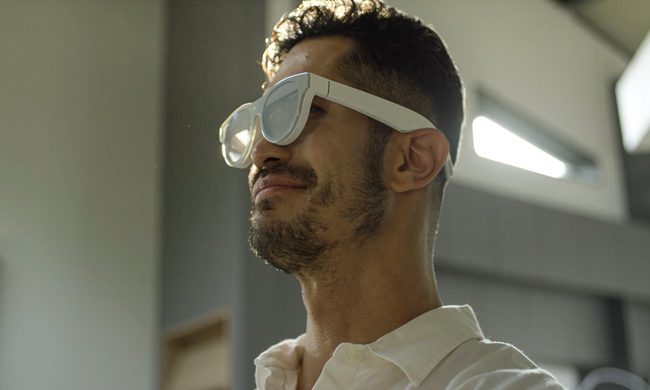
One of the biggest promises of augmented reality is blending digital objects seamlessly into the real world. Ironically, today's AR glasses often make the real world harder to see. Researchers at the Shibaura Institute of Technology (SIT) in Japan, led by Assistant Professor Xiaodan Hu in collaboration with Dr. Yan Zhang and Professor Xubo Yang from Shanghai Jiao Tong University in China, and Professor Kiyoshi Kiyokawa from Japan's Nara Institute of Science and Technology, have developed a new AR display technique that aims to make virtual objects look realistic without reducing visibility of the real world. The study was published in IEEE Transactions on Visualization and Computer Graphics.

The biggest AR problem isn't virtual objects; it's everything around them

Read more
Anti-surveillance clothing is getting cheaper, but don’t expect an invisibility cloak
Affordable shirts now claim to confuse facial recognition, although their protection depends heavily on the camera and software watching you
Chart, Plot, Adult

Anti-surveillance clothing is starting to look less like an art-school experiment and more like something you could actually wear outside. Shirts designed to confuse facial recognition systems now cost about as much as ordinary streetwear, although buying one won’t make you disappear.

The Guardian reports that designers are using face-like prints, unusual cuts and infrared lights to interfere with computer vision. These techniques target specific weaknesses, so their success depends on what happens to be watching you.

Read more
This spinning drone hides in plain sight using a visual illusion
This drone doesn't turn invisible. It tricks your brain into thinking it has.
Phantom Twist

For decades, engineers have chased the dream of an invisible drone. The usual approaches have involved transparent materials, camouflage coatings, or complex optical systems that bend light around an object. Researchers at Northwestern University decided to take a completely different route. Instead of hiding the drone itself, they chose to fool the human eye.

The result is Phantom Twist, an experimental drone that spins so rapidly it almost disappears into the background. It's not technically invisible, but to anyone watching, it looks more like a faint blur than a flying machine.

Read more