1. Home
  2. Emerging Tech
  3. Computing
  4. News

Startup can preserve your brain for future upload, but it’s ‘100 percent fatal’

Add as a preferred source on Google
SubstanceP/Getty Images

The idea of being able to upload our consciousness to a computer is a tech dream that everyone from science-fiction writers to futurist Ray Kurzweil has discussed. But a new startup being shepherded by startup accelerator Y Combinator wants to make it a reality — although there is a catch. You have to die in order for it to be able to work its magic. And there’s no guarantee that the consciousness uploading part will actually pan out, either.

Recommended Videos

Called Nectome, the startup’s premise is to preserve brains in microscopic detail using what MIT Review describes as a “high-tech embalming process.” This involves a process called vitrifixation, also known as aldehyde-stabilized cryopreservation. The team behind the project, led by co-founders Michael McCanna and Robert McIntyre, have previously won the Brain Preservation Prize (yes, that’s a real thing!) for preserving a complete rabbit connectome, a complete map of all the neural connections in the brain. They have also scaled this preservation process to larger brains, including one carried out on the corpse of an elderly woman in February. This was the first demonstration of vitrifixation on a human brain.

So what’s the sales pitch? Basically that you can pay Nectome to carry out its brain embalming process after your death. Right now, the company is gauging interest by taking $10,000 deposits from customers, although these are fully refundable if you happen to have a change of mind — so to speak.

Beyond this, the company isn’t promising anything in terms of guaranteed immortality, but its website certainly suggests that mind uploading is the end goal — although it’s not clear whether this would be carried out by Nectome or a third party.

“Our mission is to preserve your brain well enough to keep all its memories intact: from that great chapter of your favorite book to the feeling of cold winter air, baking an apple pie, or having dinner with your friends and family,” the company writes. “We believe that within the current century it will be feasible to digitize this information and use it to re-create your consciousness.”

So far, Nectome has received $1 million in funding, including $120,000 from Y Combinator and an additional $960,000 federal grant from the U.S. National Institute of Mental Health for “whole-brain nanoscale preservation and imaging.” Will enough people add their $10,000 deposits to make this a scalable business? We guess we will have to wait and see.

Luke Dormehl
I'm a UK-based tech writer covering Cool Tech at Digital Trends. I've also written for Fast Company, Wired, the Guardian…
A new AI model wants self-driving cars to think before they swerve
Forget guessing games, this self-driving AI actually shows its work.
Self driving car

Self-driving cars have gotten pretty good at driving. The harder problem is teaching them to drive safely in situations nobody planned for. We have heard horror stories of self-driving cars, behaving erratically in emergency situations, often times delaying first responders from reaching the scene.

A team at Seoul National University, led by professor Jun Won Choi from the Department of Electrical and Computer Engineering, thinks they have cracked part of that puzzle with a new AI model called SafeDrive. The research was recently selected as a highlight paper at CVPR 2026, a distinction that goes only to roughly 3% of all submissions.

Read more
An AirPods-sized mini lab could help catch disease markers in minutes
Meet VPodDuo, an AirPods-sized molecular testing gadget
VPodDuo Mini Medical Device

Home testing could eventually become a lot more convenient. Researchs at the at the University of Illinois Urbana-Champaign has developed the VPodDuo, a pocket-sized fluorescence reader designed to measure sensitive molecular tests outside a conventional laboratory.

Its housing is roughly comparable in size and shape to an AirPods charging case, while Bluetooth connectivity sends results directly to a smartphone. Meaning, you might not have to wait in line anymore.

Read more
Your future AR glasses might finally stop making the real world look weird
Researchers have developed a new display technique that keeps virtual objects realistic without dimming the real world.
Samsung AR Glasses

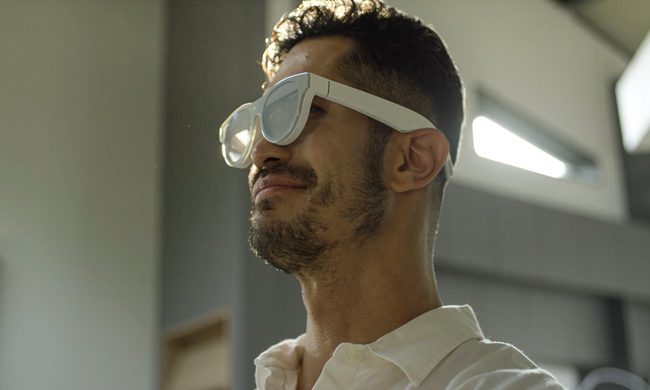
One of the biggest promises of augmented reality is blending digital objects seamlessly into the real world. Ironically, today's AR glasses often make the real world harder to see. Researchers at the Shibaura Institute of Technology (SIT) in Japan, led by Assistant Professor Xiaodan Hu in collaboration with Dr. Yan Zhang and Professor Xubo Yang from Shanghai Jiao Tong University in China, and Professor Kiyoshi Kiyokawa from Japan's Nara Institute of Science and Technology, have developed a new AR display technique that aims to make virtual objects look realistic without reducing visibility of the real world. The study was published in IEEE Transactions on Visualization and Computer Graphics.

The biggest AR problem isn't virtual objects; it's everything around them

Read more