1. Home
  2. Emerging Tech
  3. News

Physicists discover new form of light, validate decades-old quantum mechanics prediction

Add as a preferred source on Google

It’s been over 340 years since Danish physicist Ole Rømer observed that the speed of light was finite. And, to this day, photons still manage to surprise us. Last year, scientists revealed a new fundamental property of light. This year, a team of physicists from by the Trinity College Dublin and the CRANN Institute have just discovered a new form of light that refuses to behave normally, and undermines what physicists know about angular momentum.

“Angular momentum measures how much something is rotating,” one of the study’s researchers, Kyle Ballantine, told Trinity News. “For a beam of light, although traveling in a straight line it can also be rotating around its own axis.” Up until this finding, physicists thought the angular momentum of all forms of light was a multiple of Planck’s constant. Apparently, that’s not so.

Recommended Videos

To uncover this information, the researchers began by searching for new behaviors of light by shining beams through crystals to create “screw-like structures.” They used the theory of quantum mechanics to analyze these beam structures and realized that the angular momentum of the photon would be a half-integer, not a multiple of Planck’s constant.

This discovery might not sound like much, but researchers suggest that it will influence our knowledge about the very essence of light. “Our discovery will have real impacts for the study of light waves in areas such as secure optical communications,” Professor John Donegan said.

Finding a new form of light is undoubtedly exciting. However, much of the physics community’s real joy comes from validating 30-year-old theoretical physics predictions. In the 1980s, physicists speculated ways in which quantum mechanics would open doors for strange new discoveries, such as particles with fractions of their expected quantum numbers. This research provides the first validation of those predictions. “This discovery is a breakthrough for the world of physics and science alike,” said CRANN Director, Stefano Santo.


Dyllan Furness
Former Contributor
Dyllan Furness is a freelance writer from Florida. He covers strange science and emerging tech for Digital Trends, focusing…
Yet another study says AI is bad for elections, and the rabbit hole gets worse
AI may be an election bomb waiting for someone to light the fuse
Voters cast their ballots on Election Day

Another election, another study has concluded that asking an AI chatbot for political guidance is a spectacularly bad idea. Research conducted during Hungary’s 2026 parliamentary election found that ChatGPT and Google Gemini offered not just inaccurate but also inconsistent and unreliable voting advice. The chatbots misclassified voter profiles, overlooked relevant parties, recommended parties absent from the ballot, and sometimes produced materially different answers when given the same information repeatedly.

AI keeps failing the voter test

Read more
Samsung’s humanoid robot ambitions are real, but factories come first
Samsung’s new robotics division has humanoids in its sights, although its immediate business is far more practical factory automation
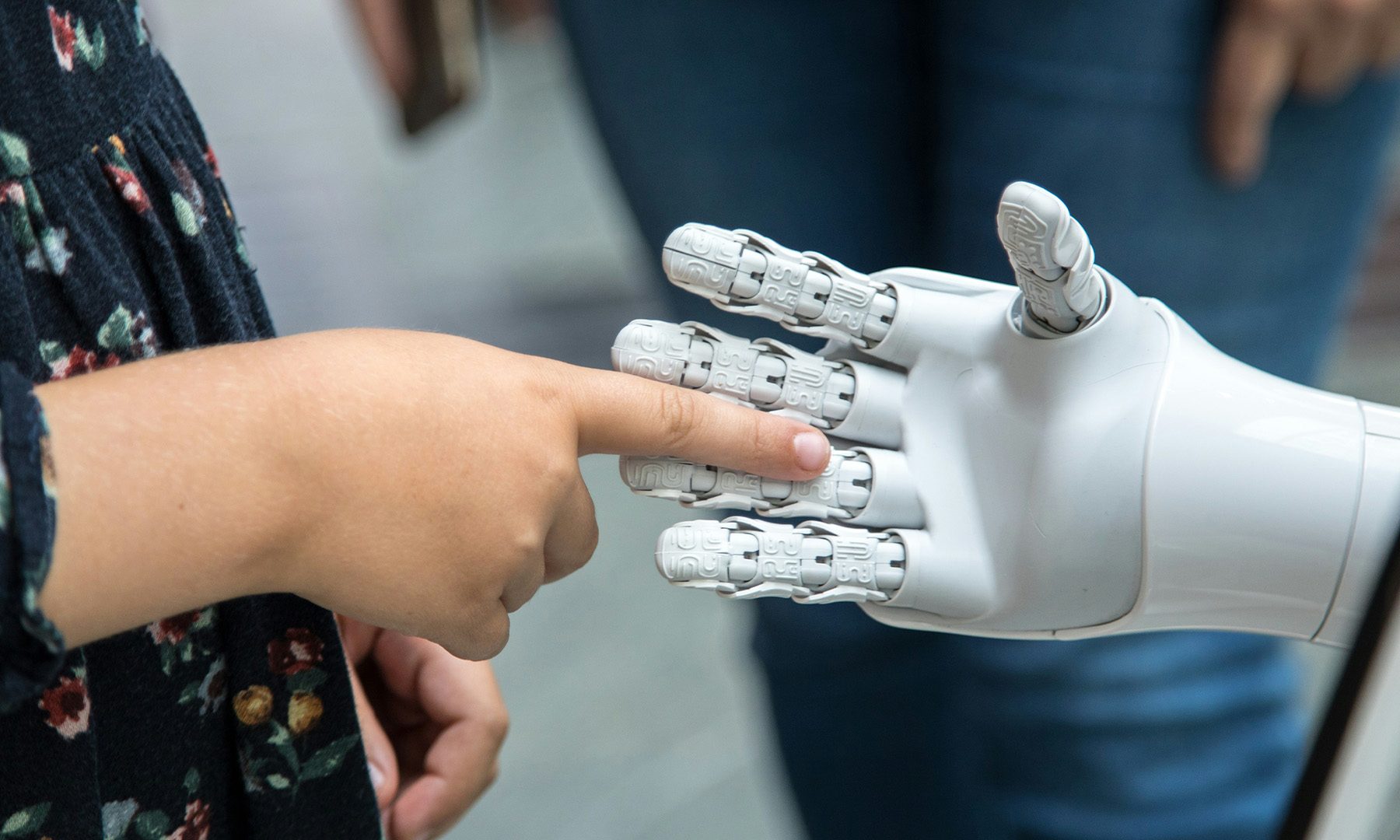
Robot Touch Human Finger

Samsung wants a place in the humanoid race, but its new robotics push begins with machines built for factories rather than homes.

The CEO-led RX robotics division will initially focus on manufacturing robots. Samsung has separately identified humanoids as a priority, although it hasn’t announced a commercial model or explained where one fits into the division’s immediate plans.

Read more
The future of AI may depend on this one behind-the-scenes change
Running Claude on Android.

Whenever a new AI model arrives, it's easy to get caught up in the bells and whistles. We talk about how much smarter it is, how quickly it answers questions, or how realistic its images have become. But here's the thing: none of that matters much if the AI can't reliably work with the apps and services people use every day.

That's why an upcoming update to the Model Context Protocol (MCP) caught my attention. It isn't a new chatbot or a fancy AI model. In fact, most people will never even know it's happening. But it could quietly make the AI ecosystem a lot healthier. If you've never heard of MCP before, don't worry. Think of it as a shared language that lets AI assistants safely talk to apps like Gmail, Slack, calendars, databases, and countless other services. Instead of every company inventing its own way to make those connections, MCP gives everyone a common rulebook.

Read more