  1. Home
  2. Phones
  3. Android
  4. Mobile
  5. News

Report shows Machine learning is helping make Google Play a whole lot safer

Add as a preferred source on Google

In an effort to keep customers safer, Google Play is getting smarter. Google has released its Android Security report for 2017, which highlights machine learning as an increasingly better way to keep malicious software off your phone.

Recommended Videos

According to the report, as many as a whopping 60.3 percent of potentially harmful apps, or PHAs, were detected through machine learning in Google Play Protect, which is a service that’s enabled on any phone running Android 4.3 or later. Not only that, but Google expects the number of PHAs detected with machine learning to go up in the future.

Earlier this year, Google revealed that 700,000 apps had been removed from Google Play in 2017 for violating Google’s policies — but at the time it didn’t reveal too much about how those apps were detected in the first place. Now we know that it was Google’s implementation of machine learning that largely contributed to making Google Play safer. In 2016, 0.77 percent of devices had installed a PHA, compared to 0.56 percent in 2017. We can only assume that figure will be even better in 2018.

Play Protect certainly has its work cut out for it. The service automatically scans as many as 50 billion apps every single day — a practice that Google says led to the removal of a hefty 39 million potential harmful apps last year. While Play Protect scans your phone every day for potentially harmful apps, users can also have Play Protect scan their phones manually if they so choose.

It’s services like Play Protect that make Google Play a far safer app store than any third-party service out there. Unlike iOS, users can download apps from the web on Android, however Google recommends against downloading apps from other sources. In fact, according to Google, users who only download apps from Google Play are nine times less likely to get a PHA than those who get apps from third-party stores.

In general, Google has long fought the idea that Android is more susceptible to hackers than iOS — though it has faced an uphill battle considering the fragmented nature of Android. Still, reports like this show that the operating system is getting safer and safer — and that should only continue into the future.

Christian de Looper
Christian de Looper is a long-time freelance writer who has covered every facet of the consumer tech and electric vehicle…
Latest Pixel 11 series leak offers the clearest look yet at Google’s next flagship
Google's next Pixel has leaked again, but this time almost nothing is left to imagine
Pixel 11

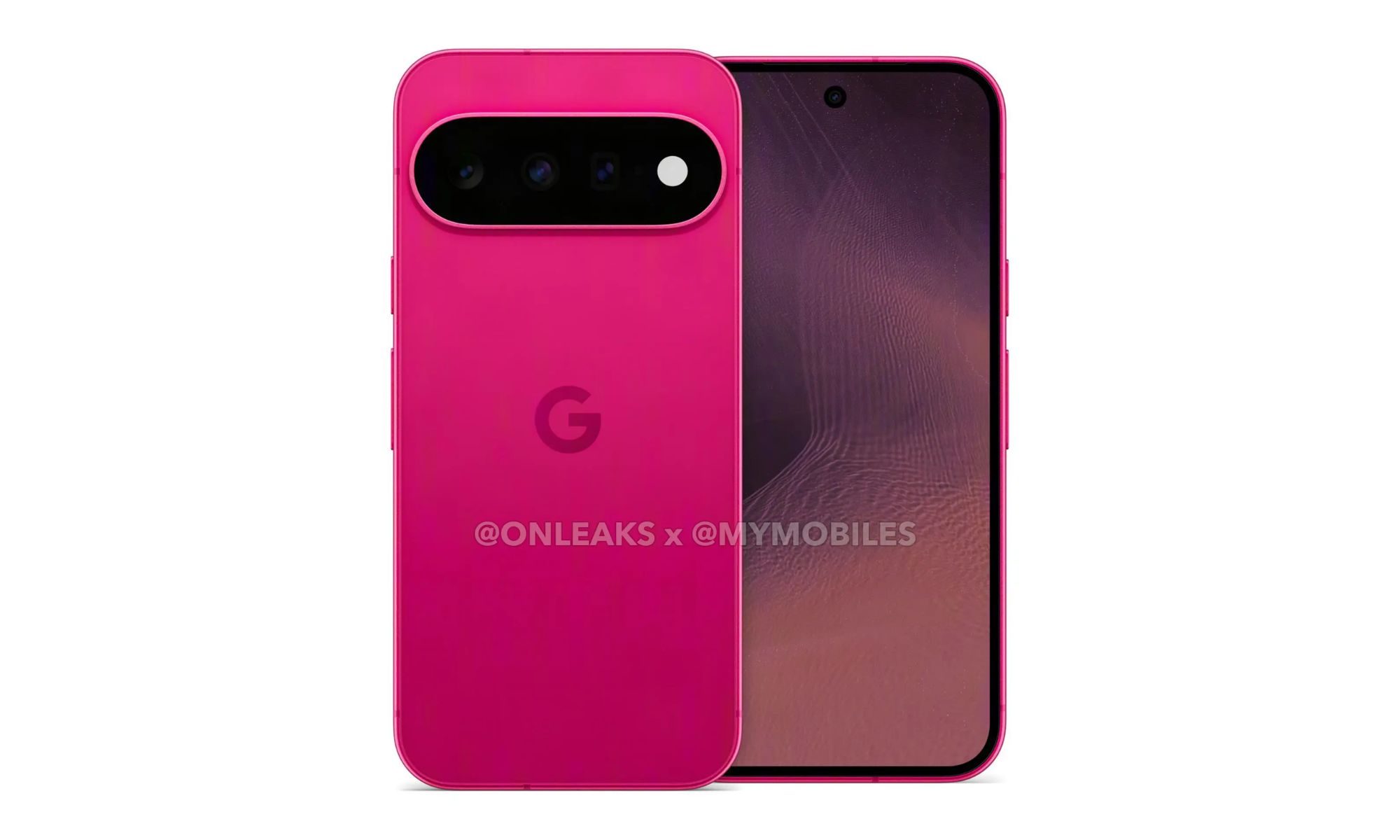
Google's Pixel launches have become increasingly difficult to keep under wraps, and the Pixel 11 series appears to be no exception. Weeks before Google's scheduled August 12 launch event, a fresh leak has revealed what is claimed to be the complete set of official press renders for the Pixel 11, Pixel 11 Pro and Pixel 11 Pro XL, showcasing every colour option across the lineup.

The renders, published by MyMobiles in collaboration with tipster OnLeaks, offer what is arguably the most comprehensive look yet at Google's next flagship family. If authentic, they not only confirm earlier design leaks but also reveal Google's colour strategy for 2026, including a vibrant Fuchsia finish for the standard model and a new copper-inspired "Dune" variant for the Pro series.

Read more
Galaxy Z Flip 8 vs. Motorola Razr Ultra (2026): Samsung’s flip phone is cheaper, but is it better?
One flip phone wins on value. The other wins on hardware.
Electronics, Phone, Mobile Phone

Flip phones have quietly become one of the most competitive corners of the smartphone market. It provides buyers with a satisfying folding snap, reducing the footprint to half the original size, and that’s the entire point. Motorola never really left the format after reviving the Razr name, while Samsung has spent generations treating the Flip line as its scrappy, budget-friendlier sibling to the Fold. 

This year, though, the gap between the two camps has narrowed to the point where picking a winner requires genuinely reading the spec sheet and learning about the phones before putting your money into one. One phone leans hard into raw display firepower, while the other leans into a deeper software ecosystem and a friendlier price tag. 

Read more
Samsung finally switched to silicon-carbon battery on Galaxy Z Fold 8. What’s so special about it?
One of Galaxy Z Fold 8’s biggest upgrade is hiding inside
Galaxy Z Fold 8 Ultra with Fold 8

Samsung has finally joined the silicon-carbon battery race with its latest batch of premium foldables packing the new battery tech. But details for this change were rather hard to spot on the spec sheets. The company has confirmed during media briefings that the Galaxy Z Fold 8 Ultra, Galaxy Z Fold 8, and Galaxy Z Flip 8 all use silicon-carbon batteries.

Even then, the resulting capacities are hardly record-breaking. The Fold 8 Ultra carries a 5,000mAh battery, the regular Fold 8 gets 4,800mAh, and the Flip 8 has 4,300mAh. Rivals from Honor and Motorola have already crossed the 6,000mAh mark. But the figures only tell part of the story.

Read more