 There’s an app for everything–including protecting yourself from apps. Sure, the cyclical nature of giving something access to your information in order to see what else you’ve given your information to is enough to make anyone think that we’re firmly caught in the Internet’s crosshairs and it’s too late to get out unscathed.
And these aren’t exactly fail-safe options. Electronic Frontier Federation’s activism director Rainey Reitman explains that studies have proven these types of applications only work if you know how to use them–what’s more is that you’re never 100-percent safe. “What consumers need is a simple way to protect themselves online that doesn’t involve finding, installing, and maintaining a slew of third party apps,” she says.
Until that day comes, we think it’s better to educate yourself and get proactive rather than stay complacent. Check out these applications that go under the hood to reveal what’s going on when you’re scouring the Web.
Reppler
Like other applications, Reppler has to be given access to your various social networking sites before it can assess what they are doing to your reputation. And accordingly, it’s going to want to be made privy to what feel like personal details. If you’re able to surmount that mental hurdle, however, you can get a revealing look at what your social sites say about you.
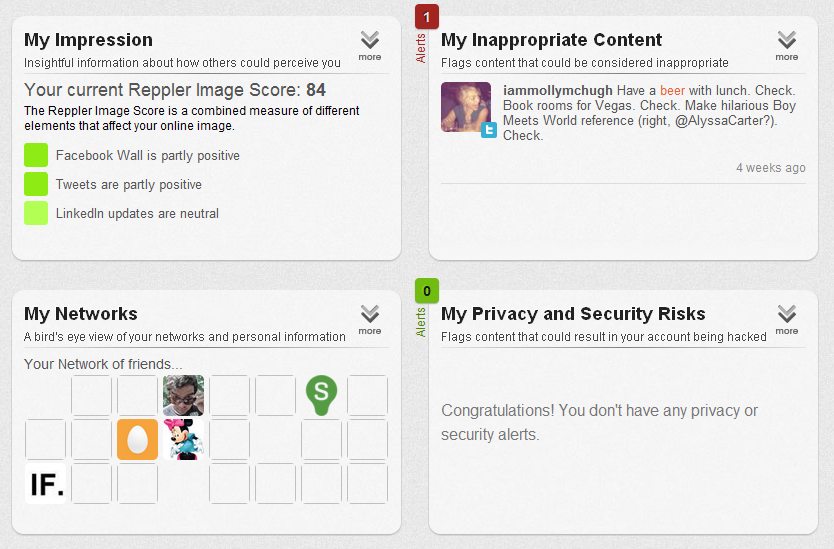 Reppler offers insight into what sort of impression you’re making via Facebook, Twitter, LinkedIn, and on other sites. It also shows you what contacts overlap across various sites—important information if you try to keep somewhat separate online identities. Our favorite feature is Reppler’s inappropriate content warning–which in our case, flagged a reference to drinking beer.
 Ghostery
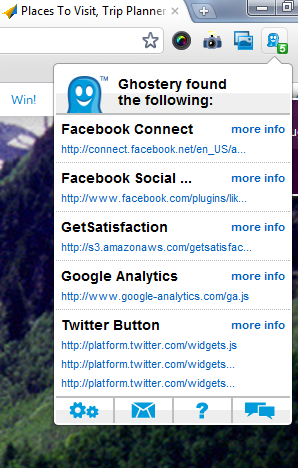
Ghostery tracks what’s tracking you. The free application describes itself as “your window into the invisible web,” and via a widget installed on your browser, surfaces everything going on behind the scenes. Every time you visit a site, a number will appear next to the Ghostery icon on the right-hand side of the omnibox. Hover over it, and you’ll get a list of other sites that are taking stock of your activity.
What’s great about Ghostery is that it doesn’t just offer this data, but also helps you determine what to do about it. You can learn more about the companies and block scripts and images from them as well as delete local shared objects. It’s a quick and painless download, and the app walks you through set-up so you can customize the tool for your own use.
Disconnect.me
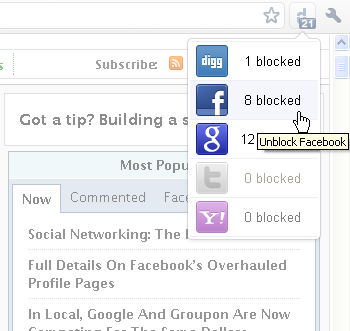
Disconnect.me functions quite a bit like Ghostery, albeit with less personalization. However, instead of reporting the third parties that are tracking you, Disconnect goes right ahead and disables them from the get-go. It also installs a browser icon that shows you the number of sites it’s blocking for you. You can also unblock sites if you choose simply by clicking on them.
Disconnect.me has a tool dedicated to disconnecting from Facebook as well. If all that frictionless sharing is starting to get to you, this app can ease your pain by disabling Facebook from tracking your outside Web activity.
Unsubscribe
Unwanted spam is the burden of every online consumer out there. Unsubscribe wants to lighten that load while also giving you access to a variety of tools to monitor your Web behavior. Its social analyzer option puts in plain sight everything you’ve approved and subscribed to, and warns you if the application seems iffy. When you remove something, it also prompts you to tell your friends who are using it.