1. Home
  2. Cars
  3. News

Win the LAAS Top Ten Automotive Startups Challenge and visit this famous island

Add as a preferred source on Google
 The LA Auto Show is one of the largest global stages for automakers. Each year, some of the most anticipated new models bow in the land of fame and fortune. Meanwhile, those who are hungry for success compete in the show’s Top Ten Automotive Startups challenge for a chance to be featured at AutoMobility LA (formerly the Connected Car Expo and LA Auto Show Press & Trade Days).

This year, the incentives for competitors have improved significantly. As part of the show’s effort to gain exposure and entrepreneurial guidance for it’s entrants, three of the Top Ten featured finalists will receive live mentoring sessions with prominent Silicon Valley investor, Bill Tai, during the LA Auto Show’s AutoMobility LA on November 16.

Recommended Videos

“The LA Auto Show is attracting super interesting and disruptive startups that are redefining what we know as automotive,” said Tai. “As an educator, investor and entrepreneur myself, I want to help bring my network and resources to accelerate the success of this year’s Top Ten finalists.”

Better still, one winner will be invited to Sir Richard Branson’s Extreme Tech Challenge, which takes place on his privately-owned Necker Island. I’ll repeat that last part: someone gets a free ride to a private island to hang with one of the richest, most successful chaps on the planet. Winners receive mentoring sessions and tech and infrastructure support from top technology firms, as well as increased publicity. In other words: you get the keys to future success.

The LAAS is encouraging startups from all industries to apply (HERE) because even if you don’t win the grand prize, the top ten finalists are exposed to 4,500 media and 20,000 industry professionals at this year’s AutoMobility LA in November.

The Top Ten finalists will be selected by the AutoMobility LA advisory board, which is comprised of senior executives from Aeris Communications, City of Los Angeles, Elektrobit, Ellis and Associates, Google, Local Motors, Lyft, Nokia Growth Partners, NVIDIA, Pandora and Strategy Analytics.  AutoMobility LA will be accepting submissions from June 9 – July 31, 2016.

Miles Branman
Miles Branman doesn't need sustenance; he needs cars. While the gearhead gene wasn't strong in his own family, Miles…
A new AI model wants self-driving cars to think before they swerve
Forget guessing games, this self-driving AI actually shows its work.
Self driving car

Self-driving cars have gotten pretty good at driving. The harder problem is teaching them to drive safely in situations nobody planned for. We have heard horror stories of self-driving cars, behaving erratically in emergency situations, often times delaying first responders from reaching the scene.

A team at Seoul National University, led by professor Jun Won Choi from the Department of Electrical and Computer Engineering, thinks they have cracked part of that puzzle with a new AI model called SafeDrive. The research was recently selected as a highlight paper at CVPR 2026, a distinction that goes only to roughly 3% of all submissions.

Read more
Your next car’s software update could become its biggest security risk
Your next car could receive updates like your smartphone. That's also becoming a cybersecurity nightmare.
OTA technology allows manufacturers to remotely deliver software updates.

Modern cars are no longer machines that stay the same after they leave the showroom. Increasingly, they're becoming software-defined vehicles that receive new features, bug fixes, and security patches wirelessly, much like smartphones. But while over-the-air (OTA) updates have made vehicle maintenance easier and cheaper, cybersecurity experts are warning that the same technology could also become one of the automotive industry's biggest security challenges.

Researchers and policymakers are now calling for stronger oversight as connected vehicles become increasingly dependent on remote software updates. Their concern isn't just about hackers stealing personal data. It's about someone potentially interfering with the operation of a moving vehicle.

Read more
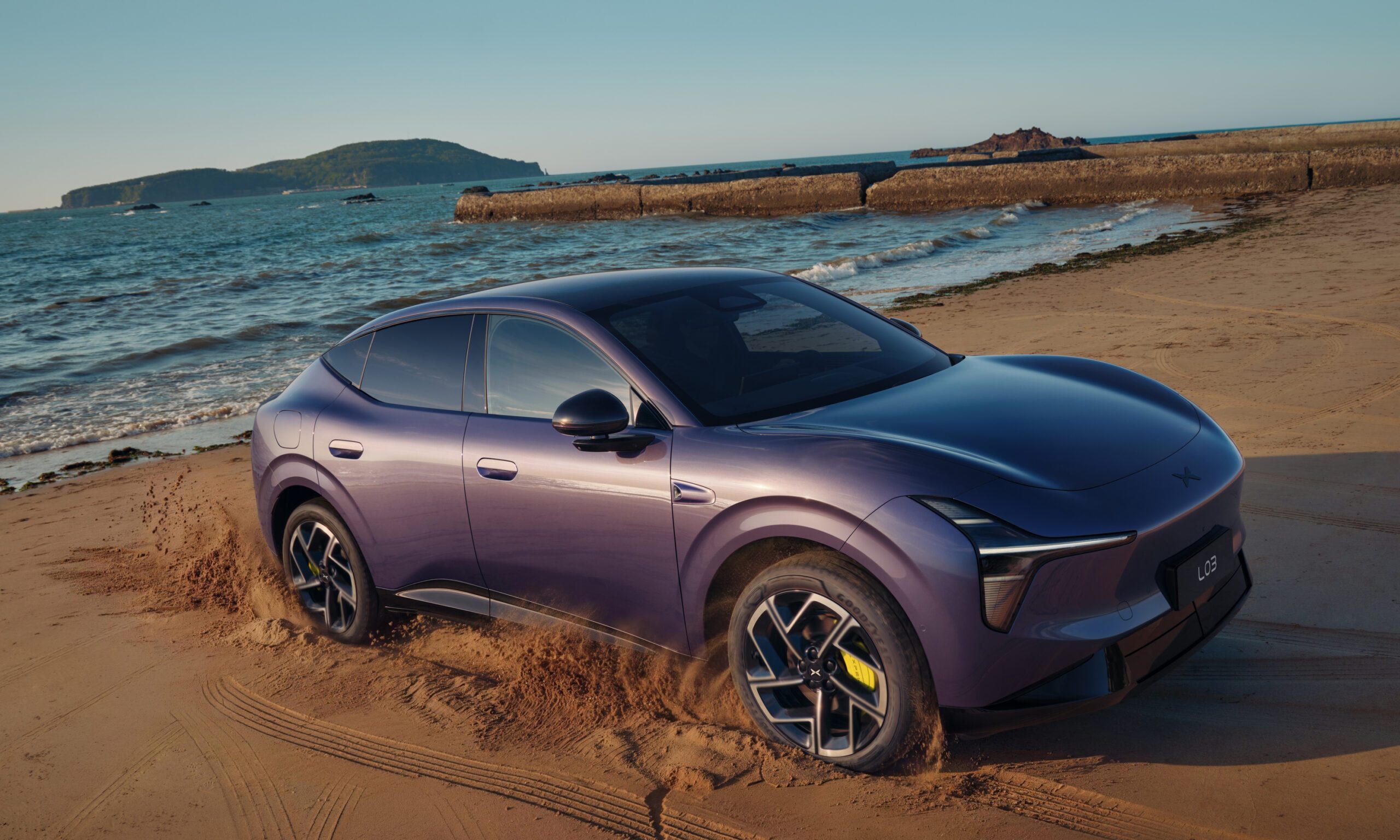
This sleek Chinese EV pairs supercar styling with three AI brains
The Xpeng L03 is an AI supercomputer disguised as a stylish family SUV
Xpeng L03

Xpeng’s latest electric vehicle carries enough processing power to make the term "smart car" actually sound more realistic than it actually is. The new Xpeng L03 debuted simultaneously in Europe and China on July 16, with the company presenting it across 65 markets. Available as a fully electric vehicle and an L03 Power X range-extender, the coupe-SUV is Xpeng’s most internationally focused model so far. Market-specific prices and sales dates remain unannounced.

Three AI chips and Google Maps built right in

Read more