1. Home
  2. Emerging Tech
  3. Photography
  4. News

The Moon photobombed NASA’s images of Earth … again

Add as a preferred source on Google

The Moon must find photobombing funny. Last week, for the second time in less than a year, while a NASA camera on the Deep Space Climate Observatory (DSCOVR) satellite was trying to observe the Earth’s atmosphere, the Moon swung in for a brief but remarkable interruption.

DSCOVR orbits about one million miles above Earth, nearly 750,000 miles further away than the Moon. From this distance, the satellite uses a four-megapixel CCD camera and telescope — called the Earth Polychromatic Imaging Camera (EPIC) — to keep a constant perspective on the planet’s illuminated side, monitoring ozone, vegetation, cloud height, and atmospheric aerosols. By maintaining focus on the Earth during daylight, EPIC captures data on daily variations across the globe — but every so often, something gets in the way.

Recommended Videos

“For the second time in the life of DSCOVR, the Moon moved between the spacecraft and Earth,” Adam Szabo, DSCOVR project scientist at NASA’s Goddard Space Flight Center in Greenbelt, Maryland, said in a NASA press release. “The project recorded this event on July 5 with the same cadence and spatial resolution as the first ‘lunar photobomb’ of last year.”

Last year’s photobomb, which occurred on July 16, saw the Moon sneak in between Earth and DSCOVR in a diagonal line as EPIC was observing the Pacific Ocean. This year’s images reveal Australia, the Pacific, Asia, the Middle East, and the horn of Africa in the backdrop.

EPIC regularly snaps ten images using filters from ultraviolet to infrared to make various scientific measurements. To construct the natural-color images of Earth, scientists combine three monochrome images – red, green, and blue – taken by EPIC in rapid succession.


Dyllan Furness
Former Contributor
Dyllan Furness is a freelance writer from Florida. He covers strange science and emerging tech for Digital Trends, focusing…
A Florida pastor asked ChatGPT if he was okay. It nearly got him killed.
When "just relax and recover" turns out to be the worst medical advice you could get.
ChatGPT on iPhone

Scott Winters, a pastor from Florida, is suing OpenAI after ChatGPT allegedly gave him what his lawsuit calls "extremely dangerous" medical advice, advice that nearly cost him his life.

What happened to the pastor?

Read more
Scientists made robots curious like toddlers, and it helped them learn language twice as fast
Give a robot curiosity, and it starts learning language (and misbehaving) just like a toddler.
robots and kids photo

Scientists have been trying to figure out how kids pick up language so fast for decades, and a new study out of the Okinawa Institute of Science and Technology (OIST) might have cracked part of the puzzle: curiosity.

Researchers built a virtual robot with a brain-inspired neural network and set it loose in a simulated 3D world full of shapes, colors, and simple commands like "push left magenta dumbbell." 

Read more
You can now buy a computer mouse controlled entirely by your tongue
Augmental has opened public sales of the MouthPad, and introduced a new wearable that lets you type hands-free.
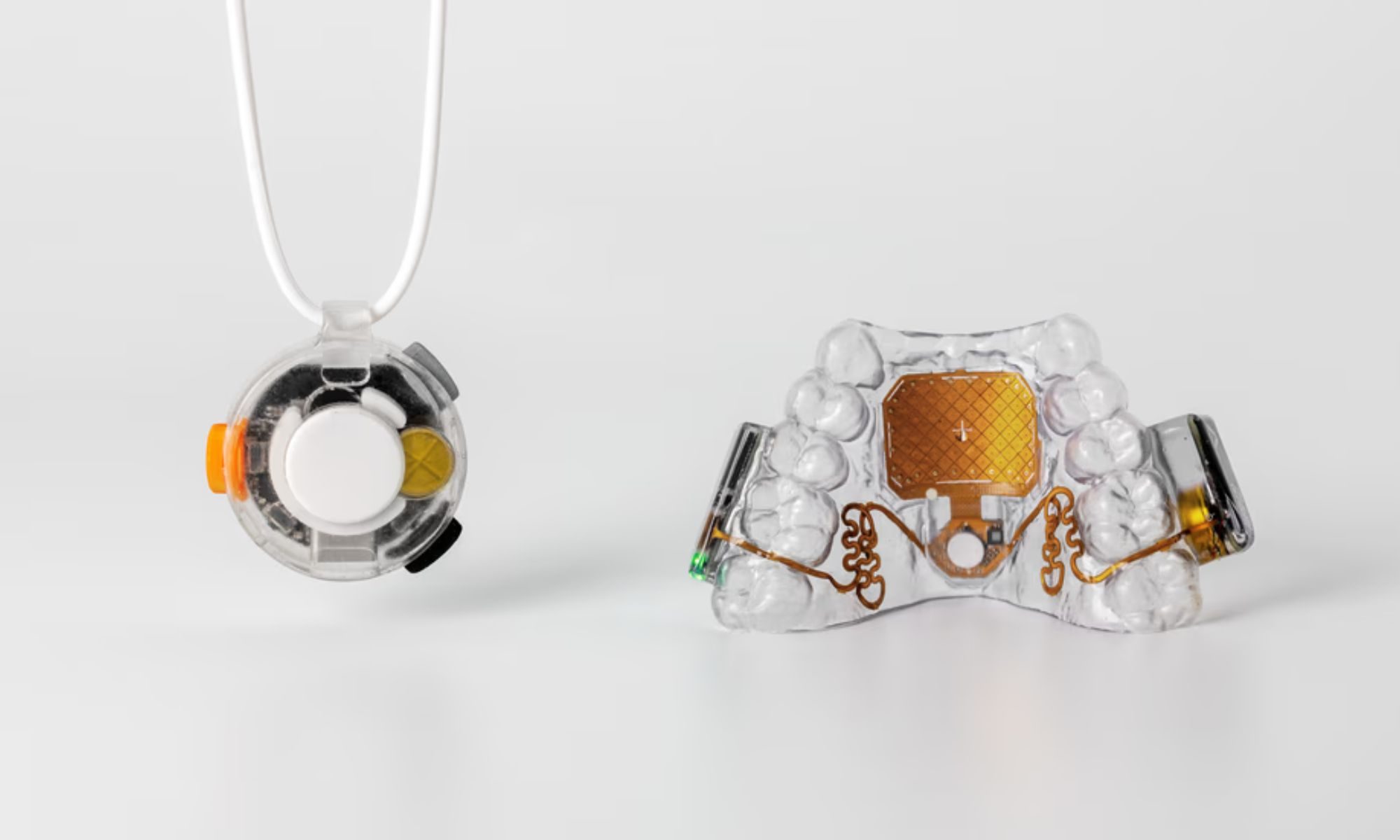
Augmental MouthPad and Vox featured

Augmental first showed off its tongue-controlled MouthPad as a CES curiosity in 2024. Today, the device is a real product you can buy, with the company opening public US sales alongside a beta release of Vox, a companion wearable built to handle the typing half of Augmental's hands-free computing promise.

A retainer that doubles as a mouse

Read more