1. Home
  2. Emerging Tech
  3. Health & Fitness
  4. News

Superfast fMRI is first to track human brain activity during thought

Add as a preferred source on Google

Some amazing things are possible using functional MRI (fMRI) technology, but until now it’s still resembled somewhat of a blunt instrument in some ways: able to spot trends in thought, but not quite quick enough to detect the kind of subtle neuronal activity that’s associated with higher order brain functions.

That may be changing thanks to new rapid fMRI technology, capable of detecting brain oscillations around 10 times faster than previously possible. This is possible using the same MRI scanner, but by utilizing a new pulse sequence technique — a bit like an over-the-air software upgrade that doesn’t require any change in hardware.

Recommended Videos

In a new study carried out at Harvard Medical School and the Center for Biomedical Imaging, Massachusetts General Hospital, researchers applied this fast fMRI tech in an attempt to track brain activity during human thought for the first time.

The results could help neuroscientists drill down far more accurately on brain activity, to not just find broad trends in fMRI data, but specific insights into the way the brain acts at various times — including hard-to-measure ones like under anesthesia and during hallucinations.

“Right now, we can say whether a picture prompts an emotional response in someone,” Laura D. Lewis, first author on the paper, told Digital Trends. “We hope that maybe using this technology it will be possible to disambiguate a cascade of things that are happening. Instead of just saying, ‘here’s a reaction’ you can work out an exact sequence. You can start to tease out all of the different processes that are involved. It will be challenging, but we think that’s where this research is headed.”

Given the massive advances fMRI data has so far led to in our understanding of the brain, it’s certainly an exciting development. “At present, to decode brain activity people do an hourlong scan and then average everything out to create a summary report,” Lewis said. “You can imagine that using this technique you can be sensitive to changes which are happening from second to second.”

Next up? Expanding the study to hopefully receive even more rapid feedback from the brain.

“We want to know how fast we can go,” Lewis concluded. “We’ve gone to a certain speed in this study, but maybe we can push even further. One question is what the limit is for this technology. Biology will ultimately tell us that.”

Luke Dormehl
I'm a UK-based tech writer covering Cool Tech at Digital Trends. I've also written for Fast Company, Wired, the Guardian…
A new AI model wants self-driving cars to think before they swerve
Forget guessing games, this self-driving AI actually shows its work.
Self driving car

Self-driving cars have gotten pretty good at driving. The harder problem is teaching them to drive safely in situations nobody planned for. We have heard horror stories of self-driving cars, behaving erratically in emergency situations, often times delaying first responders from reaching the scene.

A team at Seoul National University, led by professor Jun Won Choi from the Department of Electrical and Computer Engineering, thinks they have cracked part of that puzzle with a new AI model called SafeDrive. The research was recently selected as a highlight paper at CVPR 2026, a distinction that goes only to roughly 3% of all submissions.

Read more
An AirPods-sized mini lab could help catch disease markers in minutes
Meet VPodDuo, an AirPods-sized molecular testing gadget
VPodDuo Mini Medical Device

Home testing could eventually become a lot more convenient. Researchs at the at the University of Illinois Urbana-Champaign has developed the VPodDuo, a pocket-sized fluorescence reader designed to measure sensitive molecular tests outside a conventional laboratory.

Its housing is roughly comparable in size and shape to an AirPods charging case, while Bluetooth connectivity sends results directly to a smartphone. Meaning, you might not have to wait in line anymore.

Read more
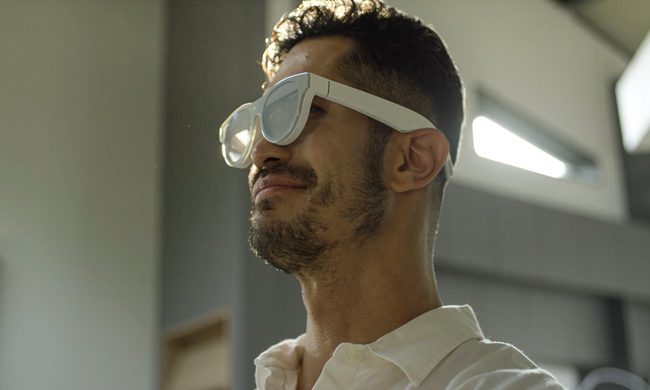
Your future AR glasses might finally stop making the real world look weird
Researchers have developed a new display technique that keeps virtual objects realistic without dimming the real world.
Samsung AR Glasses

One of the biggest promises of augmented reality is blending digital objects seamlessly into the real world. Ironically, today's AR glasses often make the real world harder to see. Researchers at the Shibaura Institute of Technology (SIT) in Japan, led by Assistant Professor Xiaodan Hu in collaboration with Dr. Yan Zhang and Professor Xubo Yang from Shanghai Jiao Tong University in China, and Professor Kiyoshi Kiyokawa from Japan's Nara Institute of Science and Technology, have developed a new AR display technique that aims to make virtual objects look realistic without reducing visibility of the real world. The study was published in IEEE Transactions on Visualization and Computer Graphics.

The biggest AR problem isn't virtual objects; it's everything around them

Read more