Whether you’re looking to save the planet or just cool new 3D printing materials, a U.K. startup called Fishy Filaments has something to offer. Started by materials scientist and geologist Ian Falconer, the project’s goal is to save discarded fishing nets from clogging up landfill sites by, instead, turning them into tomorrow’s 3D-printer filaments.
“In simple terms, I’m trying to set up a local plastics recycling company that transforms used fishing nets into a high-value, high-quality product for use in relatively low-cost fused filament 3D printers,” Falconer told Digital Trends.
There are multiple benefits to the quest, Falconer explained. As mentioned, taking used fishing nets and providing a clean, self-financing on-shore waste disposal system makes a lot of sense. It also potentially provides a local source of usable plastics that aren’t directly dependent on volatile oil prices or hazardous locations.
In 2016, Fishy Filaments demonstrated that its recycled fishing nets could be used by a commercially available, low-cost 3D printer. Now Falconer has launched a crowdfunding campaign with the aim of raising 5,000 pounds ($6,178) to take the project to the next level. While only a modest amount, the money raised will go toward a commercial feasibility study, requiring a new extruder for melting the netting strands together, along with a reel for collecting them.
So will we all be printing with Fishy Filaments a few years from now?
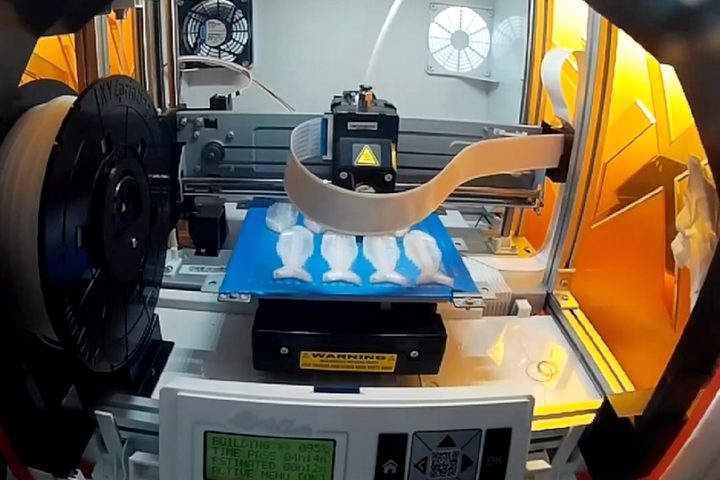
“The local-scale business model will limit its scalability to the amount of plastics available locally,” Falconer, who lives in Cornwall, on the southern coast of England, continued. “The potential, especially in the fisheries sector, is more for a regional or franchise-like model. Each fishery has a distinctive culture and set of target species defined by natural fish distribution. The practice in that fishery extends to net types and gear usage. That means different polymers used differently and in different volumes. From a recycling perspective, it means that technical processes and products developed to work in Cornwall might not work in, for example, Peterhead. Logically then Fishy Filaments Cornwall might spawn Fishy Filaments Peterhead, but their product lines would probably be different, which is no bad thing for a commercial concern.”
In other words, you’re probably not looking at the next unified mass-market filament, but it’s definitely a demonstration of how local thinking — combined with the latest in emerging technology — can produce some nifty results. Given that every area produces its own recyclable waste, all you need is some smart thinking (and a few 3D printers) to put it to good use.
If you’re interested, you can contribute to the crowdfunding campaign here. You may even get a spool or two of recycled fishing net filament out of it!