Google’s Android Auto now seems more of an experimental step in replacing the poor experiences in-car infotainment systems have offered for a long time. What’s the next step? Full-on Android integration, as the Mountain View company announced with Volvo and Audi earlier this week.
What’s the difference? The interface is skinned to how Volvo or Audi wants it to look, kind of like how Samsung and LG skin their version of Android. It’s deeply integrated with the car, so you have constant access to Google Maps, but you’re also able to control car functions in these new Android-powered vehicles. For example, Volvo and Google made an air conditioner app for the operating system, which helps control the temperature, fan speed, and more.
The interface, at some parts, borrow the look of Android on your smartphone. Toggling the volume with the physical knob, for example, displays the same audio slider you see on Android smartphones. But it’s still built for the car in mind — where you’d typically find Android’s navigation buttons, you’ll find quick access to the AC. The end result is an in-car dashboard that fits the car manufacturer’s theme, and is more like traditional infotainment systems, but it will be a reminiscent experience for Android device owners.
In some ways it seems more accessible than Android Auto.
Currently, the only point of input is through Google Assistant, an artificially intelligent bot that is already available on phones like the Google Pixel, the LG G6, and Google Home. But Google told Digital Trends it’s exploring other methods of inputs, such as a keyboard, but it wants to figure out a way to make it safe — so you’re not busy typing when you should be focusing on the road.
There’s already some third-party support from apps like Spotify and podcast app Pocket Casts, and Google said apps won’t need to do much to adapt to this new platform as it’s using pre-existing, open-source Android Program Interfaces (APIs).
What’s neat is with Google Assistant support, not only can you say, “OK Google, turn on the AC,” but you can also control smart home appliances at home. It likely works through a data plan you purchase — or an included plan by the car manufacturer — and it allows you connect to your smart appliances at home. This is useful in many ways, such as turning on the AC on the way home, rather than when you get there. You can either say the trigger phrase for Assistant, or you can activate it via a button on the steering wheel.
Google said it’s still actively exploring with manufacturers the extent of how much they want to use Assistant to control car functions. Will we be able to say, “OK Google, turn on the wipers?” They’re looking into it.
“We are making an important strategic step with the Google partnership. Google’s platform and services will enhance the user experience by enabling more personalization possibilities, while Android will offer increased flexibility from a development perspective,” said Henrik Green, Volvo’s senior vice president for research and development, in a statement.
Whereas Android Auto relies on your smartphone, this integration is mostly tied to the car. The only time your smartphone comes into play is when you need to make calls, because it taps into your phone’s Bluetooth to access your contacts.
That’s the beauty of this integration, and why in some ways it seems more accessible than Android Auto. Where the latter felt more like a tech was invading cars, this native integration feels like an evolution of the car. Android Auto does have its merits — anyone with a smartphone can use it, or you can use a third-party head unit.
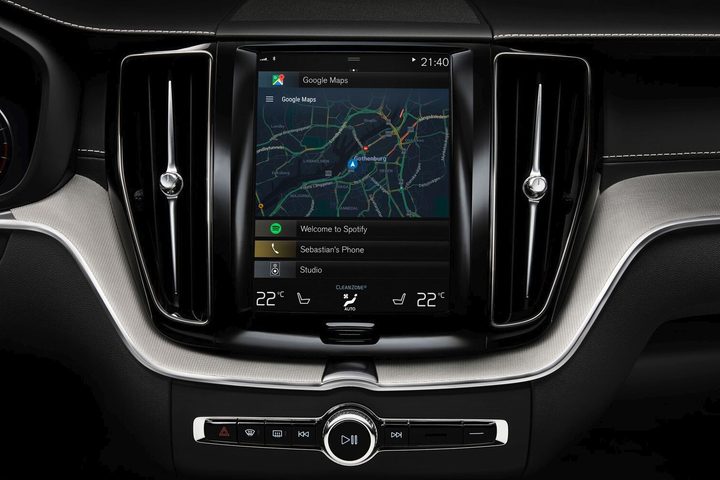
Volvo promises that the large catalog of apps found on the Google Play Store, by Google, Volvo, and third-party developers, will help offer a more connected in-car experience.
The infotainment system isn’t the only product of the partnership between Google and Volvo — Volvo also announced that newer Volvo models will be getting Google Local Search, which will help users find local businesses and locations straight from their infotainment systems. Local Search will be rolling out to existing Volvo cars through an update to Volvo’s Sensus Navigation.
Google is comfortable exploring opportunities other than Android Auto, and this new integration with Volvo and Audi cars seem like the natural next step. Volvo and Audi cars will see this Android integration later on this year.